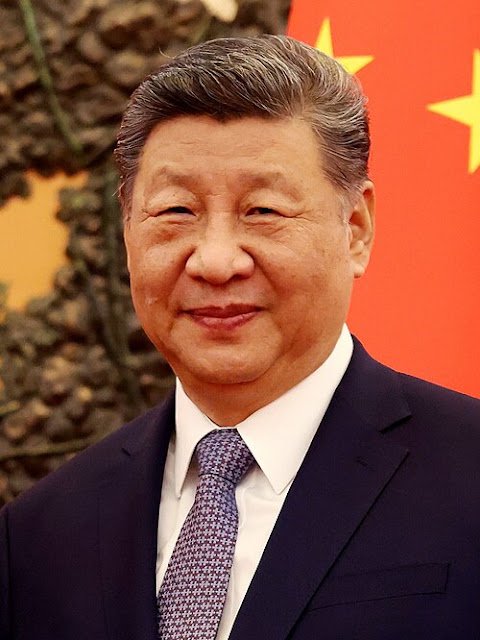
Is the 2020s China’s Decade? Experts Warn of Massive 2028 Taiwan Conflict Risk
 |
| Photo Credit: Wikimedia Commons / Public Domain |
Fast Facts
• Global Order Shift: Chinese President Xi Jinping is systematically steering China on a definitive path to displace the United States as the primary global superpower.
• Chilling Taiwan Warning: Former Australian Prime Minister Kevin Rudd warns of a dangerous one-in-three (33%) chance of a Chinese military invasion of Taiwan by 2028.
• High-Stakes Summit: All international eyes are locked on the upcoming high-stakes meeting between US President Donald Trump and Xi Jinping scheduled for late September 2026.
• Collapse of Rules-Based System: Top geopolitical experts declare that the traditional ‘rules-based international order’ has practically collapsed due to shifting American resolve and rising Chinese assertiveness.
HONG KONG: The overarching question dominating contemporary international relations is whether the 2020s will officially be defined as China’s decade. Under the centralized leadership of the Chinese Communist Party (CCP) and President Xi Jinping, Beijing has embarked on a strategic trajectory aimed at permanently ending the global and regional dominance of the United States. The long-term objective is to construct a multipolar international architecture with Beijing firmly anchored at its center.
According to Ryan Hass, a leading policy specialist at the Brookings Institution, China’s top strategists view Washington not as a superpower on a rapid decline, but as a wounded, unpredictable, and highly dangerous competitor. Rather than engaging in a direct military confrontation that could disrupt its own economic rise, Beijing is choosing to patiently accumulate financial leverage and expand its military capabilities. However, international relations experts argue that true global leadership requires more than aggressive diplomatic rhetoric; it requires massive capital to sustain international institutions—a structural vulnerability where China still struggles to match historical Western outputs.
The 2028 Taiwan Horizon: A One-in-Three Chance of War
The most critical flashpoint in this superpower rivalry remains the self-governed island of Taiwan. Providing a stark assessment of the regional security architecture, Kevin Rudd, the former Prime Minister of Australia and a renowned scholar on Chinese statecraft, issued a severe warning during a high-profile interview on September 13, 2026. Rudd declared that there is currently a one-in-three (33%) probability of China launching a full-scale military invasion of Taiwan by the year 2028.
Rudd detailed that the People’s Liberation Army (PLA) has significantly accelerated its live-fire military drills, blockading maneuvers, and amphibious landing rehearsals around the Taiwan Strait. The year 2028 is designated as an exceptionally volatile window due to a dangerous intersection of political timelines. It marks the final year of US President Donald Trump’s second administration, and January 2028 will also witness the next crucial presidential election within Taiwan itself.
Geopolitical analysts fear that Beijing might execute a dangerous miscalculation, betting that President Trump’s transactional foreign policy will prevent the United States military from intervening directly to defend Taipei. Such a misstep could trigger a catastrophic, systemic conflict between two nuclear-armed superpowers, dragging the global economy into an absolute depression.
South China Sea Assertiveness and the End of International Law
China’s calculated disregard for traditional Western-led security frameworks is prominently visible across the highly contested waters of the South China Sea. Exactly a decade has passed since the Permanent Court of Arbitration in The Hague delivered a historic legal ruling entirely rejecting Beijing’s sweeping historical territorial claims. Despite the binding legal mandate, China has consistently labeled the international verdict as a “political farce,” continuously building fortified artificial islands, deploying maritime militias, and blocking the free transit of neighboring Southeast Asian nations.
Sir John Chipman, CEO of the International Institute for Strategic Studies (IISS), maintains that the decades-old ‘rules-based international order’ has effectively dissolved in the face of gray-zone aggression. Current multilateral organizations lack the collective enforcement mechanisms required to roll back Beijing’s military expansion. By weaponizing its economic leverage through the expansive Belt and Road Initiative (BRI), China has successfully co-opted smaller developing nations into backing its diplomatic interests at the United Nations.
As geopolitical friction peaks, the upcoming face-to-face summit between Donald Trump and Xi Jinping scheduled for the end of September 2026 will serve as the ultimate litmus test for global stability. It will officially determine whether the standard competition between Washington and Beijing can be managed through structured guardrails, or if the 2020s will inevitably conclude with a devastating global conflict.