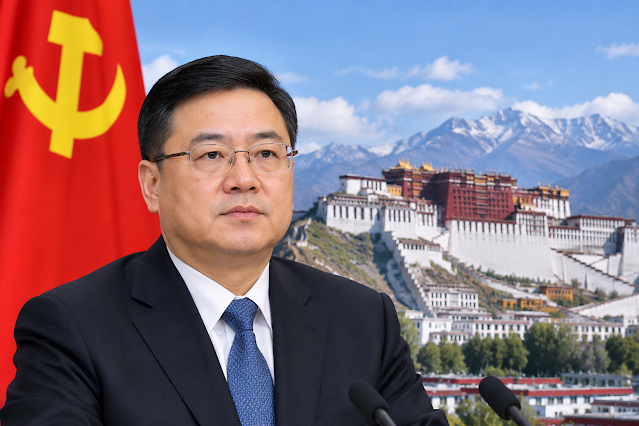
China Appoints Hu Changsheng as New Tibet Communist Party Chief
 |
| “Hu Changsheng has been appointed as the new Communist Party chief of China’s Tibet Autonomous Region, replacing Wang Junzheng.” |
BEIJING, September 22, 2026: China has appointed Hu Changsheng as the new Communist Party secretary of the Tibet Autonomous Region, making him the region’s top political official. The leadership change was reported by China’s state news agency Xinhua on Tuesday.
Hu replaces Wang Junzheng, who had served as Tibet’s Communist Party secretary. According to the announcement, Hu has been appointed to the Tibet regional Party committee as a member, standing committee member and secretary. Wang is no longer listed in those positions.
Hu Changsheng Moves From Gansu to Tibet
Before taking the new post, Hu Changsheng was the Communist Party chief of Gansu province in northwestern China. His move to Tibet represents a significant regional leadership change within the Communist Party’s provincial-level structure.
Chinese state media reported that the Central Committee decided on a broader leadership reshuffle involving Tibet, Gansu and Qinghai. Under the same changes, Wu Xiaojun was appointed Party secretary of Gansu, while Luo Dongchuan was named Party secretary of Qinghai.
The announcement did not provide a detailed explanation for Wang Junzheng’s departure from the Tibet post.
Tibet’s Top Political Position
The Communist Party secretary is Tibet’s highest-ranking political official. The position has a central role in determining the region’s political priorities and the implementation of policies set by China’s central leadership. Reuters also described the Party secretary as the region’s top political official.
The leadership change comes at a time when Beijing continues to emphasize economic development, social stability, border security and governance in Tibet.
Recent official Tibet government reporting under Wang Junzheng highlighted priorities including economic development, ecological protection, rural development, border-area development and strengthening grassroots Party organizations.
Why the Appointment Matters
Tibet is strategically important to China because of its location along the country’s southwestern border and its proximity to India, Nepal and Bhutan. The region is also an important focus of China’s policies concerning ethnic affairs, security and economic development.
The appointment of a new Party secretary therefore attracts attention beyond the normal provincial-level leadership reshuffles. Hu will take responsibility for overseeing the Communist Party’s regional leadership while implementing policies from Beijing.
At this stage, the official announcement does not indicate that Hu’s appointment represents a specific policy shift in Tibet. Any assessment of whether the leadership change will produce major changes in regional policy would require further statements or actions from Hu and the central government.
Background on Tibet’s Leadership
Wang Junzheng had been serving as Tibet’s Party secretary before the latest change. Official Tibet reporting as recently as September 18 showed Wang conducting an inspection in Shannan, where he discussed areas including grassroots governance, industrial development, rural revitalisation, environmental protection and border development.
The timing of his replacement therefore represents a relatively recent change at the top of the regional Party structure.
Hu now takes over the position after his tenure as Gansu’s Party chief. The transfer also coincides with changes in neighbouring Qinghai, where Luo Dongchuan has been appointed Party secretary.
What Comes Next
Hu Changsheng’s first statements and policy priorities in Tibet will be closely watched for indications of how the new leadership intends to approach economic development, governance, ethnic affairs, environmental issues and border-region development.
For now, the confirmed fact is the personnel change: Hu Changsheng has been appointed Tibet’s Communist Party secretary, replacing Wang Junzheng. The announcement itself does not establish any new Tibet policy or explain a major change in Beijing’s approach to the region.