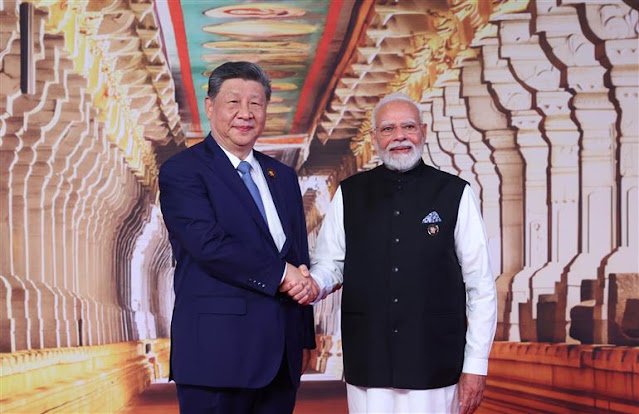
BRICS 2026: PM Modi and Xi Jinping Hold Historic 50-Minute Bilateral Talks in Delhi; Border Stability and Trade Imbalance Take Center Stage in Cautious Thaw!

NEW DELHI: In a monumental development that has reshaped Asian geopolitics, Prime Minister Narendra Modi and Chinese President Xi Jinping held their first formal, delegation-level bilateral meeting on Indian soil since the deadly 2020 Galwan Valley military standoff. Held on the sidelines of the opening day of the 18th BRICS Summit at Bharat Mandapam, the high-stakes dialogue extended well beyond its scheduled slot, lasting for a tense and highly critical 50 minutes. The initial long handshake shared between the two leaders instantly caught the attention of global newsrooms, signaling a strategic and calculated shift toward re-engaging the two nuclear-armed neighbors.
The Core Agenda: Border Stability and the 3S Framework
According to the official statement from India’s Ministry of External Affairs, Prime Minister Modi strongly emphasized that maintaining absolute peace and tranquility along the Line of Actual Control (LAC) remains the non-negotiable foundation for normalizing ties. PM Modi explicitly stated that the future of India-China relations must be strictly guided by three core principles: Mutual Trust, Mutual Respect, and Mutual Sensitivity. He welcomed the recent patrolling consensus in strategic sectors like Depsang and Demchok, urging both military commands to ensure smooth and complete disengagement to prevent any future friction along the borders.
President Xi’s Response and Economic Breakthroughs
Responding to India’s resilient position, Chinese President Xi Jinping delivered a highly significant diplomatic address, emphasizing the historical responsibilities shared by both nations. “It is crucial for both China and India to enhance communication, properly handle our differences, and act as examples of unity for the developing world and the Global South,” President Xi stated during the interaction.
Beyond the territorial boundary question, the 50-minute dialogue successfully addressed structural trade imbalances and critical supply chain issues to facilitate predictable market access for both economic powers. Highlighting this immediate economic thaw, China Southern Airlines formally announced the resumption of its direct, regular passenger flight services between Guangzhou and New Delhi starting September 21, effectively ending a nearly six-year suspension since the initial crisis began.