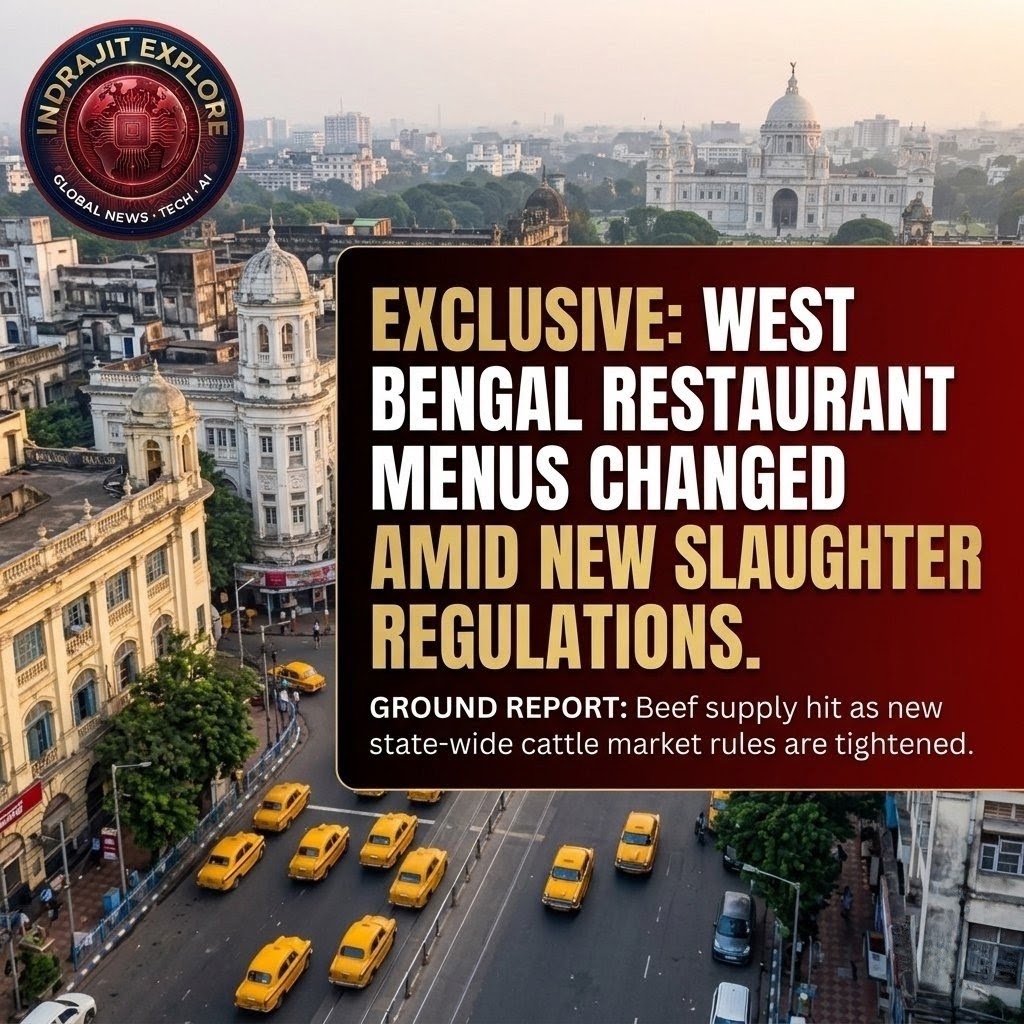
West Bengal Beef Supply Crisis: New Rules Tighten Regulations, Leading to Changes in Restaurant Menus Across Kolkata
Major changes are sweeping through the food and meat industry in West Bengal following recent political updates and administrative policy enforcements. According to ground reports and local vendors, the supply of beef has seen a sharp decline in the state. This drop has forced several iconic restaurants in Kolkata to adjust their historic menus or reduce their daily offerings.
What Are the Regulating Rules Impacting the Meat Supply Chain?
The supply disruption follows the strict enforcement of the West Bengal Animal Slaughter Control Act of 1950, which was heavily prioritized by the local administration.
Under the reinforced regulations, several strict guidelines have been put in place:
• Mandatory Fitness Certificate: Before any cattle can be processed, a written fitness certificate must be issued by a registered government veterinarian and local municipal authorities.
• Age Limitation Rule: The law states that certificates can only be granted if the animal is over 14 years of age, unfit for agricultural labor or breeding purposes, or suffering from an incurable disease.
• Ban on Open Slaughtering: The guidelines mandate that no animal processing can take place in open, public areas. All activities must be confined to government-authorized municipal slaughterhouses.
The Impact on Kolkata’s Restaurants and Local Diets
The unexpected disruption in the supply chain has heavily affected local culinary establishments and consumer choices:
• Disappearing Menu Items: Famous heritage restaurants in Kolkata (such as Mocambo and Shaikh’s) have been forced to pull beef steaks and related items from their menus due to the consistent shortage of ingredients.
• Surge in Prices: Due to low availability and increased regulatory compliance costs, the price of the meat has risen dramatically in city markets, doubling from its original baseline.
• Dietary Adaptations: Local consumers and restaurant owners report that many families are actively altering their diets, shifting toward poultry (chicken), affordable local fish varieties, or vegetarian alternatives.
Political and Legal Standpoints on the Regulations
The strict enforcement has sparked an active debate across the state’s political landscape:
• Opposition Concerns: Leaders from the Trinamool Congress (TMC) and other opposition parties argue that the move indirectly impacts the diverse food culture and livelihoods of many associated with the trade.
• High Court Intervention: The Calcutta High Court reviewed petitions regarding the enforcement but declined to interfere with the state government’s official notification, giving the administrative move full legal validity.
• Administration’s Clarification: Representatives from the ruling Bharatiya Janata Party (BJP) have clarified that the policy is not aimed at targeting anyone’s dietary preferences (such as fish or mutton consumption). Instead, they emphasize that the enforcement is solely meant to curb illegal cattle smuggling, standardize public hygiene, and enforce the existing 1950 law.