
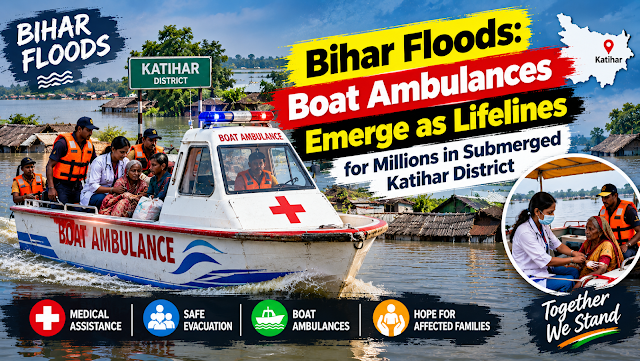
Bihar Floods: Boat Ambulances Emerge as Lifelines for Millions in Submerged Katihar District

KATIHAR (BIHAR): Amidst the worsening flood crisis gripping northern India, the Bihar Health Department has launched a vital intervention by deploying dedicated “Boat Ambulances” to deliver urgent medical care to the hardest-hit communities. Continuous heavy rainfall across the state and heavy discharges from neighboring Nepal have triggered severe flooding. The situation remains catastrophic as major channels, including the Ganga, Kosi, Barandi, and Kari Kosi rivers, continue to overflow well above danger thresholds.
According to reports released by the district administration, approximately 8,80,140 individuals have been severely impacted by the rising waters in Katihar alone. Numerous remote villages situated along the riverbanks are completely cut off, with local roads and crucial connectivity structures completely submerged under several feet of fast-moving water.
Floating Mobile Clinics Reaching Remote Hamlets
To overcome the complete collapse of surface transportation, specialized medical teams are utilizing these floating mobile clinics to bring essential healthcare services straight to the doorsteps of stranded families. The initiative aims to guarantee that no remote resident is left without access to professional medical supervision during this acute climate emergency.
Providing details on the ongoing field rescue, Barari Medical Officer-in-Charge, Dr. Md Musharraf Hussain, confirmed that while the region next to the embankment faces seasonal inundation annually, the magnitude of flooding observed this year is exceptionally severe. With thousands of families refusing to leave their submerged properties to watch over their belongings, the deployment of these medication-stocked water ambulances has proved decisive.
Combating Waterborne Illnesses On the Spot
The roving medical personnel onboard the boat clinics are working round the clock, extending instant relief to vulnerable demographics like pregnant women, toddlers, and elderly citizens. Healthcare teams are treating a substantial influx of waterborne ailments directly in the field. The primary health complaints managed by these emergency responders include:
• Intense skin irritations and systemic rashes
• Severe fungal foot infections from prolonged water exposure
• Seasonal high fevers and viral respiratory drops
• Acute diarrheal issues caused by contaminated drinking sources.
By distributing critical antibiotic kits, water purification tablets, and running decentralized immunization drives, the state apparatus is trying to block the outbreak of deadly waterborne epidemics in flood-affected panchayats.