
Tennessee Death Row Inmate Christa Pike Survives Two Lethal Injection Doses, Taken to Hospital
Tennessee death row inmate Christa Pike was taken to a hospital after surviving an attempted execution in which she was administered two doses of the lethal-injection drug pentobarbital, according to her lawyers and reports from witnesses at the prison.
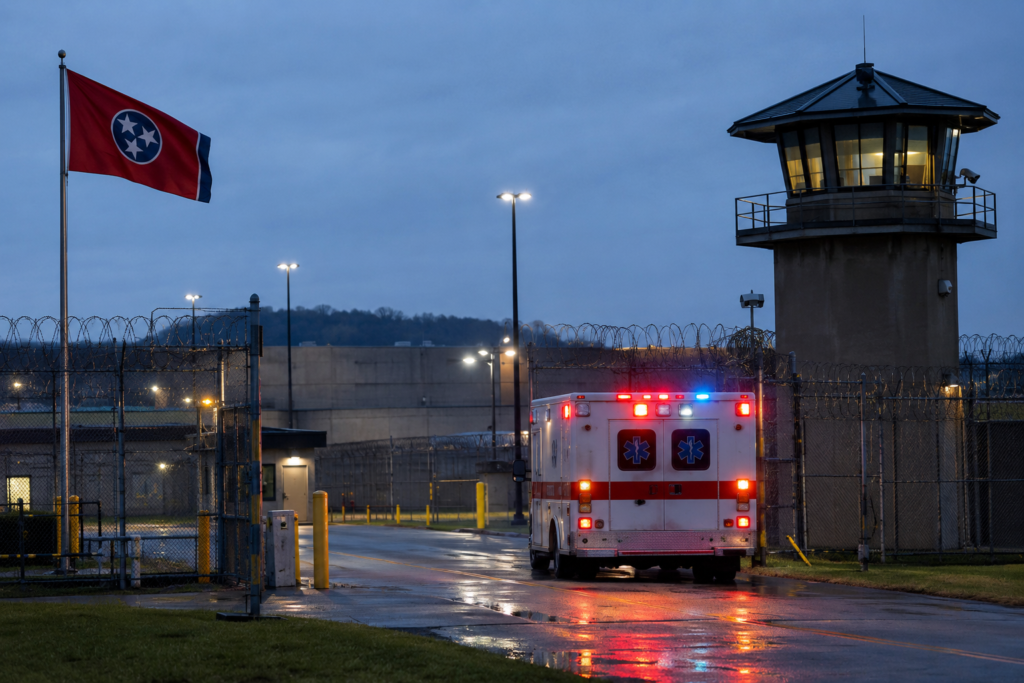
Pike, 50, had been scheduled to be executed on September 30 for the 1995 murder of 19-year-old Colleen Slemmer. The execution was eventually halted after Pike remained alive following the administration of the drugs. Her legal team said she was transported to a hospital for medical treatment, although her lawyers said they had not initially been informed about her medical condition.
Two doses administered during failed execution
The execution took place at the Riverbend Maximum Security Institution in Nashville after a series of last-minute legal developments.
According to reports from witnesses and court filings by Pike’s attorneys, the first dose of pentobarbital did not result in her death. A second dose was subsequently administered under Tennessee’s execution protocol.
Witnesses later reported that Pike remained alive and could be heard snoring after the second dose. The exact medical reason why the drugs failed to produce the intended result has not been publicly established.
Pike’s attorneys filed emergency legal motions seeking to halt the execution, arguing that continuing the procedure would expose her to unnecessary suffering. Her legal team subsequently said she was being treated at a hospital.
The Tennessee Department of Correction said its officials followed the state’s established execution protocol. Governor Bill Lee ordered a comprehensive third-party review of what happened.
Execution followed a series of court battles
Pike’s execution had already been delayed by legal proceedings on the day it was scheduled to take place.
The US Court of Appeals for the Sixth Circuit issued a temporary stay shortly before the planned execution while considering arguments related to Pike’s claims concerning her childhood and sentencing. The US Supreme Court later cleared the way for Tennessee to proceed.
The execution subsequently went ahead at the state prison in Nashville.
The case has drawn renewed attention to the administration of the death penalty and the reliability of lethal-injection procedures.
Pike was sentenced to death for 1995 murder
Prosecutors said Pike and her then-boyfriend, Tadaryl Shipp, attacked Slemmer after Pike became convinced that Slemmer was interested in Shipp. Pike was 18 at the time of the killing.
Shipp was sentenced to life imprisonment with the possibility of parole, while Pike received the death penalty.
Pike has acknowledged her involvement in the killing. Her lawyers and supporters have previously raised arguments concerning her age at the time of the crime, her background and issues considered during her sentencing.
Tennessee halts remaining executions for 2026
The failed execution has also affected Tennessee’s broader execution schedule.
Governor Bill Lee said he had ordered an independent review to determine what occurred during the attempt. He also announced that the state’s remaining scheduled execution for 2026 would not take place this year.
Tennessee has used pentobarbital as its single-drug lethal-injection method since moving away from its previous three-drug protocol. The state had already faced scrutiny over execution procedures, including a previous case in which officials halted an execution after problems with establishing an intravenous line.
The latest incident is therefore expected to receive further examination from state officials and could lead to questions about how Tennessee’s execution procedures are carried out.
What happens next
Pike’s immediate medical condition was not publicly clear in the latest reports. Her lawyers said she was receiving treatment at a hospital after the failed execution attempt.
The independent review ordered by Governor Lee is expected to examine the circumstances surrounding the administration of the two doses and the decision to halt the execution.
The incident is also likely to generate further legal proceedings as Pike’s attorneys challenge what they describe as an unconstitutional and excessively painful execution attempt.
The case has become an unusual episode in the history of capital punishment in the United States, particularly because officials administered two doses of the execution drug but Pike remained alive afterward. A death-penalty expert cited by ITV said there had previously been cases involving difficulties accessing a vein, but surviving after receiving the drugs themselves was described as unprecedented.
Source attribution: Reporting was cross-checked using Associated Press reporting, ITV News and Euronews, alongside other contemporary reports.