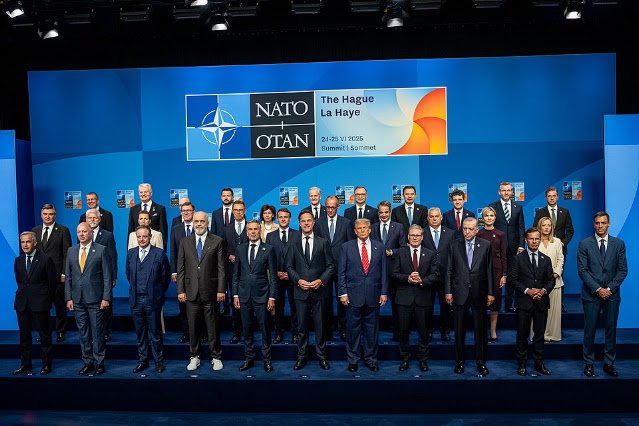
Transatlantic Fracture: How Trump’s Persistent Pressure on NATO is Unilaterally Reshaping European Security Frameworks
 |
| Photo credit: The white House/ Wikimedia commons |
The geopolitical durability of the North Atlantic Treaty Organization (NATO) faces an unprecedented structural evaluation as ongoing fiscal and political pressures from U.S. President Donald Trump continue to unilaterally reshape Europe’s defense architecture. Adopting a highly transactional “America First” diplomatic strategy that prioritizes absolute U.S. dominance over long-standing post-Cold War multilateral treaties, the current Washington administration has openly accelerated its demands for European allies to assume primary responsibility for their own conventional continental defense.
This systemic shift has moved rapidly from provocative political rhetoric into operational military realities. The Pentagon recently confirmed significant adjustments to its regional troop footprints, highlighting strategic drawing down or scaling back of military deployments in traditional strongholds like Germany and Poland. Concurrently, senior U.S. defense officials have codified a transition toward what policy architects term “NATO 3.0″—a model explicitly requiring European nations to field independent military power and balance defense infrastructure spending aligned directly with their economic scale, effectively allowing Washington to pivot its core operational focus toward the Indo-Pacific theater.
In response to this growing strategic uncertainty regarding the absolute durability of U.S. security guarantees under Article Five, European capitals have embarked on their most ambitious domestic rearmament campaign in recent generations. Combined defense spending across European NATO allies and Canada surged by over 50 percent since 2022, with member states aggressively striving toward expanded institutional spending goals. However, this fiscal expansion has triggered an underlying defense industrial rift; rather than channeling these billions entirely into U.S. defense contractors as anticipated by Washington, a growing coalition of allies—including Germany, France, Poland, and Canada—are actively engineering long-term strategies to significantly reduce their structural dependence on American military technology, supply chains, and political leadership.
While NATO Secretary General Mark Rutte has continuously traveled to Washington to defuse tensions and reinforce transatlantic unity, the long-term integrity of the 32-nation alliance remains deeply questioned by veteran foreign policy experts. The accelerating push toward a self-reliant “European pillar” within the defense framework marks a definitive sea change in global alignment. Analysts warn that while the alliance may not formally dissolve, its fundamental deterrent capability relies heavily on adversaries believing in unified collective action—a strategic trust that is being systematically tested as Europe steps forward to lead its own conventional defense.
Bulletins: Agency Key Takeaways
• The Security Paradigm Shift: The U.S. administration is enforcing a strict “NATO 3.0” burden-sharing blueprint, compelling European allies to take immediate primary responsibility for conventional continental defense.
• Industrial Autonomy: Major allies like France, Germany, Poland, and Canada are actively seeking independent military alternatives to minimize their structural dependence on U.S. defense manufacturing chains and technology.
• The Transatlantic Trust Gap: Sudden Pentagon troop adjustments and scaled-back commitments have driven European policymakers to rapidly expand domestic defense budgets to unprecedented historical levels.
• The European Pillar Reborn: Decades-old debates regarding autonomous European collective security have seen immediate revival as the continent prepares for a potentially limited U.S. security umbrella.