SEMICON India 2026: Intel and Tata Electronics Map Out Aggressive Workforce Strategy to Power India’s Semiconductor Hub
 |
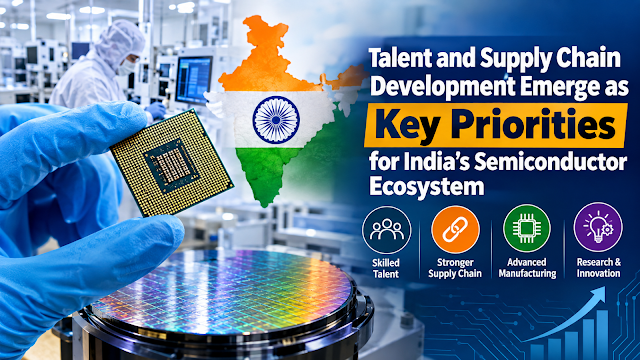
| Talent and Supply Chain Development Emerge as Key Priorities for India’s Semiconductor Ecosystem |
New Delhi, September 17, 2026: India’s semiconductor ambitions are increasingly moving beyond the establishment of chip manufacturing facilities. Industry discussions are now focusing on developing skilled talent, strengthening domestic supply chains, expanding research capabilities and building a broader ecosystem that can support the sector over the long term.
The focus comes as SEMICON India 2026 is being held at Yashobhoomi in New Delhi from September 17 to 19. The event is centred on the theme “Silicon to Systems: Building the Ecosystem” and brings together companies, researchers, investors, policymakers and other stakeholders from across the semiconductor industry.
Building a Stronger Domestic Supply Chain
A semiconductor manufacturing facility depends on a much wider industrial network. Equipment, specialised materials, chemicals, wafers, packaging services and testing facilities are among the many components required to support chip production.
India is working to expand capabilities across these areas so that more parts of the semiconductor value chain can be developed within the country.
A stronger domestic supplier network could also help companies reduce dependence on overseas sources and create additional opportunities for Indian businesses entering the semiconductor industry.
Skilled Talent Will Be Critical
The expansion of semiconductor manufacturing is expected to create demand for professionals with specialised technical skills.
Apart from chip design, the industry requires expertise in fabrication, advanced packaging, testing, equipment management, materials science and semiconductor research.
SEMICON India 2026 is also highlighting workforce development, with initiatives aimed at connecting students, educators and industry participants. The objective is to create greater awareness of career opportunities, internships, research collaborations and employment in the semiconductor sector.
India’s Chip-Design Strength Provides a Foundation
India already has a substantial base of engineering and chip-design talent. A key objective now is to connect this design capability more closely with manufacturing, packaging and product development.
Greater integration between these areas could help Indian companies participate in more stages of the semiconductor value chain rather than concentrating on a single segment.
Government initiatives are also aimed at supporting semiconductor design and innovation by providing assistance to startups, academic institutions and other participants in the sector.
Semiconductor Projects Continue to Expand
The Indian government has approved multiple semiconductor projects covering areas such as fabrication, packaging and related activities under the Semicon India Programme.
The government has also approved Semicon 2.0, which is intended to broaden and strengthen India’s semiconductor ecosystem. According to government information, some projects from the initial phase have already moved into commercial production.
Greater Global Participation
India is also seeking partnerships with international semiconductor companies and institutions while developing domestic capabilities.
SEMICON India 2026 has attracted participation from companies, investors, researchers, startups and policymakers from different parts of the world. Government information states that delegations from more than 40 countries are participating in the event.
Such international engagement could provide opportunities for investment, technology partnerships, research collaboration and integration with global semiconductor supply chains.
The Road Ahead
For India, the next stage of semiconductor development will involve more than increasing chip-production capacity. The country will also need to expand its network of suppliers, skilled professionals, research institutions, design companies, startups and advanced packaging facilities.
The broader objective is to create an ecosystem in which different parts of the semiconductor value chain can develop together.
As India continues to attract investment in the sector, the pace at which it develops specialised talent, domestic suppliers and technology capabilities will remain an important factor in determining the depth of its semiconductor ecosystem.