Xi Jinping May Seek Halt to U.S. Arms Sales to Taiwan in Trump Talks
 |
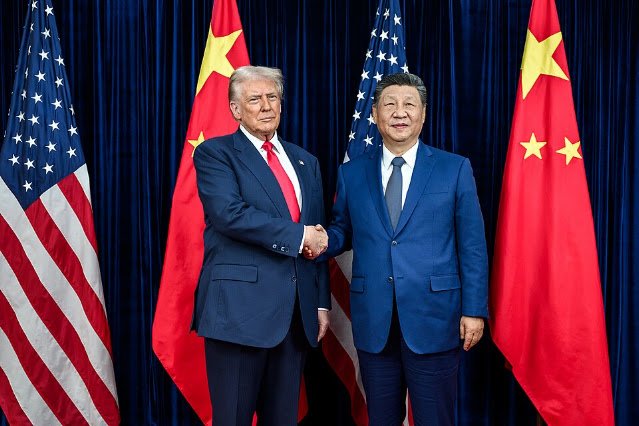
| “U.S. President Donald Trump and Chinese President Xi Jinping shake hands during a meeting as Washington and Beijing discuss key issues, including Taiwan and U.S. arms sales.” ( photo credit: The White House) |
Washington, September 22, 2026: Chinese President Xi Jinping is expected to raise the issue of U.S. arms sales to Taiwan during his upcoming meeting with U.S. President Donald Trump in Washington, according to people familiar with discussions ahead of the summit.
The Taiwan arms issue is expected to be among the sensitive subjects at the Trump-Xi meeting, as Beijing continues to oppose U.S. weapons deliveries to the self-governed island. Three sources familiar with the discussions told Reuters that Chinese officials are likely to point to the 1982 United States-China Joint Communiqué on arms sales to Taiwan.
Beijing Expected to Cite 1982 Agreement
The 1982 communiqué addressed the long-running dispute between Washington and Beijing over American weapons sales to Taiwan. In the document, the United States said it did not intend to maintain a long-term policy of arms sales to Taiwan and stated that it intended to gradually reduce such sales over time.
However, the historical U.S. position also included conditions surrounding the issue. Former President Ronald Reagan stated separately that Washington’s willingness to reduce arms sales was linked to China’s continued commitment to resolving differences with Taiwan peacefully.
This difference in interpretation remains an important part of the dispute between Washington and Beijing.
China Also Seeking Halt to Existing Deliveries
According to the sources cited by Reuters, Beijing is expected to go beyond future weapons purchases and ask Washington to stop deliveries of weapons that Taiwan has already ordered.
China considers Taiwan part of its territory and strongly opposes military cooperation between Taiwan and the United States. Taiwan’s government rejects Beijing’s sovereignty claims and maintains its own democratic system of government.
The issue has become increasingly significant as military activity around Taiwan has increased in recent years. Reuters reported that Chinese military forces have conducted frequent operations around the island, including exercises involving missile launches.
Why the Issue Matters to Washington
The United States does not maintain formal diplomatic relations with Taiwan, but American law requires Washington to provide Taiwan with the means to maintain its self-defence capabilities.
That legal framework has remained a central element of U.S. policy toward Taiwan for decades. It is also one reason why arms sales to Taipei remain a complicated issue in U.S.-China relations.
The Trump administration has already placed a major weapons package for Taiwan on hold. According to recent reporting, the package is valued at around $14 billion. Trump previously described the pending arms sale as a potential negotiating tool in discussions with Beijing.
Taiwan Arms Sales Become Part of Wider Trump-Xi Talks
The Taiwan question is only one of several major issues expected to feature during the summit.
Trade, technology, artificial intelligence and the conflict involving Iran are also important areas of disagreement between Washington and Beijing. The two countries are simultaneously trying to manage economic competition while avoiding a broader deterioration in bilateral relations.
Reuters has reported that China may also offer diplomatic assistance related to the Iran conflict as part of its broader discussions with Washington. The proposal, according to sources familiar with the talks, could form part of Beijing’s effort to seek concessions from the United States on Taiwan.
The discussions therefore come at a time when Washington and Beijing are dealing with several interconnected geopolitical and economic disputes.
Taiwan Remains a Major Point of U.S.-China Tension
For Beijing, Taiwan is regarded as a core sovereignty issue. For Washington, the island is an important part of its broader security relationships in the Indo-Pacific.
The United States has continued to approve military equipment and weapons for Taiwan despite China’s objections. Beijing has repeatedly called for an end to such sales.
The 1982 communiqué remains central to China’s argument because Washington stated in that document that it intended to reduce arms sales to Taiwan. At the same time, the broader U.S. policy framework has continued to allow defensive support for Taipei.
Summit Could Test U.S.-China Relations
Xi’s expected request comes as the Chinese leader prepares for talks with Trump in Washington. The summit is being closely watched because Taiwan, trade and other strategic disputes have the potential to influence the wider relationship between the world’s two largest economies.
Whether the two leaders reach any understanding on Taiwan arms sales remains to be seen. The issue is particularly sensitive because any change in U.S. policy could have implications for Washington’s relationship with Taipei as well as its broader security relationships in Asia.
For now, the reported discussions indicate that Taiwan arms sales are likely to remain one of the most closely watched subjects when Xi and Trump meet this week.