
NASA and SpaceX Prepare to Send New Solar Arrays and 6,300 Pounds of Cargo to Space Station

NASA and SpaceX are preparing a new cargo mission to the International Space Station (ISS), carrying more than 6,300 pounds of scientific investigations, supplies and equipment. The mission will also deliver the final set of new roll-out solar arrays designed to increase the orbiting laboratory’s power-generation capacity.
The flight, designated SpaceX’s 35th Commercial Resupply Services mission for NASA, is scheduled to use a Falcon 9 rocket and an uncrewed Dragon spacecraft. NASA announced a target launch time of 6:33 a.m. Eastern Daylight Time on October 13 from Space Launch Complex 40 at Cape Canaveral Space Force Station in Florida.
The launch schedule can change because of weather, technical checks or other operational requirements. NASA’s latest mission updates should be consulted for confirmation of the actual liftoff.
New Solar Arrays to Boost Space Station Power
One of the mission’s major payloads is the final set of International Space Station Roll-Out Solar Arrays, known as iROSA.
Unlike traditional rigid solar panels, these arrays are designed to roll out after deployment. Their compact configuration allows them to be transported to orbit and installed alongside the station’s existing solar-power infrastructure.
The new arrays are intended to supplement the ISS power system, helping support onboard research, equipment and daily operations. The station relies on electricity for life-support systems, communications, scientific instruments and other essential functions.
The additional power capacity is particularly important as the station continues to host experiments that require reliable electrical supply.
Cargo Includes Experiments for Medical and Materials Research
The Dragon spacecraft will carry a range of scientific payloads in addition to routine supplies for astronauts.
Among the investigations are hardware intended to manufacture artificial retinas in microgravity, research involving three-dimensional heart-tissue models, and studies examining how new types of glass form in space.
The mission will also transport brain organoids—small, laboratory-grown models of brain tissue—that researchers hope can help identify possible treatment targets for neurodegenerative diseases, including Alzheimer’s, Parkinson’s and multiple sclerosis.
Microgravity provides scientists with experimental conditions that differ from those on Earth. Research conducted in orbit can help investigators study biological processes, materials and technologies that may be difficult to examine under normal gravitational conditions.
However, results from space-based experiments must be analysed and validated before their potential medical or industrial applications can be established.
How Dragon Will Reach the International Space Station
Following launch, the Dragon spacecraft is expected to travel to orbit aboard the Falcon 9 rocket. It will then conduct its approach to the space station and dock autonomously with the space-facing port of the Harmony module.
NASA’s published schedule placed docking at approximately 11 a.m. EDT on October 15, subject to operational conditions.
After docking, the crew will unload the supplies and research equipment. The solar arrays will require installation work, including operations involving the station’s robotic systems and astronauts.
The spacecraft is expected to remain attached to the ISS until around mid-November before departing with research materials and cargo returning to Earth.
Why Cargo Missions Matter
Regular cargo flights are essential to maintaining the space station, which has supported scientific research involving international partners for more than two decades.
Resupply missions bring food, replacement components, scientific instruments and other equipment required by the crew. They also allow researchers to send new experiments to orbit and return selected samples for analysis on Earth.
NASA’s commercial resupply programme works with private companies, including SpaceX, to transport cargo to and from the station. These partnerships help sustain the ISS while supporting the development of commercial spaceflight capabilities.
The CRS-35 mission combines routine resupply operations with a significant power-system upgrade and research that could contribute to future advances in medicine and materials science.

NASA’s Curiosity Rover Captures Stunning Dawn Light on Mars
NASA’s Curiosity rover has captured a striking view of dawn on Mars, revealing unusual wind-carved rock formations on the slopes of Mount Sharp under the planet’s early morning light.
The newly released panorama shows distant cliffs known as yardangs, which stand out against the Martian horizon as sunlight begins illuminating the landscape. NASA said the image provides one of the clearest views yet of these distinctive geological formations.
Curiosity Captures Martian Dawn
The panorama was captured by Curiosity’s Mastcam on August 11, 2026, the rover’s 4,982nd Martian day, or sol. The images were taken at around 8:30 a.m. local Mars time and later stitched together to create the wider panorama.
NASA said the image was processed without the usual white balancing used for many Curiosity photographs. That decision preserved the appearance of the early morning scene, including distinctive blue tones in the foreground and the warm colors of the Martian landscape.
The result provides a dramatic look at the transition between darkness and daylight on the Red Planet.
Mysterious Yardangs Draw Scientists’ Attention
The most prominent features in the image are the jagged rock formations known as yardangs. These structures were shaped by wind over extremely long periods and form part of a distinctive geological layer on Mount Sharp.
The yardang layer stretches for approximately 10 miles (16 kilometers) across the northwestern section of Mount Sharp, a mountain that rises about 3 miles (5 kilometers) above the floor of Gale Crater.
Scientists are particularly interested in the layer because its appearance differs from surrounding rocks. NASA said its color, tilted layers and unusual position have raised questions about how it formed.
One possibility is that the material could be linked to ancient volcanic ash, although scientists have not yet determined its exact origin.
What the Rocks Reveal About Ancient Mars
Curiosity has been exploring Mount Sharp since beginning its ascent in 2014. The mountain contains layers of rock that preserve evidence of different periods in Mars’ geological history.
Scientists studying these layers have found evidence that Gale Crater once contained lakes and streams billions of years ago. Over time, the water disappeared, leaving behind minerals associated with a much drier Martian environment.
Studying formations such as the yardangs could help scientists understand how Mars changed from a wetter environment in its distant past to the cold and dry planet seen today.
The research may also help scientists assess whether ancient Mars once had environmental conditions suitable for microbial life.
Curiosity Reaches a Major Milestone
The new image comes shortly after Curiosity reached another milestone during its climb of Mount Sharp.
NASA said the rover has gained about 0.6 miles (1 kilometer) in elevation since beginning its ascent from the floor of Gale Crater. This represents the greatest elevation gain achieved by a rover on Mars.
Curiosity is currently in the second year of its fifth extended mission. The rover is expected to continue travelling through geological layers containing sulfates and carbonates before eventually reaching the yardang layer.
NASA scientists hope Curiosity will reach the base of the yardangs sometime in 2027, potentially allowing the rover to study the formations from much closer.
A New Look at the Red Planet
The latest panorama offers more than a visually striking view of a Martian sunrise. It also gives scientists another opportunity to study the geological history preserved on Mount Sharp.
As Curiosity continues its climb, researchers hope that close-up observations of the unusual rock formations will help answer questions about their origin and the environmental changes that shaped Mars over billions of years.
The rover’s continuing exploration, along with NASA’s other Mars missions, is helping scientists build a clearer picture of the Red Planet’s ancient climate, geology and potential habitability.
Source attribution: NASA/JPL-Caltech/MSSS
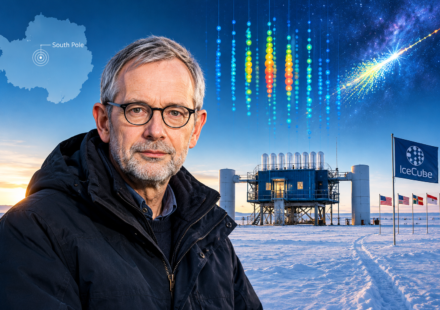
Francis Halzen Wins 2026 Nobel Prize in Physics for IceCube Neutrino
Belgian-American physicist Francis Halzen has won the 2026 Nobel Prize in Physics for his decisive contributions to the IceCube Neutrino Observatory and the discovery of high-energy neutrinos originating from astrophysical sources.
The Royal Swedish Academy of Sciences announced the award on October 6, recognising Halzen's work in turning an unusual idea — using the enormous volume of Antarctic ice to detect elusive cosmic particles — into a powerful new tool for studying the universe.
Halzen's Antarctic idea changed the way scientists study the universe
Neutrinos are electrically neutral subatomic particles that interact extremely weakly with matter. Because they can travel enormous distances without being significantly deflected or absorbed, they can carry information from some of the most violent environments in the universe.
Halzen recognised that the ice beneath the South Pole could be used as a giant detector for these difficult-to-observe particles.
That idea became the foundation of the IceCube Neutrino Observatory, an enormous scientific installation buried deep beneath the Antarctic ice. The observatory occupies roughly a cubic kilometre of ice and contains thousands of light sensors designed to detect flashes produced when neutrinos interact with matter.
IceCube opened a new window on distant cosmic events
The IceCube experiment has allowed researchers to identify high-energy neutrinos coming from outside the Solar System and investigate their possible astrophysical sources.
Unlike light, neutrinos are not electrically charged and therefore are not bent by magnetic fields. This means their arrival direction can provide scientists with a relatively direct indication of where they originated.
Researchers hope such observations can help explain powerful cosmic processes associated with phenomena such as exploding stars, black holes and other extremely energetic environments.
The Nobel Committee said the work has opened the way to a new form of astronomy, using neutrinos as messengers from the distant universe.
A huge detector buried beneath Antarctic ice
IceCube is located at the Amundsen-Scott South Pole Station in Antarctica. Its detection system extends deep into the ice, where sensors monitor the faint flashes of light created by particle interactions.
The project was completed in 2011 after years of development involving an international team of scientists and engineers. The first high-energy neutrinos were subsequently detected, helping establish that some of these particles originate from extremely distant cosmic sources.
The scale of the detector is essential because high-energy astrophysical neutrinos are extremely rare. A vast volume of ice gives researchers a greater chance of capturing the tiny signals produced by their interactions.
Halzen says the biggest discoveries may still be ahead
Halzen, who is 82 and is affiliated with the University of Wisconsin–Madison, said after the announcement that the full scientific potential of the method remains to be explored.
His work has already demonstrated that neutrinos can be used to investigate the universe in ways that conventional astronomical observations cannot. Researchers now hope that continued IceCube observations could reveal more about the sources of these high-energy particles and potentially uncover previously unknown cosmic phenomena.
The Nobel recognition therefore goes beyond a single particle discovery. It honours the development of an entirely different way of observing the cosmos.
Nobel Prize carries 12 million Swedish kronor
The 2026 Nobel Prize in Physics comes with a prize amount of 12 million Swedish kronor, according to the Royal Swedish Academy of Sciences.
Halzen's award also highlights the importance of long-term scientific projects. IceCube required a huge international collaboration, complex engineering in one of the world's harshest environments and years of observations before its scientific potential became clear.
The discovery of high-energy astrophysical neutrinos has now transformed Antarctic ice into one of the world's most unusual astronomical instruments.
For scientists, the next challenge is to determine what other secrets can be revealed by these almost undetectable particles travelling across the universe.

US and German Scientists Win Nobel Medicine Prize for Breakthrough Work on Light and the Brain
Two German scientists and an American researcher have won the 2026 Nobel Prize in Physiology or Medicine for discoveries that transformed scientists' ability to study and control the brain using light.
The Nobel Assembly at the Karolinska Institutet awarded the prize to Karl Deisseroth of the United States and Germany's Peter Hegemann and Georg Nagel for their discoveries concerning light-gated ion channels and optogenetics.
Nobel Prize Recognises a New Way to Study the Brain
The scientists' work led to the development of optogenetics, a technique that allows researchers to control the activity of individual nerve cells using light.
The technology has fundamentally changed neuroscience because it allows researchers to switch specific neurons on or off with remarkable precision. This has helped scientists investigate how brain circuits influence memories, emotions and behaviour.
The Nobel Assembly said optogenetics has opened a new era in neuroscience and provides opportunities to map the brain in ways that were previously difficult to achieve.
Discovery Began With Light-Sensitive Algae
The breakthrough began with research into a tiny single-celled alga called Chlamydomonas.
Peter Hegemann was interested in how the organism detects and moves toward light. Hegemann and Georg Nagel discovered a light-sensitive protein called channelrhodopsin.
When exposed to blue light, the protein opens a channel that allows charged ions to move through the cell, creating an electrical signal. Their work showed that the protein could make other cells respond to light.
Deisseroth Turned the Discovery Into a Brain Tool
Karl Deisseroth and his colleagues took the research a major step further by introducing the gene for channelrhodopsin into nerve cells.
In experiments, researchers were able to use blue light to trigger electrical activity in neurons. Deisseroth later demonstrated that the technique could be used in the brains of living animals.
The resulting method became known as optogenetics, combining genetics with the use of light to control nerve-cell activity.
Potential for Neurological and Psychiatric Research
Optogenetics has become an important research tool for studying brain disorders and neural circuits.
Scientists have used the technique to investigate conditions and processes linked to Alzheimer's disease, Parkinson's disease, epilepsy, addiction, depression and other neurological or psychiatric disorders.
Researchers are also exploring whether optogenetic approaches could eventually help restore vision in people with certain forms of blindness and contribute to other medical treatments. However, many therapeutic applications remain under development.
Three Scientists Share the Prize
Karl Deisseroth is a professor at Stanford University in California. Peter Hegemann is associated with Humboldt University of Berlin, while Georg Nagel has been associated with the University of Würzburg in Germany.
The three laureates will share the Nobel prize money of 12 million Swedish kronor.
The medicine award opens the 2026 Nobel Prize announcements, with the prizes in physics, chemistry, literature, peace and economic sciences to follow during Nobel week.
The recognition of Deisseroth, Hegemann and Nagel highlights how a discovery involving light-sensitive proteins in algae ultimately became a powerful tool for exploring one of science's greatest mysteries: how the human brain works.
Source attribution: Nobel Prize, Karolinska Institutet, Reuters, Associated Press, Nature and Stanford/HHMI.

Russia Investigates Suspected Pneumonic Plague Case as Health Officials Move to Contain Fears
Reports of a suspected pneumonic plague case in Russia's Siberian Irkutsk region have triggered concern over a possible new infectious disease outbreak. However, health authorities have not confirmed that plague caused the death of the laboratory worker at the centre of the reports.
The case involves a 28-year-old employee of the Irkutsk Anti-Plague Research Institute in Shelekhov who died after developing severe pneumonia. Local reports have linked her illness to a possible laboratory exposure, including claims that a test tube containing plague bacteria may have been broken. Those details have not been independently confirmed.
Russian health authorities have instead described the illness as pneumonia of unknown aetiology. Rospotrebnadzor has said testing did not detect microorganisms associated with the woman's professional activities and that the epidemiological situation in Irkutsk and Shelekhov remained stable.
Why the case has attracted attention
The incident is unusual because the woman reportedly worked at an institute specifically involved in research and surveillance related to plague.
Following her illness and death, nearly 200 people who may have been exposed were reportedly placed under medical observation. Authorities have also introduced precautionary measures at medical facilities in the region.
The United States is monitoring the situation as well. A US State Department official said Washington was aware of reports of a fatal suspected pneumonic plague case and was working with the Centers for Disease Control and Prevention and other agencies to monitor developments. The official also stressed that many details remained unconfirmed.
What is pneumonic plague?
Plague is a bacterial disease caused by Yersinia pestis. The bacterium naturally circulates mainly among small mammals and their fleas.
There are three major clinical forms of plague: bubonic, pneumonic and septicemic.
Pneumonic plague affects the lungs and is considered the most serious form because it can spread from an infected person through respiratory particles. Symptoms can include fever, weakness, headache, breathing difficulty, chest pain and coughing, sometimes with bloody or watery sputum.
Unlike Covid-19, however, pneumonic plague is caused by a bacterium rather than a virus. That difference is medically important because bacterial infections such as plague can be treated with appropriate antibiotics.
Why this is not another Covid
The word "plague" can immediately evoke memories of historic pandemics, while the Covid-19 pandemic created widespread fear about respiratory infections.
But the present Russian situation should not automatically be compared with Covid.
Covid-19 was caused by a novel coronavirus that spread efficiently across countries and populations, eventually producing a global pandemic.
Pneumonic plague is a different disease with a different pathogen and different treatment. Although it can spread between people when the infection is in the lungs, transmission generally requires exposure to infectious respiratory particles from an infected person. Early recognition and antibiotic treatment are critical.
The WHO says untreated pneumonic plague can become fatal very rapidly. At the same time, it says antibiotics can effectively treat the infection when treatment begins early.
The biggest reason not to panic
The most important fact in the Russian case is that plague has not been publicly confirmed as the cause of death.
Rospotrebnadzor has reported pneumonia of unknown origin and said expanded testing did not identify microorganisms connected to the woman's professional activities. People identified as contacts are being monitored as a precaution.
That means the current situation should be viewed as a public-health investigation rather than evidence of a new plague pandemic.
Precautionary quarantine and medical observation do not necessarily mean that an outbreak is occurring. Such measures are designed to identify potential infections quickly and prevent transmission if a dangerous pathogen is eventually confirmed.
What happens if pneumonic plague is confirmed?
If laboratory testing eventually confirms Yersinia pestis, health authorities would be expected to identify close contacts, monitor them for symptoms and provide appropriate medical treatment or preventive measures where necessary.
The disease is serious, but modern medicine has changed the outlook dramatically compared with historical plague outbreaks.
The WHO says plague can be diagnosed through laboratory testing of appropriate samples and treated with antibiotics. For pneumonic plague, early treatment is particularly important because the illness can progress rapidly.
Public should rely on confirmed information
The Russian case also highlights how quickly uncertainty surrounding a serious disease can fuel rumours.
Reports of a possible laboratory exposure, hospital precautions and people being placed under observation have generated concern, but none of these developments by themselves establish that a community-wide plague outbreak is underway.
For now, the available evidence supports a cautious approach: authorities are investigating a serious and unusual death, contacts are being monitored and additional testing is being carried out.
Until laboratory confirmation is available, describing the incident as a confirmed Russian plague outbreak would be premature.
The key message is therefore simple: pneumonic plague is a serious disease, but it is not Covid-19, it is treatable when diagnosed early, and the suspected Russian case has not been officially confirmed as plague.
Source attribution: World Health Organization (WHO), US State Department/CDC, Rospotrebnadzor, Reuters, AFP, NDTV, Al Jazeera and other contemporary reports.