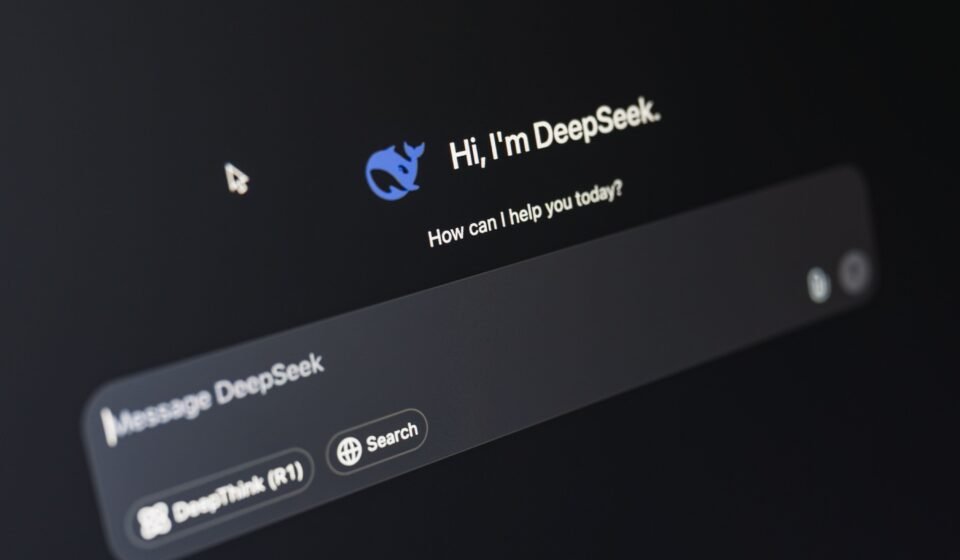

The United States has ordered federal civilian government agencies to remove products and services associated with Chinese artificial intelligence company DeepSeek from their information technology systems, citing potential national security and data protection risks.
The directive, issued by the US Department of Homeland Security (DHS), also prohibits federal civilian agencies from purchasing DeepSeek products and services, including certain third-party offerings built using the Chinese AI model. The order was made public on October 19 and is scheduled for publication in the Federal Register on October 20.
The decision marks another step in Washington’s efforts to restrict the use of technology it considers a potential security risk. Officials have warned that sensitive government information could be exposed if DeepSeek products are used by government employees or contractors.
Why the US Is Restricting DeepSeek
The Department of Homeland Security identified several potential risks associated with the technology. These include the possibility that sensitive information could be transferred to China, that information about US individuals or government agencies could be used to generate actionable intelligence, and that the AI models could contain malware or other security vulnerabilities.
The concerns outlined in the order relate to potential risks rather than publicly established evidence that every DeepSeek product has transferred government data or contains malicious software.
The department has also instructed federal agencies to monitor internet traffic entering and leaving government websites to help identify possible security threats associated with the technology.
The move follows a review involving the Federal Acquisition Security Council, which examines potential risks in government technology supply chains.
Ban Extends Beyond DeepSeek’s Own Products
The restriction is broader than a prohibition on directly accessing DeepSeek’s chatbot. It also covers products developed by affiliated entities and third-party services that use implementations of DeepSeek models.
This means government agencies may need to assess software and services that incorporate the technology even when DeepSeek is not the company directly providing the final product.
The directive applies to federal civilian agency IT systems and procurement. It does not establish a blanket nationwide ban preventing private businesses or individual users in the United States from using DeepSeek.
Federal contractors and technology suppliers serving government agencies may also need to review whether their offerings fall within the restrictions.
DeepSeek and the US-China AI Competition
DeepSeek attracted international attention after its AI models demonstrated capabilities that challenged assumptions about the cost and resources required to develop competitive AI systems.
Its emergence intensified competition between Chinese and American technology companies, particularly over advanced AI models, computing resources and the infrastructure needed to train and operate them.
For Washington, the latest order is part of a wider debate about whether technologies developed in countries viewed as strategic competitors should be allowed to operate inside sensitive government systems.
China has previously criticised US restrictions on Chinese technology companies, arguing that such measures reflect political and economic competition. The latest order adds another point of tension to the relationship between the two countries.
Other US Restrictions on Chinese Technology
The DeepSeek directive follows earlier restrictions imposed by several US government departments and state governments on the use of the Chinese AI service on official devices.
The US Navy and Department of Commerce had previously taken steps to restrict DeepSeek on government systems. States including New York, Tennessee and Virginia have also introduced restrictions on its use in certain official settings.
Washington has pursued other measures affecting Chinese technology, including action involving telecommunications equipment, drones and electronic devices. These policies reflect concerns about data security, supply-chain dependence and the potential exposure of sensitive information.
The measures differ in their scope and legal basis, so the DeepSeek order should not be interpreted as an automatic prohibition on every Chinese-made technology product in the United States.
What the Decision Means for Government AI Use
The directive highlights the growing importance of security reviews as governments adopt AI tools for research, administration, document processing and other official tasks.
AI systems can process large volumes of information, including material that may be confidential or sensitive. Government agencies therefore face questions about where data is stored, who can access it, how models are maintained and whether external services introduce additional vulnerabilities.
The US order requires affected agencies to remove covered products and restrict future procurement. Agencies and their suppliers will need to identify relevant services and ensure their systems comply with the directive.
The decision may also influence how public institutions evaluate AI products from foreign suppliers, particularly when those tools are connected to government networks or handle sensitive information.
What Happens Next?
The order establishes a federal restriction on DeepSeek-related technology within civilian government IT systems and procurement. Its practical impact will depend on how agencies identify affected products, implement removal measures and review services supplied by contractors.
The directive does not itself prove that DeepSeek has improperly accessed US government information. Instead, it reflects the government’s assessment that the potential security risks justify restricting the technology in federal civilian systems.
As competition over artificial intelligence intensifies, government agencies are likely to face continued pressure to balance the benefits of advanced AI tools against cybersecurity, data protection and national security requirements.