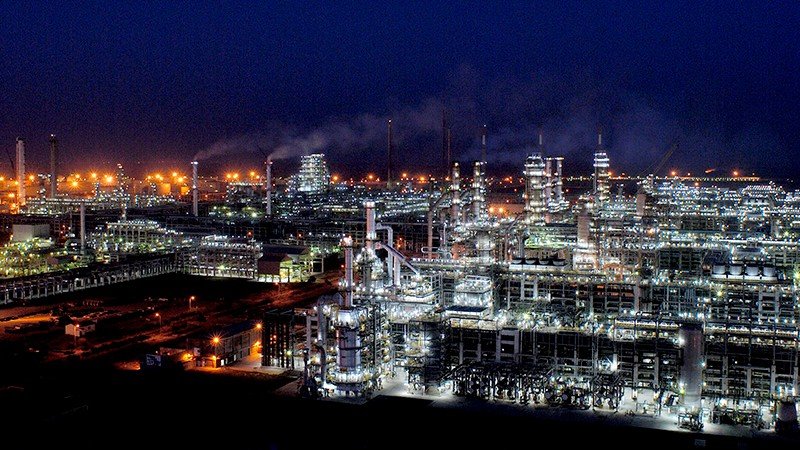

U.S. Secretary of State Marco Rubio’s visit to Jamnagar, Gujarat, is drawing international attention as Washington looks to strengthen energy cooperation with India and expand markets for Venezuelan crude oil. The city is home to Reliance Industries’ massive refining complex, operated by billionaire industrialist Mukesh Ambani. The visit highlights the growing importance of India’s refining capacity amid global energy-market uncertainty.
Rubio’s itinerary includes discussions with Indian officials and business leaders, with his Jamnagar stop placing energy cooperation and commercial investment at the centre of his India visit.
Why Is Rubio Visiting Jamnagar?
A key objective is to discuss whether Reliance can process more Venezuelan crude oil. The United States is seeking additional markets for Venezuelan oil as it works to increase production and diversify global energy supplies.
Rubio said he planned to discuss increased Venezuelan oil processing with Reliance. India’s large refining industry could help convert additional crude supplies into fuels for domestic and international markets.
The discussions come at a time when conflicts and disruptions affecting major energy-producing regions and shipping routes have increased concerns about oil availability and prices. Expanding supply from different sources could help ease some pressure, although Venezuelan oil alone would not eliminate wider global supply risks.
Jamnagar’s Strategic Importance
Jamnagar is home to the world’s largest single-site oil-refining complex, operated by Reliance Industries. The facility has a combined crude-processing capacity of approximately 1.4 million barrels per day, making it a major part of the international petroleum supply chain.
The complex processes crude oil into products such as petrol, diesel and aviation fuel, as well as petrochemical feedstocks used in manufacturing. Its scale and technical capabilities allow it to handle a wide variety of crude grades, including heavier oil that some refineries may find difficult to process efficiently.
That capability is particularly relevant to Venezuela, whose oil production includes heavy crude. A refinery able to process such supplies can offer a potential market as companies and governments reassess their energy sourcing strategies.
The Venezuela Oil Connection
Washington is looking for buyers as it seeks to expand Venezuelan oil production. Reliance’s ability to process heavy crude makes it a significant potential partner in that effort.
For the United States, encouraging additional processing could support its wider energy strategy and help diversify the destinations for Venezuelan oil. For India, the discussions could create opportunities for its refining industry, while decisions about crude purchases would still depend on commercial terms, availability, shipping costs and government policies.
The issue also intersects with India’s existing energy relationships. India has been a major purchaser of Russian crude since the Russia-Ukraine war began in 2022. U.S. policy towards Russian oil purchases has been a source of tension between Washington and New Delhi, making energy sourcing an important part of their broader economic discussions.
Mukesh Ambani and India-U.S. Business Ties
Rubio’s planned meeting with Mukesh Ambani also highlights Reliance Industries’ growing significance in international energy and investment discussions.
Reliance operates across multiple sectors, including refining, petrochemicals, telecommunications, retail and new energy. Its Jamnagar complex is central to its energy business and gives the company an important role in global refined-fuel markets.
The company is also linked to a proposed major refinery project in Brownsville, Texas. U.S. President Donald Trump announced a proposed $300 billion project backed by Reliance in March, making the company relevant to Washington’s efforts to attract large-scale energy investment.
Rubio’s visit therefore brings together several issues: energy security, investment, trade and the role of major private companies in strengthening economic ties between the two countries.
What Does the Visit Mean for India-U.S. Relations?
The Jamnagar stop is part of a wider effort to promote commercial cooperation between India and the United States. Rubio’s India visit also includes engagement with Indian External Affairs Minister S. Jaishankar and business representatives.
The two countries have significant economic and strategic interests, but their relationship has also faced disagreements over trade policy, tariffs and energy imports. Talks involving Reliance and the refining sector offer a practical area for cooperation even as wider negotiations continue.
The outcome will depend on whether the discussions lead to concrete commercial arrangements, including any increase in Venezuelan crude processing or additional investment. A visit alone does not confirm that new supply agreements have been finalised.
A Refinery With Global Reach
Jamnagar’s importance extends well beyond Gujarat. Its refining capacity connects Indian industry with crude suppliers and fuel buyers across international markets. That makes the city relevant to discussions about oil prices, supply disruptions and the diversification of energy sources.
Rubio’s visit underlines how energy infrastructure and private-sector investment can shape international diplomacy. For India and the United States, the immediate focus is on whether cooperation with Reliance can support energy supply objectives while creating opportunities for trade and investment.
Disclaimer: This article is based on publicly reported information available as of October 21, 2026. Planned discussions and proposed projects should not be interpreted as confirmation that a new agreement has been finalised.