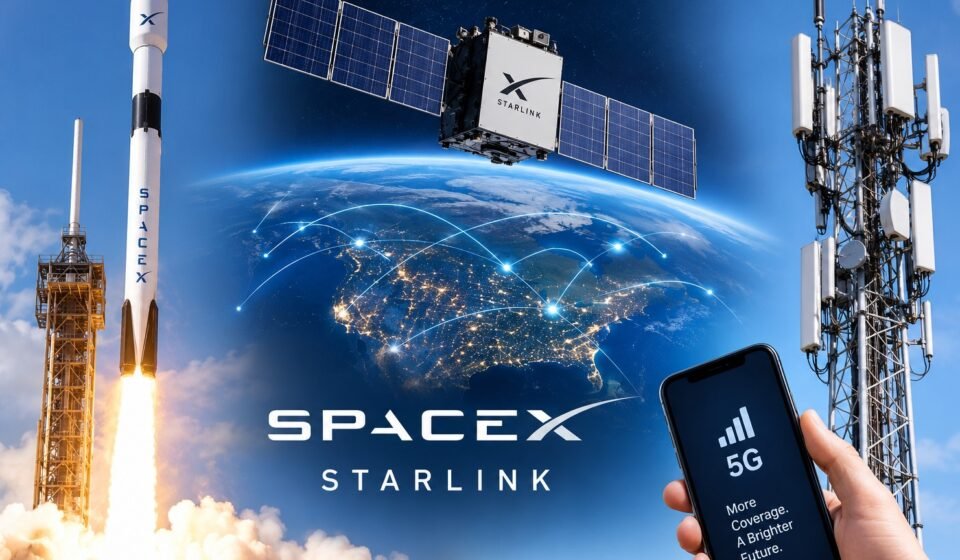

SpaceX is exploring a major expansion of its telecommunications business, with plans to obtain access to tens of thousands of cellular sites across the United States. The initiative could help the company combine its satellite technology with conventional mobile infrastructure and establish a stronger presence in the American wireless market.
The company, led by Elon Musk, is reportedly discussing arrangements that could provide access to at least 80,000 cell sites. If the plan advances, SpaceX could use existing infrastructure to accelerate the development of a nationwide mobile service rather than depending entirely on newly constructed facilities. The negotiations have not yet resulted in a publicly confirmed agreement covering all the proposed sites.
An Expansion Beyond Satellite Internet
SpaceX is widely associated with rockets, spacecraft and Starlink, its satellite-based internet service. Starlink uses satellites in low Earth orbit to deliver connectivity to customers, including people living in areas where conventional broadband infrastructure is difficult or expensive to establish.
Expanding into the wider mobile market would represent a different kind of challenge. Customers increasingly expect reliable service while travelling, indoors and in crowded urban areas. Meeting those expectations requires a combination of radio equipment, network capacity, suitable spectrum and strategically positioned infrastructure.
A larger ground-based network could help SpaceX address these requirements. Instead of relying exclusively on satellite connections, the company could combine signals from space with equipment installed at existing cellular sites.
This approach could eventually support a broader range of mobile connectivity options. However, the actual performance and availability of any future service would depend on the network design, spectrum resources and investment SpaceX commits to the project.
Why Existing Cell Sites Matter
Cellular sites provide the physical locations where wireless operators install antennas and other communications equipment. Their placement helps determine how effectively a network can serve homes, businesses, roads and densely populated neighbourhoods.
Building thousands of new locations can be expensive and time-consuming. Companies must identify suitable land, obtain permissions, arrange power and backhaul connections, and install equipment before a site can contribute to a functioning network.
Access to established sites could reduce some of these obstacles for SpaceX. Depending on the terms of any agreements, the company might be able to deploy equipment at selected locations without having to develop every site independently.
The reported target of 80,000 locations illustrates the potential scale of the project. Nevertheless, gaining permission to use a tower does not automatically mean that a site is ready for service. Additional equipment, network connections, regulatory compliance and technical integration may still be necessary.
Infrastructure Companies Could Play a Key Role
Cell-tower operators could become important partners if SpaceX moves forward. Companies such as Crown Castle and American Tower own or manage infrastructure that wireless providers use to extend their coverage.
Crown Castle has emerged as a company involved in discussions related to the proposed expansion. Its chief executive, Christian Hillabrant, has indicated that the company is speaking with multiple parties about potential leasing opportunities, without publicly confirming a specific agreement with SpaceX.
For infrastructure providers, new customers could create additional demand for existing towers. Leasing arrangements can allow tower operators to generate revenue from their assets while enabling telecommunications companies to expand without constructing an entirely new network from the ground up.
However, the commercial outcome remains uncertain. The final number of locations, rental terms, equipment requirements and timing would depend on negotiations between the companies involved.
Competition in the American Wireless Market
SpaceX’s ambitions could increase competitive pressure on established US mobile operators, including AT&T, Verizon and T-Mobile. These companies already operate extensive networks and have spent years investing in spectrum, infrastructure and customer services.
A new entrant would need to offer customers a convincing reason to switch. Coverage, connection quality, pricing, compatible devices and customer support would all influence its ability to attract subscribers.
SpaceX could have an advantage in connecting satellite and terrestrial technologies under one business. Satellite connectivity may be particularly valuable in remote areas, while ground-based sites could provide additional capacity where large numbers of people use mobile services.
Even so, combining the two systems on a nationwide scale would be technically demanding. SpaceX would have to ensure that customers can maintain dependable connections while moving between coverage areas and that the network can handle demand during busy periods.
The company would also face competition from existing carriers that are continuing to develop their own networks and explore satellite-based connectivity.
A Significant Financial Commitment
Building a nationwide wireless service would require substantial spending. Industry estimates cited in recent reporting suggest that a terrestrial network of this scale could cost more than $80 billion and take years to develop.
The final investment would depend on how many sites SpaceX leases, how much equipment each location needs, the available spectrum and the speed of deployment. Using existing towers could reduce some construction costs, but it would not remove the expense of operating a large communications network.
SpaceX would also need to consider ongoing costs, including maintenance, power, network management and upgrades as technology and customer demand change.
For a company involved in space launches, satellite deployment and internet services, the challenge will be balancing a new telecommunications venture with its existing investment commitments.
What the Plan Could Mean for Consumers
If SpaceX establishes a competitive mobile service, American consumers could eventually have another option when choosing a wireless provider. Competition can encourage companies to improve coverage, develop new services and reconsider pricing.
However, it is too early to predict whether the proposed network would lead to lower bills or better connectivity. Those outcomes would depend on the service SpaceX ultimately delivers, the locations it covers and the response from established operators.
For now, the reported discussions signal an ambition rather than a completed nationwide rollout. The next important developments will be confirmation of infrastructure agreements, details about deployment and evidence that SpaceX can deliver a reliable service at scale.
The project could broaden SpaceX’s role in telecommunications, but turning its ambitions into a functioning nationwide network will require years of planning, technical execution and investment.