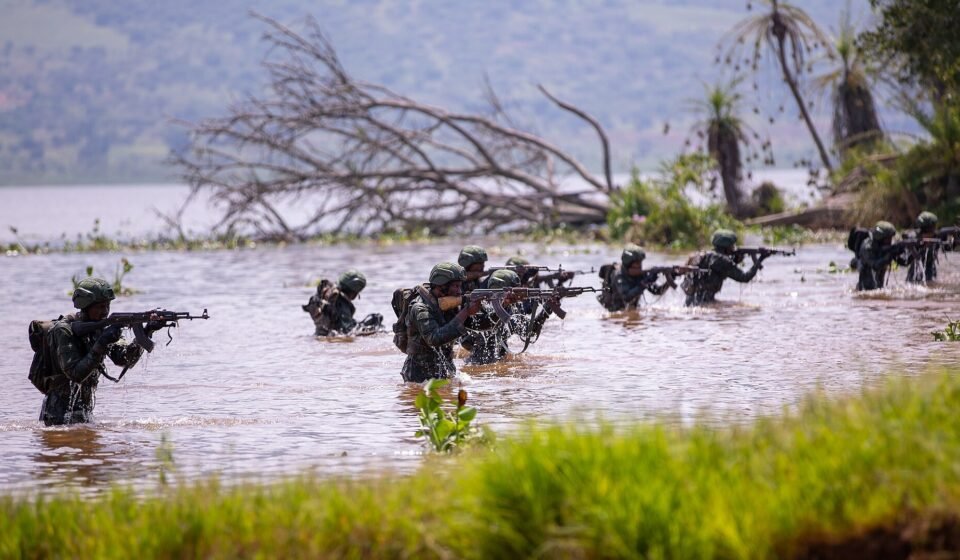

The United States has imposed new sanctions on Rwanda’s Ministry of Defence and a Rwandan financial institution, intensifying pressure on Kigali over the continuing conflict in eastern Democratic Republic of the Congo.
The US Treasury Department announced the measures on October 28, identifying the Ministry of Defence and Zigama Credit and Savings Society as entities allegedly involved in supporting the March 23 Movement (M23), an armed group operating in eastern Congo.
Washington said the action was intended to hold Rwanda accountable for commitments made under the US-brokered Washington Accords for Peace and Prosperity. The agreement, signed by the leaders of Rwanda and the Democratic Republic of the Congo in December 2025, was intended to advance peace and encourage regional economic cooperation.
The latest sanctions come as fighting continues in eastern Congo despite diplomatic initiatives. Their announcement signals renewed US efforts to pressure the parties to implement the agreement and address the security crisis affecting communities across the region.
Why Washington Imposed the Sanctions
The US Treasury Department alleges that Rwanda’s Ministry of Defence has played a central role in providing military and logistical support to M23.
According to the department, Rwanda’s security apparatus has deployed troops in North and South Kivu provinces and provided the armed group with equipment, supplies, training and operational assistance. Washington says this support has helped M23 capture territory, including important population centres and mineral-producing areas.
Rwanda’s government has disputed allegations that it backs M23, while the conflict has involved competing security claims and accusations between the countries.
The US government has presented the new measures as an effort to enforce the Washington Accords and push Rwanda to end its alleged support for the armed group. Treasury Secretary Scott Bessent said Rwanda must halt that support and withdraw its troops from eastern Congo. These statements represent the US government’s position; the sanctions announcement does not independently resolve every disputed claim about responsibility for the conflict.
Financial Institution Also Included
The sanctions extend beyond Rwanda’s defence establishment to Zigama Credit and Savings Society, a financial institution that serves Rwanda’s security services.
The Treasury Department alleges that Zigama facilitated payments for weapons, ammunition, military equipment, travel and training connected to Rwanda’s defence forces. It also accused the institution of facilitating transactions linked to M23 and the group’s political organisation, the Congo River Alliance.
Washington further alleged that the institution helped move gold originating from areas under M23 control to Kigali, Rwanda’s capital.
These allegations are significant because sanctions targeting financial institutions can affect the channels through which money moves between military organisations, suppliers and commercial entities. The precise impact will depend on the transactions involved and the extent to which banks and other businesses have dealings with the designated parties.
What the Sanctions Mean in Practice
Under the US measures, property and financial interests belonging to the designated entities that fall within US jurisdiction, or are held or controlled by US persons, must generally be blocked and reported.
US persons are generally prohibited from conducting transactions involving blocked property unless an applicable exemption or authorisation permits them. The restrictions can also create risks for businesses and financial institutions that knowingly engage in prohibited dealings with designated entities.
The measures may therefore affect access to US-linked financial services, payments and commercial relationships. Companies operating internationally may review their exposure to the sanctioned institutions and entities to ensure compliance with US requirements.
However, the sanctions do not amount to a blanket prohibition on every transaction involving Rwanda or its economy. Their scope depends on the designated parties, the applicable sanctions rules and any licences or exemptions issued by US authorities.
Eastern Congo’s Conflict Remains a Regional Security Challenge
The conflict in eastern Congo has involved M23 and other armed groups, Congolese security forces and regional actors. North and South Kivu have experienced repeated fighting, territorial changes and severe disruption to civilian life.
M23 captured Goma, the capital of North Kivu, and Bukavu, the capital of South Kivu, during its major advance in early 2025. The fighting has affected communities near the borders with Rwanda and other neighbouring countries, while control over mineral-rich areas has added an economic dimension to the conflict.
International organisations and Western governments have accused Rwanda of supporting M23, an allegation Kigali disputes. The group has also faced accusations of serious human rights abuses, including unlawful killings, detention and forced displacement.
The continuing violence has made it difficult to translate diplomatic agreements into lasting changes on the ground. Civilians remain vulnerable to renewed fighting, loss of livelihoods and displacement when armed groups contest territory.
Washington Accords Face a Difficult Test
The Washington Accords were intended to provide a framework for reducing tensions between Rwanda and the Democratic Republic of the Congo while opening opportunities for trade and investment.
The agreement also sought to encourage greater transparency in regional mineral supply chains and support economic development in the Great Lakes region of Africa.
The latest sanctions highlight the gap between those objectives and the situation on the ground. Washington’s decision to target Rwanda’s defence ministry and a financial institution indicates that it is prepared to use economic restrictions to press for compliance with the agreement.
Yet sanctions alone may not be sufficient to end the conflict. Their effectiveness will depend on whether they change the calculations of the parties involved, whether enforcement can limit access to financial and material support, and whether diplomatic efforts produce verifiable security commitments.
The situation also presents challenges for regional governments and international partners seeking to prevent further escalation while protecting civilians.
Potential Consequences for Rwanda and the Region
The new restrictions could increase compliance costs for businesses with exposure to the designated entities. Financial institutions may strengthen screening procedures, while suppliers and commercial partners may review transactions that could create sanctions risks.
For Rwanda, the measures add pressure at a time when the country is facing scrutiny over its role in the eastern Congo conflict. The effect on its broader economy will depend on how far the sanctions influence international financial relationships and whether additional measures follow.
For the Democratic Republic of the Congo, the decision may provide diplomatic support for its calls for Rwanda to end alleged military involvement in the east. However, the announcement does not guarantee an immediate withdrawal of forces or a reduction in fighting.
The humanitarian consequences remain a central concern. Any sustainable settlement will need to address civilian protection, displacement, security arrangements and the conditions necessary for communities to return safely to their homes.
What Happens Next?
The immediate question is whether the sanctions will prompt changes in the activities identified by Washington and encourage implementation of the peace agreement.
Further developments may include diplomatic engagement, compliance measures by international financial institutions and additional efforts to monitor security conditions in eastern Congo.
The US action increases the economic and political pressure on Rwanda, but it remains one part of a wider effort to resolve the conflict. Progress will depend on the conduct of the parties, regional cooperation and whether diplomatic commitments are translated into verifiable action.
The bottom line: Washington has expanded its sanctions response by targeting Rwanda’s Ministry of Defence and Zigama Credit and Savings Society over alleged support for M23. The move raises the stakes for implementation of the Washington Accords, but its effect on fighting and civilian safety remains uncertain.