
A fire at a nuclear research laboratory in South Carolina triggered an emergency response on Wednesday evening, prompting officials to restrict access to a major federal complex with a history of producing materials for US nuclear weapons.
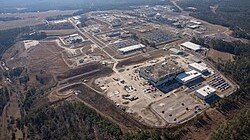
The fire broke out at Savannah River National Laboratory, located inside the Savannah River Site near Aiken. Authorities declared a site-area emergency at approximately 5:39 p.m. local time on October 28. The fire was subsequently extinguished, but precautionary measures remained in place as officials assessed the incident and its potential implications.
Employees in affected areas who were not involved in emergency response or shutdown operations were instructed to shelter in place. Authorities also restricted incoming traffic at site entrances and limited nearby rail, river and air movements while response operations continued.
Officials reported no indication of contamination beyond the site’s boundaries. However, local reporting cited an emergency dispatch describing an unfiltered, ground-level radiological release associated with the incident. The full technical details and the amount, if any, of radioactive material released had not been established in the available reports.
Fire Triggers Precautionary Measures
The incident prompted a coordinated response involving Savannah River Site officials and relevant state and local agencies.
The restrictions were designed to control access to the affected area while emergency personnel assessed the situation. Employees not directly involved in the response were sheltered as a precaution, while incoming traffic was stopped at site entrances.
Although the fire was reported to have been extinguished, the emergency response reflected the additional precautions required at facilities that handle nuclear materials and conduct radiological research.
Officials said there was no reported contamination outside the site. That statement is important, but it does not establish every detail about what happened inside the laboratory. Further information about the cause of the fire, the materials involved and the extent of any release would be needed to provide a complete account.
Why the Savannah River Site Matters
The Savannah River Site is a large federal complex covering approximately 310 square miles across parts of Aiken, Barnwell and Allendale counties in South Carolina.
Established during the early 1950s, the facility originally produced materials used in the US nuclear weapons programme, including plutonium-239 and tritium. Its work supported America’s nuclear arsenal during the Cold War.
The complex’s mission subsequently evolved. Today, its activities include environmental cleanup, nuclear waste management, research and development, and the management of nuclear materials. Some operations continue to support US national security and nuclear deterrence.
Savannah River National Laboratory conducts research related to nuclear materials, environmental management and technologies associated with the site’s broader mission.
The location’s history explains why even a fire confined to a single room can prompt heightened precautions. At a facility handling specialised materials, emergency teams must assess not only the fire itself but also the possibility of contamination, exposure and disruption to sensitive operations.
However, the site’s historical role in nuclear weapons production does not mean the latest incident involved a nuclear weapon or an explosion. No such conclusion is supported by the available reports.
What Is Known About Radiation Concerns?
The distinction between an emergency at a nuclear facility and a confirmed hazard to the surrounding population is important.
The reported emergency involved a fire at the laboratory and a response that included restrictions and precautionary sheltering. Local reporting also described a possible radiological release at ground level, while officials reported no indication of contamination outside the site’s boundaries.
These statements do not necessarily conflict: a release or suspected release inside a controlled facility does not automatically mean radioactive material has reached surrounding communities.
Nevertheless, a definitive assessment would require further information about the materials involved, measurements taken by monitoring teams and the results of any environmental sampling.
As of the latest available reports, there was no confirmed indication of contamination beyond the site. Residents should rely on official updates for any instructions concerning access, travel or public safety.
Potential Impact on Workers and Nearby Communities
The immediate concern is the safety of workers in the affected area and the prevention of any spread of hazardous material.
Sheltering employees and restricting entry can help emergency teams manage a developing situation without unnecessary movement through potentially affected areas. Temporary transport restrictions can also provide space for emergency vehicles and reduce complications during response operations.
For nearby communities, the key question is whether monitoring and subsequent assessments continue to show that the incident remained contained within the facility.
The incident may also lead to a review of emergency procedures, fire protection systems and the handling of materials in the affected laboratory area. Such reviews would be routine possibilities after an incident of this kind, rather than evidence that any specific safety failure has already been established.
The available reporting did not establish the cause of the fire, whether anyone was injured or whether laboratory operations would face a prolonged shutdown.
What Happens Next?
The next important developments will be the findings of the site’s investigation and any additional information released about the reported radiological event.
Officials may need to establish how the fire started, what equipment or materials were involved, whether any radioactive material was released and what monitoring detected inside and outside the affected facility.
The results will help determine whether further protective measures are necessary and whether normal operations can safely resume.
For now, the confirmed picture remains limited: a fire occurred at Savannah River National Laboratory, an emergency response was activated, precautionary restrictions were imposed, and officials reported no indication of contamination beyond the site’s boundaries.
For now, the confirmed picture remains limited: a fire occurred at Savannah River National Laboratory, an emergency response was activated, precautionary restrictions were imposed, and officials reported no indication of contamination beyond the site’s boundaries.