
Poland has called for an urgent ceasefire in the Black Sea to allow grain shipments from both Ukraine and Russia to move safely, warning that people in food-importing countries cannot afford prolonged disruption to one of the world’s most important agricultural trade routes.
Polish Foreign Minister Radosław Sikorski made the appeal during the G20 foreign ministers’ meeting in Atlanta, United States. He argued that a rapid agreement on safe maritime passage could help ensure grain reaches vulnerable populations, particularly across developing countries that depend on international food supplies.
Sikorski also stressed that Ukraine must be included in any diplomatic effort to end Russia’s war, which began with Moscow’s full-scale invasion in February 2022. He said European countries should have a role in negotiations rather than leaving decisions about the conflict entirely to other powers.
Why the Black Sea Matters to Global Food Supplies
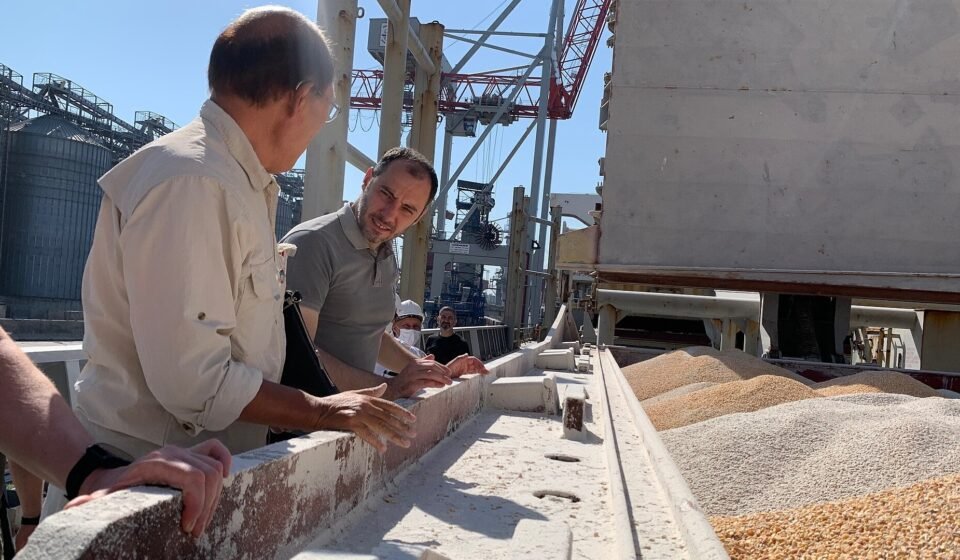
The Black Sea is a crucial corridor for agricultural exports from Russia and Ukraine, two major suppliers of grain to international markets. Shipments passing through the region help feed populations in parts of Africa, the Middle East and Asia.
The war has made commercial shipping increasingly difficult. Attacks on ports and vessels, alongside broader security threats, have raised concerns about whether cargoes can reach international buyers safely and on time.
When grain exports are interrupted, the consequences can extend well beyond the countries directly involved in the conflict. Importing nations may have to seek alternative suppliers, compete for available cargoes or pay more for transport and insurance.
Lower-income countries are particularly vulnerable because food often represents a large share of household spending. A sustained increase in grain prices can put pressure on family budgets and government food-assistance programmes.
Sikorski’s proposal is therefore not simply a regional security initiative. It also addresses the wider humanitarian and economic consequences of the war.
Sikorski Says Ukraine Must Be Part of Any Peace Effort
The Polish foreign minister argued that a ceasefire should not be treated as a substitute for resolving the underlying conflict.
He maintained that Ukraine must participate in negotiations concerning its future and that European governments should be involved in decisions affecting the continent’s security.
His position reflects Poland’s broader approach to Russia’s invasion. Warsaw has consistently supported Ukraine and argued that a durable settlement must take account of Ukrainian sovereignty and security.
Sikorski also called for a fair end to the war before Russia is allowed to resume energy sales to Europe on the previous scale. Russia once supplied a substantial share of Europe’s imported energy, but the invasion prompted European governments to reduce their dependence on Russian supplies.
The proposal highlights a continuing disagreement over sanctions and economic relations: whether restrictions should remain in place until a political settlement is achieved or be eased as part of negotiations.
Russia’s Position Remains a Major Obstacle
A Black Sea ceasefire would require agreement on the conditions governing civilian shipping, including how vessels could travel safely through waters affected by the conflict.
The proposal faces significant challenges because Russia and Ukraine remain adversaries, and both sides have military and strategic interests in the region. A commitment to protect grain shipments would need practical arrangements that reduce the risk of attacks and establish confidence that commercial vessels would not become targets.
Ukraine has indicated that it is ready to consider a limited ceasefire covering food shipments, according to a statement by Ukrainian Foreign Ministry spokesperson Heorhii Tykhyi reported on October 30. He said countries dependent on Black Sea supplies could help encourage Russia to agree to such an arrangement.
However, a proposal or expression of readiness does not mean a ceasefire has been agreed. Russia’s acceptance and the details of any enforcement or monitoring system would be essential to putting such an arrangement into effect.
Without a workable agreement, shipping companies are likely to remain cautious about operating in high-risk areas.
Food Prices and Shipping Costs Could Be Affected
A successful ceasefire could improve confidence among shipowners, insurers and agricultural traders. If commercial vessels could operate with fewer security risks, transport disruptions might ease and more grain could reach buyers.
However, a ceasefire would not automatically bring food prices down. Global grain prices are also influenced by harvests, weather conditions, fuel costs, currency movements, export restrictions and demand.
Shipping insurance is another important factor. When vessels face a greater risk of attack, insurance premiums can rise, increasing the cost of transporting cargo. Those expenses may eventually be reflected in the prices paid by importers and consumers.
Analysis: If a Black Sea truce were implemented and sustained, it could help reduce some of the uncertainty surrounding grain exports. That would be particularly important for countries with limited financial resources to absorb higher import costs. But any lasting improvement would depend on the ceasefire’s scope, compliance by both sides and the wider military situation.
Poland Also Seeks a Bigger Role in the G20
The Atlanta meeting has brought another diplomatic issue into focus: Poland’s ambition to become a full member of the G20.
The United States has supported the idea, with Secretary of State Marco Rubio arguing that Poland’s economic development and growing international influence would strengthen the group. Sikorski said he welcomed the proposal and had discussed it with representatives of several member countries.
Russian Foreign Minister Sergey Lavrov criticised Poland’s invitation to the meeting, arguing that decisions in the G20 should follow the principle of consensus. Russia’s opposition could make any change to the group’s membership difficult.
Poland’s participation and its call for a Black Sea ceasefire reflect Warsaw’s effort to influence discussions on both European security and global economic stability.
The Next Step Is Turning Diplomacy Into Action
Sikorski’s appeal places food security at the centre of discussions about ending or limiting the consequences of the war in Ukraine.
For countries that rely on imported grain, a secure shipping corridor could provide meaningful relief from the risks created by the conflict. For Russia and Ukraine, however, the central challenge remains finding terms that both sides are willing to accept.
The immediate question is whether diplomatic pressure can produce a practical agreement protecting civilian vessels and grain cargoes. Until that happens, the Black Sea will remain a source of uncertainty for shipping operators, agricultural traders and governments concerned about food affordability.