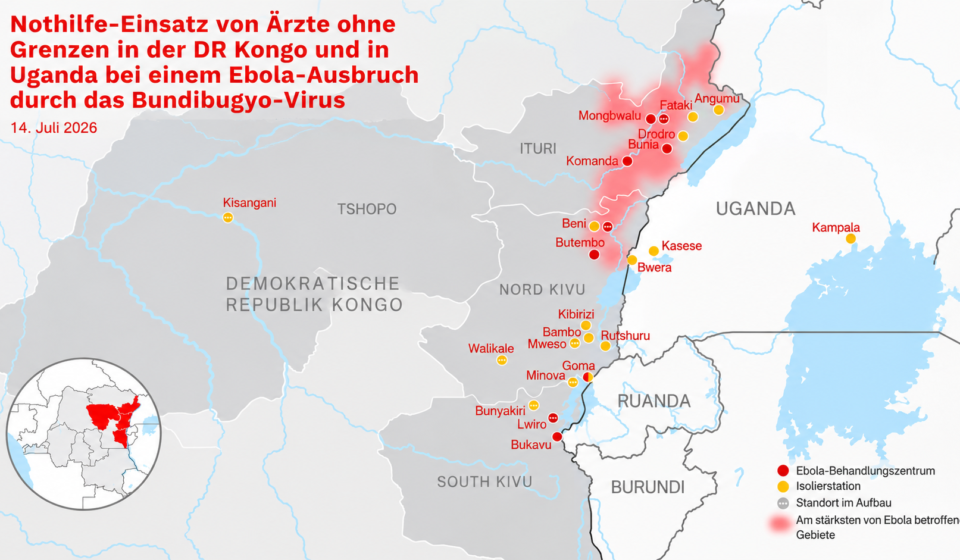

The Ebola outbreak in the Democratic Republic of Congo has crossed a devastating milestone, with the reported death toll reaching 5,026 and total infections climbing to 10,351, according to the latest government figures reported on Saturday. The scale of the outbreak and the appearance of cases in other African countries are raising fresh concerns about whether health authorities can contain the virus before it spreads further.
The outbreak is caused by the Bundibugyo strain of the Ebola virus. Since the outbreak was declared in mid-May, the disease has spread across 67 health zones in eight of Congo’s 26 provinces. The eastern provinces of Ituri and North Kivu remain the hardest-hit areas.
The latest figures put the reported fatality rate at nearly 50%. Thousands of people have recovered, but the growing number of infections is placing additional pressure on medical teams, treatment facilities and public health services.
Health Authorities Face Growing Containment Challenges
One of the biggest challenges is identifying infected people early and tracing those who may have been exposed. Health officials are concerned that approximately 80% of new infections are occurring outside the chains of contacts already being monitored.
This makes it harder for response teams to identify where transmission is occurring and intervene before additional people become infected.
The situation is further complicated by the fact that around one-third of recorded deaths occurred before patients received medical care. Delayed treatment reduces the opportunity for healthcare workers to provide supportive care and increases the difficulty of containing infections within affected communities.
The outbreak is concentrated in eastern Congo, where armed conflict and insecurity have restricted access to some communities. Attacks on healthcare workers and medical facilities have also disrupted efforts to deliver treatment and conduct disease surveillance.
These conditions create a dangerous combination: the virus continues to spread while the teams responsible for identifying cases and caring for patients face serious operational obstacles.
Healthcare Workers Struggle to Maintain Services
Medical staff are working under considerable pressure as the number of cases rises. Treatment centres need adequate personnel, protective equipment, medical supplies and reliable funding to continue operating safely.
On Friday, workers at an Ebola treatment centre in Tchomia, in Ituri province, stopped work while demanding four months of unpaid wages. The facility reportedly had five confirmed patients and 10 suspected cases under care at the time.
Similar difficulties have affected other treatment facilities. Shortages of fuel and financial resources have also been reported in parts of North Kivu, another major centre of the outbreak.
Interruptions to treatment services can have consequences beyond individual patients. They may delay diagnosis, reduce access to medical care and make it more difficult to maintain the isolation procedures needed to limit transmission.
The deaths of frontline medical personnel have added to concerns about the risks faced by those responding to the emergency.
Ebola Cases Outside Congo Raise Regional Concerns
The outbreak is no longer confined to the Democratic Republic of Congo. Cases have also been reported in other African countries, including Kenya and Nigeria, while Uganda recorded cases earlier in the outbreak.
Kenya has reported eight cases and two deaths in the latest figures cited by the government data reported on Saturday. Nigeria has reported one confirmed case. Uganda previously recorded infections linked to the outbreak, although its last confirmed patient was reported to have recovered in July.
The spread across several countries has increased the demands on public health authorities, which must coordinate surveillance, contact tracing and responses at border crossings.
The appearance of cases in different parts of the continent does not mean that every African country faces the same level of risk. The situation varies according to local transmission, travel connections, public health preparedness and the ability to identify and isolate cases quickly.
Nevertheless, the movement of infected people between countries makes timely information-sharing and coordinated action particularly important.
No Approved Vaccine or Specific Treatment for This Strain
A major concern is that there is no approved vaccine or specific treatment available for the Bundibugyo virus responsible for the current outbreak.
Healthcare workers provide supportive treatment aimed at managing symptoms and helping patients cope with complications. Early medical attention and appropriate supportive care remain important, although outcomes can vary significantly.
The absence of an approved vaccine specifically for this strain makes infection prevention, early detection and effective outbreak response especially important.
Health authorities must also communicate clearly with communities about how the virus spreads, what symptoms require medical attention and where people can seek help. Mistrust, misinformation and fear can discourage people from reporting symptoms or cooperating with contact-tracing teams.
Building public confidence is therefore a crucial part of the response, alongside medical resources and surveillance.
Why the Death Toll Matters Now
Crossing 5,000 reported deaths is more than a numerical milestone. It reflects the scale of the emergency and the difficulty of bringing transmission under control.
The current outbreak has become the second-deadliest Ebola outbreak recorded, behind the West African epidemic of 2014–2016, which killed more than 11,000 people.
The comparison highlights the seriousness of the present situation, but the course of the outbreak will depend on what happens next. The number of new infections, access to treatment, contact-tracing coverage and the continuity of healthcare services will all influence whether transmission can be reduced.
The latest figures also underline the importance of reaching patients before their condition deteriorates. If a significant share of deaths continues to occur before people receive care, authorities will face a major obstacle in reducing fatalities.
What Needs to Happen Next?
The immediate priority is to strengthen the response in the worst-affected areas of Congo. This includes improving access to medical facilities, protecting healthcare workers, restoring uninterrupted treatment services and ensuring that suspected cases are identified quickly.
Contact tracing must also improve so that people exposed to the virus can be followed up and linked to care when necessary. Authorities in neighbouring countries need to maintain surveillance and coordinate with Congo to respond promptly to potential cross-border infections.
Public communication will remain essential. Communities need trustworthy information and practical access to healthcare so that people are more likely to report symptoms and seek treatment early.
Analysis: The most serious risk is the combination of continued transmission, delayed medical care and weakened response capacity. Even when health authorities understand how an outbreak is spreading, insecurity, limited resources and community distrust can prevent that knowledge from translating into effective action.
The current figures do not establish that a continent-wide epidemic is inevitable. They do show why neighbouring countries and regional health organisations are concerned and why coordinated preparedness matters.
The Bottom Line
As of October 31, the Ebola outbreak in the Democratic Republic of Congo has reportedly killed 5,026 people and infected 10,351. Cases beyond Congo have increased concerns about regional spread, while conflict, staffing disputes and gaps in contact tracing continue to hinder containment.
The immediate challenge is to bring medical care closer to affected communities, protect frontline workers and identify infections before they spread further. The next phase of the response will be critical in determining whether authorities can slow the outbreak and prevent additional loss of life.