
At least 21 people have died after a boat carrying migrants sank off the northwestern coast of Senegal, in another deadly incident along the Atlantic migration route used by people attempting to reach Europe. Authorities have recovered 21 bodies and rescued one survivor, while search and rescue operations remain underway.
Senegal’s Interior Ministry confirmed the casualties in a statement issued on Sunday. According to the ministry, the figures were recorded by Saturday evening. Officials have not established how many people were travelling aboard the vessel, leaving open the possibility that additional passengers may still be missing.
The incident occurred off the coast of Kébémer, a town in northwestern Senegal located approximately 180 kilometres north of the capital, Dakar. The area lies along a stretch of coastline from which migrants have attempted dangerous sea journeys towards European destinations.
Search operation continues as authorities assess the tragedy
Emergency teams are continuing efforts to locate possible survivors and establish the full scale of the disaster. The recovery of 21 bodies and the rescue of one person represent the confirmed figures released by the government so far.
The absence of an official passenger count makes it difficult to determine how many people may have been aboard the boat when it sank. Authorities have also not publicly provided a complete account of what caused the vessel to go down.
The government’s statement described the passengers as people attempting to migrate irregularly. However, details about their identities, nationalities, ages and intended destinations have not yet been fully disclosed.
The Senegalese authorities have expressed condolences to the families of those who lost their lives. The interior ministry also indicated that the government was committed to addressing the networks involved in organising irregular migration.
For families waiting for news, the uncertainty surrounding the number of passengers is likely to make the aftermath especially difficult. Until search teams complete their work and officials establish a clearer account of the journey, the final number of victims may remain unknown.
A dangerous journey from West Africa towards Europe
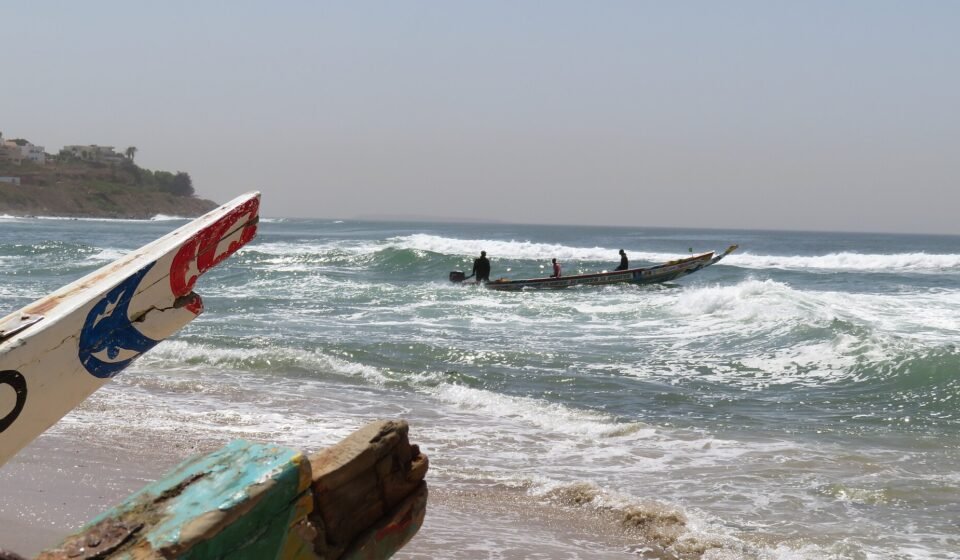
Senegal is among the West African countries from which migrants attempt to travel across the Atlantic Ocean towards Spain’s Canary Islands. The journey is frequently made in small wooden fishing vessels known locally as pirogues.
These boats are not necessarily designed or equipped for long-distance journeys across open ocean. Passengers can face overcrowding, limited supplies, changing sea conditions and long periods without access to assistance. A mechanical failure or navigational problem can quickly become life-threatening when a vessel is far from shore.
The Atlantic crossing is particularly challenging because of the distance involved. Migrants may spend several days at sea, depending on their departure point, route and the condition of the vessel. Those travelling in poorly equipped boats often have limited access to communication systems, life-saving equipment and reliable navigation tools.
The International Organization for Migration has described the Atlantic route as a major pathway for West African migrants seeking to reach Europe. It has also warned that changes in departure patterns can make the journey longer and more dangerous.
Tighter controls can push boats towards longer routes
Increased maritime monitoring and border controls in traditional departure areas have affected the routes used by people attempting to reach the Canary Islands. According to information cited by the IOM, some departures have shifted further south towards countries such as The Gambia.
Such changes can add hundreds of kilometres to the journey. The organisation has warned that alternative departure points may extend some crossings by as much as 750 kilometres, with certain journeys reaching approximately 2,200 kilometres.
Longer distances mean more time exposed to the risks of the open sea. Boats may run short of fuel, food or drinking water, while passengers can become vulnerable to dehydration, exhaustion and severe weather. Remote departure points can also make it harder for rescue services to locate vessels in distress.
The latest sinking off Kébémer has again drawn attention to the human cost of these journeys. However, the precise route taken by the boat involved in this incident and the circumstances that led to its sinking have not yet been fully established by authorities.
Human smuggling remains a major concern
The Senegalese government has reiterated its determination to tackle networks involved in organising irregular migration. Such operations can involve intermediaries who arrange transport, collect money from passengers and coordinate departures.
People considering these journeys may be motivated by unemployment, limited economic opportunities, insecurity or the hope of finding better living conditions abroad. But the promise of reaching Europe can come with serious risks, particularly when travel is arranged through unsafe vessels and unregulated operators.
Criminal networks can take advantage of people who have few legal options for migration. Passengers may have little information about the condition of the boat, the length of the journey or the dangers they could face once they leave the coast.
Efforts to prevent dangerous crossings therefore involve more than monitoring boats at sea. Cooperation between countries, action against people-smuggling networks and access to safer legal migration channels are also important parts of addressing the problem.
Death toll could change as search efforts continue
For now, the confirmed toll stands at 21 dead and one survivor, based on the figures released by Senegal’s Interior Ministry. The number of people who were originally aboard the vessel remains unknown.
Search teams are continuing their work, and authorities are expected to provide further information as the operation progresses and more details become available.
The tragedy is a reminder of the risks faced by people attempting to cross the Atlantic in small and inadequately equipped boats. For the families of those who died, the immediate concern is identifying the victims and receiving reliable information about their loved ones.
As Senegal continues its response, the focus remains on finding possible survivors, confirming the identities of the victims and determining what happened to the vessel off the country’s northwestern coast.