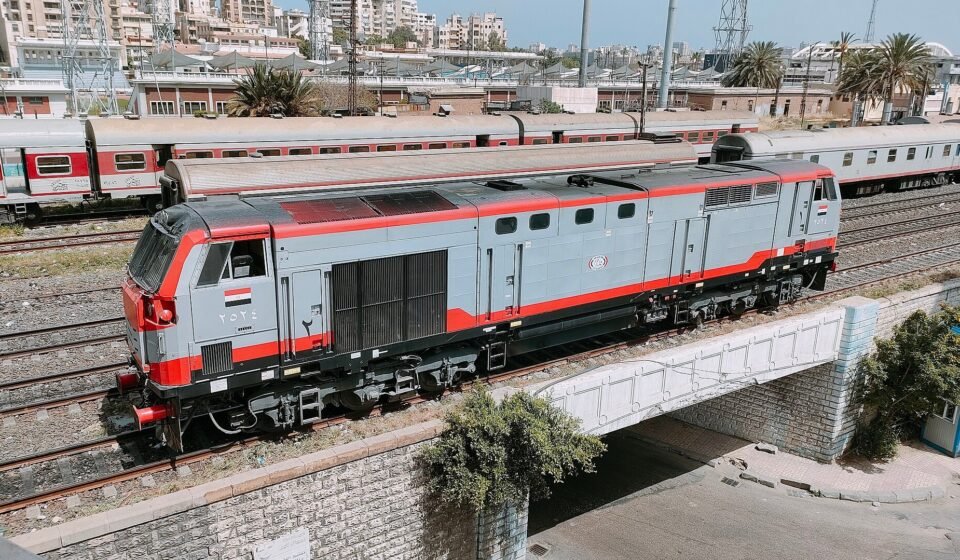

A collision between two passenger trains in Egypt’s Giza Governorate has killed at least seven people and injured 125 others, triggering an emergency response and a formal investigation into one of the country’s latest major railway disasters.
The accident occurred on Sunday, November 8, in the Al-Ayyat district, approximately 52 kilometres south of Cairo. Several train carriages were derailed after a passenger service travelling from Giza towards Fayoum struck the rear of another train operating on the Cairo-to-Aswan route.
Egyptian authorities confirmed the deaths and injuries as rescue teams worked to evacuate passengers, transport victims to hospitals and clear the damaged railway coaches.
The collision has once again brought attention to railway safety in Egypt, where millions of people depend on trains for everyday travel between major cities and smaller communities.
Two passenger trains involved in the collision
According to Egyptian National Railways, the accident involved train No. 134, a Tahya Misr service travelling on the Giza-Fayoum route, and train No. 2010, which was heading from Cairo towards Aswan.
The Giza-Fayoum train struck the rear of the Cairo-Aswan service between Kafr Ammar and Al-Raqqa railway stations in the Al-Ayyat area.
Initial findings from the site inspection and witness interviews indicated that the Aswan-bound train was stationary on the track when the other train hit its last carriage. Several coaches were derailed in the impact, leaving damaged railway vehicles scattered around the accident site.
The full sequence of events, including why the second train approached the stationary service, remains under investigation. Authorities have not yet announced a final technical explanation for the collision.
Seven dead and 125 injured
Egypt’s Ministry of Health and Population confirmed that seven people had died and 125 had been injured in the incident. The injured passengers were taken to hospitals in the surrounding Giza and Beni Suef areas.
Medical teams treated people for injuries including fractures, cuts, bruises and trauma affecting the head, chest and other parts of the body. Some passengers required further examinations and hospital observation.
The government deployed 72 ambulances to support evacuation and emergency medical operations. Hospital authorities also received instructions to increase their readiness and ensure that injured passengers received the necessary treatment.
As patients recovered, dozens were discharged after medical assessment. Others remained under observation or were transferred to larger medical facilities for continued care.
The casualty figures may be revised as authorities complete their assessment and provide further updates.
Rescue workers and local residents assist passengers
The collision created a difficult rescue situation, with passengers trapped inside damaged and overturned carriages. Emergency personnel, railway workers and residents from nearby villages joined efforts to reach people and help move the injured away from the wreckage.
Heavy equipment, including cranes, was brought to the location to lift damaged coaches and clear the railway line. Ambulances transported victims to medical facilities while rescue personnel continued checking the affected carriages.
Witness accounts described a chaotic scene immediately after the impact, with passengers suffering injuries and people outside the trains rushing to help. Some rescuers had to work around overturned coaches and damaged metal structures to reach those inside.
The operation also required coordination between health services, railway officials and local authorities to manage transportation and medical assistance.
President orders investigation into the accident
President Abdel-Fattah el-Sisi said he was following developments closely and directed the relevant authorities to provide medical assistance to everyone affected.
He also called for a prompt investigation and stressed that anyone found responsible for negligence should face accountability.
Egypt’s Public Prosecution has launched an inquiry to establish the circumstances surrounding the collision. Prosecutors have inspected the accident site, visited hospitals and begun gathering information from injured passengers and other witnesses.
A specialised technical committee has been tasked with examining the damaged trains, railway tracks and relevant operational procedures. Its work is expected to help establish whether the collision involved a technical malfunction, a signalling failure, an operational mistake or another safety-related problem.
No final finding of responsibility has been announced.
Railway services disrupted after the crash
The collision affected train movement along an important railway corridor connecting Cairo with destinations in Upper Egypt.
Egyptian National Railways dispatched emergency teams and equipment to remove damaged coaches and restore normal operations. The Transport Ministry also arranged alternative bus services for passengers travelling between affected stations, including routes connecting Al-Wasta, El-Ayyat and El-Moneib.
The temporary arrangements were intended to reduce disruption while railway crews worked to make the line operational again.
The accident also prompted attention to assistance for victims and their families. Egypt’s Financial Regulatory Authority said the Railway and Metro Accident Insurance Pool would accelerate compensation procedures. The announced compensation for deaths and permanent total disability was increased from 30,000 to 50,000 Egyptian pounds.
Egypt’s railway safety challenges
Egypt operates one of Africa’s largest railway networks, carrying passengers across a vast country where rail transport remains an important and relatively accessible means of travel.
However, the network has faced repeated accidents over the years, raising questions about maintenance, signalling systems, operational discipline and the pace of modernisation.
The government has committed substantial investment to improving railway infrastructure, purchasing new trains and upgrading existing services. Yet major collisions and derailments demonstrate that infrastructure spending must be accompanied by effective safety procedures, regular inspections and strong operational oversight.
The Al-Ayyat district itself has a history of serious railway incidents. In 2002, a devastating fire aboard a passenger train travelling south of Cairo killed hundreds of people, making it the deadliest railway disaster in Egypt’s history.
The latest collision is a separate incident, but its location has revived concerns about the safety of one of the country’s most heavily used transport systems.
Investigation will determine what went wrong
For now, the immediate priorities remain the treatment of injured passengers, support for victims’ families and restoration of railway services.
The technical investigation will be important in determining how one passenger train came to strike another on the same track and whether existing safety measures failed to prevent the collision.
Until the findings are released, the precise cause of the disaster remains unconfirmed. The deaths of seven people and injuries to more than a hundred others have nevertheless renewed calls for stronger safeguards across Egypt’s railway network.