
Anthropic Seeks Full Court Rehearing in Fight Against Pentagon Blacklisting

Artificial intelligence company Anthropic has asked a US federal appeals court to reconsider its decision upholding the Pentagon’s move to designate the company as a national security supply-chain risk, escalating a legal dispute over the military use of AI and the safety restrictions imposed on the technology.
The petition, filed on October 13, challenges a September ruling by a divided panel of the US Court of Appeals for the District of Columbia Circuit. The earlier decision allowed the US Department of Defense to maintain its designation of Anthropic, the developer of the Claude AI models.
Anthropic argues that the Pentagon’s action was linked to the company’s refusal to permit its AI systems to be used for mass surveillance of Americans or lethal autonomous warfare. The Defense Department has maintained that its concerns relate to national security and the potential effect of the company’s restrictions on military operations.
Anthropic Challenges September Court Ruling
In September, a three-judge appeals panel ruled 2–1 in favour of upholding the Pentagon’s designation. The majority accepted the department’s position that Anthropic’s restrictions on how its AI technology could be used raised concerns about the government’s ability to deploy the systems for defence purposes.
Anthropic is now asking the court to rehear the case. Its legal challenge argues that the designation improperly applies federal supply-chain security powers and that the court did not adequately address the company’s claim that the action was retaliatory.
A request for rehearing does not automatically overturn the previous decision. The court must decide whether to reconsider the case, and the existing ruling remains an important part of the legal dispute unless it is changed through further proceedings.
Dispute Centres on AI Safety Guardrails
The conflict developed after negotiations over the use of Anthropic’s Claude models in US military and government work. Anthropic has maintained that its systems should not be used for mass domestic surveillance or fully autonomous weapons capable of making lethal decisions without appropriate human control.
The Pentagon, meanwhile, has argued that the military must retain sufficient flexibility to use contracted AI technology for national defence. The disagreement has raised broader questions about how much control AI developers can retain over the use of their products after entering government contracts.
The case also highlights a difficult policy question: how should the government balance military requirements with safeguards that private AI companies consider essential to responsible deployment?
Blacklisting Has Business Implications
The Pentagon’s designation restricts Anthropic’s participation in certain defence-related work and affects how contractors can use its AI systems in projects connected to the department.
Anthropic has said the restrictions have cost it billions of dollars in potential business and harmed its reputation. The company’s financial impact claims are its own estimates and should be distinguished from independently verified losses.
The dispute is particularly significant as major AI developers compete for government contracts and investment. A prolonged legal battle could influence how technology companies negotiate safety requirements, contract terms and access to sensitive government work.
A Separate Court Case Adds Complexity
The legal dispute has involved proceedings under different federal laws. In August, a federal judge in California ruled against a separate designation affecting Anthropic, finding that the administration’s action under the law at issue was unlawful.
That ruling did not resolve every aspect of the Pentagon dispute. The September appeals decision concerning the separate supply-chain risk designation upheld the Pentagon’s position under a different legal framework.
The distinction is important because court decisions in one case do not necessarily remove restrictions imposed under another statute.
What Happens Next?
The immediate question is whether the D.C. Circuit will agree to rehear Anthropic’s challenge. If the court accepts the request, further proceedings could examine the scope of the government’s authority to designate suppliers as national security risks and the legal arguments raised by the AI company.
Until the court takes further action, the September ruling remains in place. The outcome could have implications for government procurement, AI safety policies and the ability of technology companies to set limits on military uses of their systems.
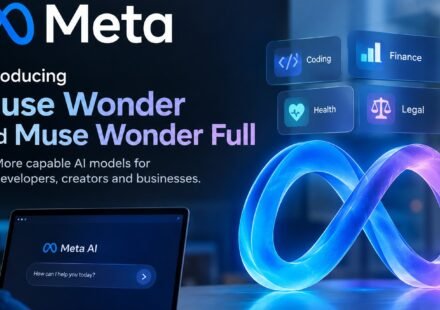
Meta Bets on Smarter AI Agents With New Muse Wonder and Wonder Full Models
Meta has unveiled two new artificial intelligence models, Muse Wonder and Muse Wonder Full, as the company intensifies its efforts to compete with leading AI developers OpenAI and Anthropic.
Announced on October 12, the new models are designed to handle complex personal and professional tasks, including coding, understanding legal documents, navigating insurance claims and analysing financial information. The launch marks another step in Meta’s broader push to develop more capable AI assistants and digital agents.
According to Meta, the models build on its earlier Muse Spark work and are intended to help users complete tasks that require more than a simple question-and-answer exchange.
What Are Muse Wonder and Muse Wonder Full?
Meta describes Muse Wonder and Muse Wonder Full as its most capable AI models to date.
The company says Muse Wonder is available to developers and builders through the Meta Model API and Muse Code. Muse Wonder Full is available to Muse Code subscribers.
Meta also plans to integrate Muse Wonder into its Muse AI assistant, with access initially rolling out to subscribers.
The models are intended to perform tasks across several specialised areas, including health, finance, law and software development. Potential applications include helping users interpret complicated documents, work through administrative processes and build software applications.
Active Memory and Active Focus
Two features highlighted by Meta are Active Memory and Active Focus.
Active Memory is designed to retain relevant information across conversations, helping the AI recall details that matter to an ongoing task.
Active Focus aims to help the models continue working toward a goal when problems arise. According to Meta, the systems can explore alternative approaches, recover from errors and ask for clarification when necessary.
These capabilities reflect a broader industry shift towards AI agents that can manage multistep tasks rather than simply generate text in response to individual prompts.
However, their practical performance will depend on how reliably the models work in real-world situations, including tasks involving complex instructions and changing information.
How Meta Plans to Compete With OpenAI and Anthropic
The launch places Meta in direct competition with companies developing advanced AI models and assistants.
OpenAI offers its ChatGPT family of products, while Anthropic develops Claude models for reasoning, coding and professional work. Both companies have been expanding the capabilities of their AI systems.
Meta is seeking to strengthen its position through its Muse model family, AI agent products and developer tools.
The company says its latest models deliver state-of-the-art performance on agentic tasks. Such claims need to be assessed against independent evaluations, because benchmark results can vary depending on the tests, model configurations and tasks selected.
The release alone does not establish that Meta has surpassed its competitors across all AI applications.
Will the New Models Be Available to Everyone?
Not immediately in the same way across all products.
Meta says Muse Wonder is available through its developer API and Muse Code, while Muse Wonder Full is available to Muse Code subscribers. Integration of Muse Wonder into the broader Muse assistant is planned to begin with subscribers.
This staged rollout means availability will depend on the product and access tier. Developers may be able to experiment with the models through Meta’s tools, while ordinary users may need to wait for wider integration.
Meta has not announced that these new models will be released as open-source models. Their access arrangements should therefore not be confused with the company’s separate releases of openly available AI models.
Privacy and Safety Remain Important Questions
AI agents that remember information and work across multiple steps can be useful, but they also raise questions about privacy, data access and reliability.
Meta says the Muse Wonder models have been trained to avoid sharing private information without permission, refuse harmful requests and strengthen security protections. The company has also said it will publish additional safety evaluations.
Independent testing will be important to determine how effectively these safeguards work in practice, particularly when an AI system handles personal documents or performs actions on a user’s behalf.
What the Launch Means for the AI Industry
Meta’s latest release illustrates how competition in artificial intelligence is increasingly focused on practical task completion, memory and autonomous workflows—not only on conversational ability.
If the models perform reliably, they could help developers build tools that handle complex work and assist users with everyday administrative and professional tasks.
For now, the long-term impact will depend on independent performance results, safety, pricing, access and how well the models compare with competing systems in real-world use.
Meta has expanded its AI ambitions with Muse Wonder and Muse Wonder Full. Whether the new models can translate the company’s claims into sustained adoption will become clearer as developers and users gain more experience with them.