G20 Unity Put to the Test as Dispute Over Russia Cancels Traditional Group Photo

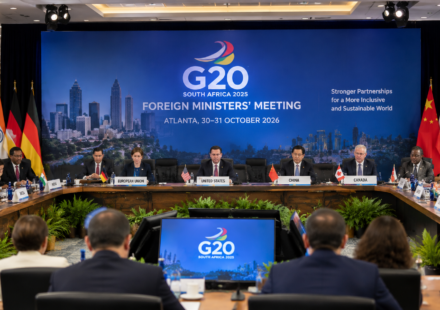
A growing diplomatic divide over Russia’s war in Ukraine disrupted the opening of the G20 foreign ministers’ meeting in Atlanta, after the United States cancelled a traditional group photograph because several delegations objected to appearing alongside Russian Foreign Minister Sergey Lavrov.
The photograph, commonly known as the G20 “family photo,” is a ceremonial part of major international gatherings. Its cancellation highlighted the difficulty of presenting a united front among the world’s leading economies while disagreements over Russia, Ukraine and wider international security continue to strain relations between Western governments.
The two-day meeting is being hosted by US Secretary of State Marco Rubio. The discussions are intended to address international economic and security challenges, including energy supplies, global trade and freedom of navigation. However, the dispute surrounding Lavrov’s attendance became an early sign of the political tensions facing the gathering.
Why the United States Cancelled the Photograph
US officials said the decision was taken after it became clear that some delegations would not participate in a joint photograph with Lavrov. Washington wanted to prevent a ceremonial event from turning into a public confrontation that could overshadow the substantive discussions.
A Western diplomat said roughly one-third of participants, including representatives from Australia and Canada, opposed being photographed alongside the Russian foreign minister.
Germany also made its position clear. Foreign Minister Johann Wadephul said there could be no joint photograph featuring European partners and Lavrov because relations with Russia could not be treated as normal under the current circumstances.
European representatives had reportedly considered an alternative arrangement involving two separate photographs—one including Lavrov and another without him. The United States ultimately decided to abandon the photo opportunity altogether.
The cancellation did not stop the meeting itself. Foreign ministers continued with their scheduled discussions, although the disagreement exposed the political sensitivities surrounding Russia’s participation.
Russia’s Presence Remains a Source of Division
Lavrov’s attendance has become a contentious issue for several Western governments because Russia’s full-scale invasion of Ukraine in February 2022 fundamentally changed Moscow’s relations with many European countries and other Western partners.
European governments have continued to support Ukraine and have argued for maintaining pressure on Russia. They remain concerned about efforts that could ease Moscow’s international isolation without sufficient progress toward ending the war.
The dispute in Atlanta also comes amid differences between Washington and some of its European allies over how to approach the conflict. Recent US decisions involving Russian energy exports and sanctions have added to those concerns.
For European officials, the issue is not simply whether diplomats should share a photograph. They are also concerned that a public display of unity could be interpreted as a sign that relations with Moscow are returning to normal.
Russia, meanwhile, has continued to participate in international diplomatic forums and promote its own proposals for global economic and political cooperation.
The cancellation therefore illustrates how even routine diplomatic ceremonies can become politically sensitive when governments disagree over a major international conflict.
A Difficult Meeting on Global Security and Trade
The photo dispute is unfolding alongside a wider agenda involving several international crises.
According to public statements surrounding the meeting, discussions include economic stability, trade, energy and food security, and the protection of important maritime routes. The Strait of Hormuz, the Red Sea, the Black Sea and the South China Sea are among the areas relevant to concerns about freedom of navigation.
These issues have consequences beyond diplomacy. Disruptions to shipping routes can increase transport costs, threaten energy supplies and create uncertainty for businesses and consumers. Conflicts and trade restrictions can also complicate efforts to maintain stable international supply chains.
The G20 brings together major economies whose interests do not always align. Its members have different relationships with Russia, China and other influential powers, making agreement on politically sensitive issues difficult.
The Atlanta meeting is therefore an opportunity to test whether countries can cooperate on practical economic and security concerns even when they remain divided over geopolitical disputes.
What the Cancellation Could Mean for the G20
Analysis: The absence of a group photograph is unlikely, by itself, to change the course of the war in Ukraine or determine the outcome of negotiations. Its significance is mainly diplomatic: it demonstrates how difficult it has become for some Western governments to participate in symbolic displays of unity with Russian officials.
The episode could make it harder for the meeting to produce a common position on Russia and Ukraine. If participating governments cannot agree on the language of a joint statement, the United States may have to rely on a chair’s summary or separate announcements to communicate the results.
At the same time, the disagreement does not necessarily mean that all cooperation will fail. Governments that differ over Russia may still share interests in energy security, trade stability and the protection of maritime routes.
For markets, the main issue will be whether the talks produce practical commitments on these economic risks. The cancelled photograph itself is not a direct reason to expect oil prices or financial markets to move. Any effect would depend on wider developments involving conflict, sanctions, energy supplies and shipping.
Diplomatic Tensions Likely to Continue
The Atlanta gathering comes ahead of a G20 leaders’ summit scheduled to take place in Miami in December. The foreign ministers’ discussions may help shape the diplomatic environment ahead of that meeting, although the disagreements in Atlanta show that a unified approach to Russia remains difficult.
The cancellation also highlights a broader challenge for international forums: bringing rival governments into the same room does not guarantee agreement on how to address the crises facing them.
For now, the G20 talks are continuing without the traditional family photograph. The decision has become a visible reminder that the conflict over Ukraine continues to influence diplomatic relations well beyond the battlefield.
Atlanta Set to Host Key G20 Diplomatic Talks as Rubio Prepares to Convene Foreign Ministers
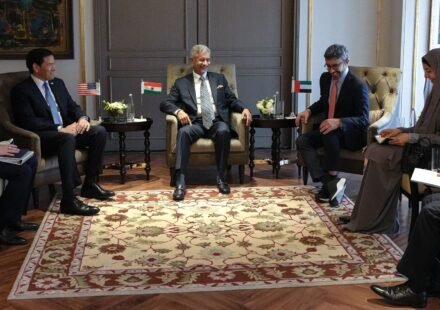
US Secretary of State Marco Rubio is scheduled to host foreign ministers from the Group of Twenty (G20) economies in Atlanta, Georgia, on October 30 and 31, bringing senior diplomats together to discuss economic pressures, international security and cooperation on issues affecting global trade.
The two-day meeting comes as geopolitical tensions, energy-market uncertainty and disruptions to international supply chains continue to create challenges for governments and businesses. Washington intends to use the gathering to encourage practical cooperation on shared economic and security concerns.
The meeting will also help prepare the ground for the G20 Leaders’ Summit scheduled for December in Miami, Florida, where heads of government are expected to consider broader priorities for the global economy.
What Will Be Discussed in Atlanta?
According to the US State Department, the discussions will focus on strengthening international cooperation, encouraging economic growth, supporting open markets and making supply chains more resilient.
Diplomats are also expected to address geopolitical crises that can disrupt economic activity. These include threats to freedom of navigation, energy and food security, and the movement of goods through international supply networks.
These subjects are closely connected. When shipping routes become less secure, transportation costs can rise and deliveries may be delayed. Energy disruptions can push up production and logistics expenses, while interruptions to food supplies can increase pressure on consumers and governments.
The meeting provides G20 members with an opportunity to discuss how they can respond to these shared challenges. However, the final outcomes will depend on the positions taken by participating countries and whether they can agree on practical measures.
Why the G20 Matters Beyond Diplomacy
The G20 brings together major advanced and emerging economies, including the United States, India, China, Japan, Germany, France, Brazil and Saudi Arabia, alongside other members and the European Union.
Its importance comes from the economic weight of its members. Decisions and policy coordination among these economies can influence international trade, investment, financial stability and the movement of essential goods.
The forum is not a world government and does not automatically impose binding policies on every member. Instead, it provides a platform where governments can exchange views, negotiate common priorities and coordinate responses to international problems.
For businesses, the discussions can offer signals about the direction of economic policy and international cooperation. For governments, they provide an opportunity to raise concerns about market access, supply disruptions and the economic consequences of geopolitical instability.
Energy Security and Shipping Routes in Focus
Energy security is expected to be an important subject during the Atlanta discussions. Oil and gas supplies depend on production levels, transport infrastructure and the security of routes used by tankers and other commercial vessels.
A disruption to a major shipping corridor can affect the availability and cost of energy, particularly for countries that depend heavily on imported fuel. Higher energy costs can then feed into transportation, manufacturing and electricity prices.
Freedom of navigation is therefore not only a military or diplomatic concern. It also affects the movement of commercial goods and the functioning of international markets.
G20 members have different energy needs and foreign-policy priorities. The Atlanta meeting could provide a forum for discussing these differences, although it remains uncertain whether the participating countries will announce specific joint measures on shipping security or energy supplies.
Supply Chains and the Global Economy
Resilient supply chains are another priority identified by Washington.
Modern manufacturing relies on components, raw materials and finished products sourced from several countries. Industries such as electronics, automobiles, pharmaceuticals and machinery can face production delays when even one essential input becomes difficult to obtain.
Governments and companies have increasingly examined ways to reduce excessive dependence on individual suppliers or vulnerable transport routes. These efforts may include diversifying sources, improving logistics and strengthening cooperation with trading partners.
Such changes can make supply networks less vulnerable to sudden disruptions, but they can also require additional investment and increase costs in the short term.
The G20 discussions could help governments compare their approaches to these challenges. Any lasting improvement, however, would depend on decisions made after the meeting and on cooperation between governments and private businesses.
What the Meeting Could Mean for India
India will have an interest in discussions covering trade, energy security, food supplies and international economic stability. As a major emerging economy, it has a stake in maintaining reliable export markets, securing essential imports and supporting investment.
Energy prices are particularly important for countries that import substantial quantities of crude oil. A sustained increase in international oil prices can raise import costs and put pressure on inflation, transportation expenses and public finances.
Stable shipping routes and dependable supply chains are also important for Indian manufacturers and exporters. Disruptions can affect the delivery of raw materials, raise freight charges and delay shipments to overseas customers.
The Atlanta meeting could therefore provide an opportunity for India and other participating economies to exchange views on these issues. However, the precise positions and commitments of individual delegations should not be assumed before official statements are released.
From Ministerial Talks to the December Summit
The foreign ministers’ meeting is part of the wider US-hosted G20 programme for 2026. The next major milestone is the Leaders’ Summit scheduled for December 14 and 15 at Trump National Doral in Miami, Florida, according to the State Department.
The Atlanta gathering will allow diplomats to discuss shared priorities before leaders meet to consider the broader economic agenda. Ministerial discussions can help identify areas of agreement and issues that require further negotiation.
The effectiveness of the process will depend on whether countries can move beyond broad statements and establish areas for practical cooperation. Differences over trade, geopolitical conflicts and national economic interests may limit the scope of agreement.
For now, the October 30–31 meeting is scheduled, but its final results remain unknown. Statements from participating governments and any agreed follow-up measures will help show whether the discussions produce concrete progress.