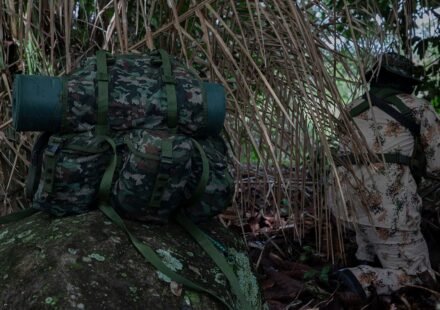
Explosive Drone Strike on Colombian Army Base Kills Three Soldiers, Injures Several Others

Three Colombian soldiers have been killed and several others injured after drones carrying explosives struck a military installation in the northern part of the country, highlighting a renewed escalation of violence involving armed groups competing for control of strategic territories.
The attack took place on Saturday, November 7, at a military base in Santa Rosa del Sur, in the southern part of Bolívar department. Colombia’s Army confirmed that unmanned aircraft equipped with explosive devices were used against the military compound.
According to the Army’s initial statement, three members of the armed forces were killed and eight soldiers suffered serious injuries. Other personnel were also affected and received medical attention at healthcare facilities in the region. Subsequent reports indicated that the number of injured could be higher, although a final consolidated figure had not been firmly established.
The attack has prompted condemnation from the country's leadership and renewed questions about the growing use of commercially available drones by illegal armed organisations in Colombia.
Drones carrying explosives hit military installation
The attack reportedly occurred around midday, when soldiers were inside the military compound. Reports from Colombian media indicated that the explosives struck an area used by troops during their lunch break.
The military installation is located in Santa Rosa del Sur, a municipality in Bolívar department near the San Lucas mountain range. The Army said the drones had been modified to carry explosive devices, turning unmanned aircraft into weapons capable of causing significant damage to personnel and infrastructure.
Videos circulated on social media following the explosions appeared to show smoke rising from the military compound and soldiers moving towards protective positions. The footage highlighted the confusion and urgency that followed the attack.
The Army activated security procedures and began assessing the damage caused to the installation. Injured personnel were taken to medical facilities for treatment. Some reports said soldiers were transported to hospitals outside the immediate area as medical teams responded to the emergency.
The military has not publicly identified the individuals who operated the drones or explained precisely how the attackers managed to approach the base.
President condemns attack and orders action
Colombian President Abelardo de la Espriella strongly condemned the strike, describing it as a criminal attack against members of the country's armed forces.
In a message shared on social media, the president expressed solidarity with the families of the soldiers who lost their lives and with those receiving medical treatment. He also said that support and assistance had been arranged for the injured personnel and their relatives.
The president directed security forces to intensify operations aimed at identifying and capturing those responsible. He also called for action against the organisations behind the attack and efforts to strengthen state control in areas where armed groups operate.
The government has adopted a tougher security approach since De la Espriella took office in August. His administration cancelled peace negotiations with remaining rebel groups and increased military operations against armed organisations.
The latest attack is likely to add pressure on the government to demonstrate that military installations and personnel can be protected against increasingly sophisticated explosive tactics.
Armed groups compete for control of Bolívar region
Santa Rosa del Sur is situated in an area where several illegal armed organisations have been competing for territorial influence. The region has economic importance because of its gold deposits and mining activities.
Among the groups operating in the wider area are the Gulf Clan, also known as the Gaitanist Self-Defence Forces of Colombia, the National Liberation Army (ELN) and smaller factions associated with former members of the Revolutionary Armed Forces of Colombia (FARC).
These organisations have been involved in conflicts over territory, illegal mining, drug trafficking routes and extortion networks. Their activities have created persistent security challenges for local communities and government forces.
However, authorities have not officially attributed Saturday's drone attack to any particular organisation. No group had publicly claimed responsibility in the initial reports.
Although some media reports have discussed possible links to armed groups operating in the region, investigators will need to establish the perpetrators through evidence. Assigning responsibility without official confirmation could lead to inaccurate conclusions about the attack.
Growing use of drones in Colombia's conflict
The incident reflects a wider security concern in Colombia: the increasing use of unmanned aircraft modified to carry explosives.
Drones are relatively inexpensive compared with conventional military equipment and can be operated remotely. Armed groups can adapt commercially available devices to carry explosive payloads, allowing them to target military positions and other infrastructure without directly approaching their intended targets.
Such attacks create new challenges for security forces, particularly in rural areas where military installations may be surrounded by difficult terrain and where armed organisations have established local networks.
Detecting small drones can be difficult, while responding to an attack requires specialised equipment, surveillance systems and effective coordination between military units.
Colombia has experienced several explosive attacks in recent weeks. A separate attack on a military base in Tolima province reportedly killed four civilians, while other incidents involving explosives have targeted security personnel and infrastructure.
The latest incidents have increased concerns that armed organisations are intensifying their campaign against state forces.
Security situation remains tense
Colombia's long-running conflict has evolved significantly since the 2016 peace agreement with the FARC, which led to the demobilisation of more than 14,000 former combatants.
However, the agreement did not eliminate armed violence across the country. Smaller dissident factions and other criminal organisations expanded their presence in areas previously controlled by the FARC, creating new territorial disputes.
The government argues that earlier ceasefires and negotiations allowed some armed groups to strengthen their influence in rural communities and expand illegal economic activities.
Security analysts have repeatedly warned that military pressure alone may not resolve the underlying problems, particularly in regions affected by weak state presence, illegal mining, drug trafficking and limited economic opportunities.
For residents of southern Bolívar, the latest attack reinforces concerns about the ability of armed groups to threaten both security forces and civilian life.
The immediate priority for Colombian authorities is to determine who carried out the drone strike, establish the full number of casualties and prevent further attacks on military facilities.
With three soldiers dead and several others injured, the incident represents another serious setback for security efforts in a region where armed groups continue to compete for influence.