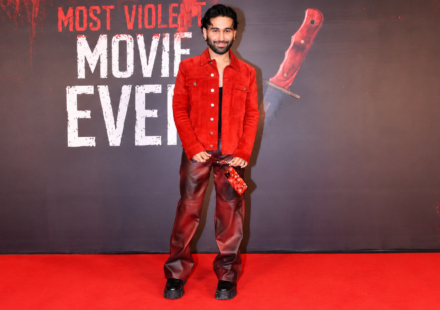
Orry Opens Up About Sara Ali Khan Fallout, Says Friendship Ended After He Felt Abandoned

Social media personality Orhan Awatramani, popularly known as Orry, has reignited conversations about his strained relationship with Bollywood actor Sara Ali Khan. In a recent conversation, Orry described Sara as a “fake friend” and alleged that she failed to support him during a difficult period, despite his claims that he had stood by her during challenging moments in her life. He also made allegations against Sara’s mother, veteran actor Amrita Singh, claiming that she verbally abused him and never apologised for her behaviour.
The revelations came during an appearance on Double Date, a show hosted by Neha Dhupia and Angad Bedi. During the conversation, Orry discussed the breakdown of his long-standing friendship with Sara, explained why he had distanced himself from her family and suggested that the unresolved issues had left little room for reconciliation.
His comments have once again brought the personal disagreement into the public spotlight, particularly because the individuals involved have long been associated with Bollywood’s celebrity social circles.
Orry Explains Why He Called Sara Ali Khan a Fake Friend
During the conversation, Neha Dhupia asked Orry about the most famous person he had unfollowed on social media. He named Sara Ali Khan without hesitation and subsequently explained the reasons behind his decision.
Orry claimed that his relationship with Sara went back to their childhood and continued through their college years and for approximately another decade. According to him, the friendship had lasted long enough for him to believe that they could depend on each other during difficult circumstances.
However, he alleged that the relationship changed when he needed emotional support and did not receive it from Sara.
Describing his disappointment, Orry said that friendships can sometimes appear strong while failing to withstand difficult situations. He maintained that Sara’s absence during his challenging period made him question whether their bond had been as genuine as he once believed.
His criticism was not limited to the end of their friendship. Orry also suggested that the lack of communication during that period was particularly hurtful because he believed he had previously offered her support when she needed it.
The remarks reflect Orry’s personal account of the disagreement. Sara Ali Khan’s independent response to these latest allegations was not included in the publicly available reports reviewed for this article.
Orry Recalls Supporting Sara During a Difficult Period
Explaining why he felt disappointed, Orry referred to an earlier difficult phase in Sara’s life. He recalled a period when they were in Goa and said the actor was dealing with what he described as a major case.
Orry alleged that he remained by Sara’s side throughout that period, even when other people advised him to distance himself from the situation.
According to his account, he did not abandon the friendship because of the pressure surrounding her circumstances. Instead, he said he continued offering support to Sara and members of her family.
Orry contrasted that experience with his own difficult period, claiming that Sara did not contact him to ask how he was doing.
He said he had expected at least a phone call or a simple check-in from someone he considered a close friend. The absence of such communication, according to him, became a turning point in their relationship.
For Orry, the disagreement appears to centre on the expectation that long-term friendships should involve mutual support rather than one-sided loyalty. He suggested that his earlier willingness to stand beside Sara made her alleged absence especially difficult to accept.
Nevertheless, the circumstances of Orry’s personal difficulties have not been fully detailed in the available accounts, and his description represents his side of the dispute.
Amrita Singh Also Faces Allegations From Orry
Orry’s comments extended beyond Sara to her mother, Amrita Singh. He alleged that Amrita had scolded him and made offensive remarks about him to other people.
He also claimed that he never received an apology for the alleged behaviour. According to Orry, this unresolved disagreement became another reason he could not simply resume his friendship with Sara as though nothing had happened.
He argued that continuing the relationship without addressing the alleged incident would mean overlooking something that had genuinely upset him.
Orry’s position suggests that the disagreement involves more than a lack of communication between two former friends. His account indicates that he also believes the relationship cannot be repaired while the issues involving Amrita remain unresolved.
These statements are allegations made by Orry during the conversation. They should not be treated as independently established findings, and Amrita Singh’s response to the latest remarks was not available in the reports reviewed.
How the Friendship Fallout Became Public
The disagreement between Orry and Sara has attracted attention over time, with social media activity contributing to speculation about their relationship.
Reports of a fallout gained visibility in 2025 after Orry shared birthday photographs of Sara that some social media users considered unflattering. The posts prompted discussion online about whether the two were still on good terms.
Further speculation followed when Orry shared a social media video mentioning the names Sara, Amrita and Palak without their surnames. Some viewers interpreted the references as being directed at Sara Ali Khan, Amrita Singh and actress Palak Tiwari.
The situation received additional attention after Sara and her brother, Ibrahim Ali Khan, were reported to have unfollowed Orry on Instagram.
These developments fuelled public interest, but social media activity alone does not establish the complete reasons behind a private disagreement. Orry’s latest comments have now provided more detail about his own understanding of the breakdown.
He had also spoken previously about his strained relationship with Amrita, indicating that an apology could potentially help him reconsider his position.
Is Reconciliation Possible?
Orry’s latest remarks suggest that he is not currently ready to move past the disagreement without addressing what he believes happened. He has presented the lack of support from Sara and the absence of an apology from Amrita as central reasons for maintaining his distance.
Whether the relationship can be repaired remains uncertain. Reconciliation would likely require the people involved to address their differences privately and reach a mutual understanding, rather than allowing social media speculation to define the dispute.
For now, Orry’s account has reopened discussion about celebrity friendships, loyalty and the expectations people place on long-standing personal relationships.
The controversy also highlights how disagreements between public figures can become entertainment news when private grievances are discussed on widely viewed shows. While such conversations offer insight into one person’s perspective, they rarely reveal every side of a complicated relationship.
Until Sara Ali Khan and Amrita Singh respond publicly to the latest allegations, the full circumstances surrounding the fallout remain unclear. What is evident is that Orry believes the friendship broke down because he felt unsupported at a critical moment and that the alleged incident involving Amrita remains unresolved.
His latest comments have therefore added another chapter to a disagreement that has already attracted considerable attention across Bollywood-focused social media discussions.
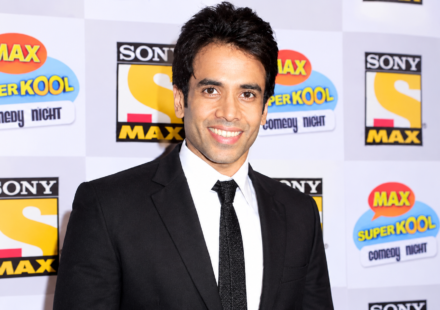
Tusshar Kapoor Receives ₹5 Crore Extortion Threat, Police Suspect Impersonation
Bollywood actor Tusshar Kapoor has reportedly received an extortion threat demanding ₹5 crore from a caller who claimed to be associated with the Lawrence Bishnoi gang. However, a preliminary examination of the threatening audio has raised doubts about the caller’s identity, with Mumbai Police suspecting that someone may have used the gang’s name to intimidate the actor and demand money.
The incident has drawn attention to the risks posed by criminals who allegedly impersonate members of organised gangs to frighten prominent personalities. Investigators are now attempting to trace the person behind the threatening communication and establish whether the caller had any genuine connection to the gang.
According to information reported on November 3, 2026, Kapoor informed Mumbai Police about the alleged threat. The matter was subsequently taken up by the Crime Branch and its Anti-Extortion Cell, which are examining the available evidence.
Caller Allegedly Demanded ₹5 Crore
The caller reportedly introduced himself as Harry Boxer, a person alleged to be associated with the Lawrence Bishnoi gang. During the communication, the individual allegedly demanded ₹5 crore from Kapoor.
The demand has become the central focus of the investigation. In an extortion attempt, a person seeks money through threats, intimidation or pressure. Investigators must establish not only who made the demand but also whether the threat was genuine, whether the caller had the ability or intention to carry it out, and whether anyone else was involved.
In this case, the caller’s claimed identity remains unverified. Using the name of a known criminal organisation does not, by itself, establish that a threat originated from that group.
Police are therefore examining the communication rather than accepting the caller’s claim at face value. Identifying the person responsible will be important in determining the motive behind the demand and whether the incident involved an attempt to exploit the gang’s reputation.
Voice Analysis Raises Questions About the Caller
One of the most significant developments in the preliminary investigation has been the examination of the threatening audio recording.
The Crime Branch’s technical team reportedly compared the voice in the recording with available reference samples associated with Harry Boxer. According to information attributed to police sources, the two recordings did not match.
This finding has strengthened suspicions that the caller may have been impersonating the alleged gang member. Investigators are considering the possibility that an unidentified person used a recognisable criminal name to create fear and pressure the actor into paying money.
However, a mismatch between two voice recordings does not, on its own, establish the caller’s identity or reveal the full circumstances of the alleged extortion attempt. The investigation must still determine who sent or made the communication and whether the person acted alone.
The preliminary findings also do not establish that the Lawrence Bishnoi gang was responsible for the threat. Until investigators obtain further evidence, the alleged connection should be treated as an unverified claim made by the caller.
Mumbai Police Continue Efforts to Trace the Source
The investigation is focused on identifying the person behind the threatening communication. The Crime Branch and Anti-Extortion Cell are reportedly examining the available audio and working to establish its origin.
Tracing the source of a threat can involve examining communication records, relevant technical information and other evidence that may help investigators identify a suspect. The precise steps taken in this case have not been fully disclosed publicly.
As of November 3, reports indicated that a First Information Report, or FIR, had not been registered. The absence of an FIR at that stage does not mean the complaint has been dismissed or that investigators have established the threat was harmless. It means the publicly reported investigation had not yet reached that formal stage.
The next important developments will be whether investigators identify a suspect, obtain evidence supporting the alleged extortion attempt and determine whether the caller had any connection to an organised criminal group.
Kapoor’s security has also reportedly been strengthened following the threat. Authorities will need to assess the credibility of the communication as they continue their inquiry.
Why Impersonation Can Make Extortion Threats Difficult to Assess
The case highlights a wider challenge for law enforcement: distinguishing a genuine threat from an attempt to exploit the reputation of a criminal organisation.
A caller may use the name of a well-known gang because the association itself can create anxiety. A target may fear that refusing to pay could lead to physical harm, even when the caller has not demonstrated a genuine connection to the group.
For investigators, this makes verification particularly important. A claim of affiliation must be supported by evidence rather than accepted solely because a caller uses a particular name. Audio analysis can provide one useful investigative lead, but other evidence may be needed to establish the source, motive and seriousness of a threat.
For people receiving suspicious calls or messages, the incident also underlines the importance of preserving evidence and reporting threats to the authorities. Attempting to negotiate with an unidentified caller or transferring money without verification can expose a victim to further demands.
Members of the public should avoid circulating unverified recordings or identifying individuals as members of a criminal organisation without reliable evidence. Such claims can spread misinformation and complicate efforts to establish what actually happened.
What the Case Means for Tusshar Kapoor
For Kapoor, the immediate issue is the investigation into the alleged demand for ₹5 crore and the credibility of the threat. The reported voice mismatch offers a reason to question the caller’s claimed identity, but it does not yet provide a complete explanation of the incident.
The actor has reportedly brought the matter to the attention of Mumbai Police, allowing investigators to examine the communication and pursue the person responsible.
The outcome will depend on the evidence collected during the inquiry. If investigators identify the caller, they may be able to determine whether the incident involved deliberate impersonation, an attempted extortion scheme or another form of intimidation.
At present, there is no publicly established evidence confirming that the Lawrence Bishnoi gang issued the demand. The police investigation remains important both for identifying the alleged caller and for assessing whether any continuing security risk exists.
The key question is no longer simply who the caller claimed to be, but who was actually behind the ₹5 crore demand. Until that question is answered through evidence, the alleged gang connection and the precise circumstances of the threat remain matters under investigation.
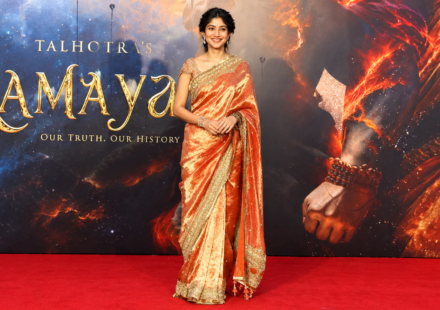
Yash’s Son Could Not Accept Ravana Killing Jatayu: Sai Pallavi Shares an Emotional Moment From Ramayana
A powerful scene from the upcoming mythological epic Ramayana: Rise of a Legend reportedly left a deep emotional impression on Yash’s young son. Actor Sai Pallavi, who plays Sita in the film, has revealed that the child became upset after watching his father portray Ravana in a confrontation with Jatayu, the legendary bird who attempts to stop Ravana from abducting Sita.
The incident took place when Yash brought his children, Ayra and Yatharv, to the film’s world premiere in Los Angeles on October 27. It was an unusual experience for the children, who were seeing their father perform on the big screen in a major mythological role.
According to Sai Pallavi, Yatharv was particularly disturbed by the scene in which Ravana attacks and kills Jatayu. Although he understood that his father was acting, the emotional impact of the scene was strong enough to make him question the character’s actions.
The moment has attracted attention because it offers a glimpse into how a dramatic scene from an epic story can affect a young viewer, even when the person playing the character is someone he knows and loves.
Sai Pallavi Recalls the Child’s Reaction
During a media interaction connected with the film’s promotions, Yash spoke about his children’s response to watching the movie. He explained that they had many questions after seeing the story unfold on screen.
Sai Pallavi then shared a particularly touching detail about Yatharv’s reaction to the Jatayu sequence.
According to her account, the young boy told his father that he did not like seeing him kill the bird in the film. He reportedly questioned why Ravana had done something like that, even in a fictional performance.
Sai Pallavi explained that the child knew Yash was an actor and understood that he had appeared in films before. Nevertheless, the distinction between the actor and the character did not prevent him from feeling upset about what happened to Jatayu.
Her account highlighted the innocence of a child who could recognise the difference between acting and reality but still respond emotionally to the actions shown on screen.
For Yatharv, the scene was not simply a dramatic confrontation between two mythological figures. It was also a moment in which his father appeared to do something he believed was wrong.
Why the Jatayu Scene Matters in the Ramayana
Jatayu occupies an important place in the traditional story of the Ramayana. He is a noble bird who attempts to protect Sita when Ravana carries her away to Lanka.
Despite being unable to defeat Ravana, Jatayu challenges him and tries to prevent the abduction. His struggle is remembered as an act of courage, loyalty and sacrifice.
The episode has emotional significance because Jatayu risks his life to help Sita, even though he faces an opponent with far greater power. His actions represent the decision to stand against wrongdoing, regardless of the personal cost.
For viewers familiar with the epic, the encounter is more than an action sequence. It represents the conflict between Ravana’s determination to carry out the abduction and Jatayu’s attempt to protect Sita.
This emotional foundation helps explain why the scene can leave a strong impression on audiences. A child watching the sequence may focus less on its mythological significance and more on the simple idea that a bird is being hurt while trying to help someone.
Yatharv’s reported response reflects that immediate emotional connection. Rather than evaluating the scene as part of a cinematic performance, he reacted to what he saw happening to Jatayu.
Yash on the Challenge of Playing Ravana
The incident also comes as Yash has been discussing the challenges of portraying Ravana in the film.
Ravana is one of the most complex and widely discussed figures in Indian mythology. He is commonly remembered as the antagonist of the Ramayana, but his character is also associated with immense power, knowledge, ambition and pride.
For an actor, presenting such a figure convincingly requires more than an imposing appearance or an intimidating voice. The performance must communicate the character’s authority while allowing audiences to understand the motivations and weaknesses that shape his decisions.
Yash has explained that one of his main challenges was making Ravana’s extraordinary power believable to viewers. He wanted audiences to feel that the character was formidable rather than simply being told that he was difficult to defeat.
The actor has also spoken about his interest in moving beyond a one-dimensional portrayal of Ravana. He wants audiences to consider the character’s different qualities and understand where his choices led him astray.
Such an approach does not necessarily justify Ravana’s actions. Instead, it allows the character to be presented with greater complexity, giving viewers more to consider than a straightforward division between a hero and a villain.
The Jatayu sequence is particularly relevant to this approach because it shows Ravana’s power through a consequential act. The scene also illustrates how the character’s decisions affect others, making the conflict emotionally significant rather than purely physical.
Ranbir Kapoor and Sai Pallavi Lead the Film
Directed by Nitesh Tiwari, Ramayana: Rise of a Legend features Ranbir Kapoor as Lord Ram, Sai Pallavi as Sita and Yash as Ravana. The cast also includes Sunny Deol as Hanuman and Ravi Dubey as Lakshman, among other actors.
The film is scheduled for a worldwide theatrical release on November 5, 2026, making it one of the major cinematic releases attracting attention in India ahead of its opening.
Its story draws on the Ramayana, one of the most influential epics in Indian cultural and literary traditions. Bringing such a familiar narrative to the screen creates a particular challenge: audiences may already have strong expectations about its characters, important episodes and moral themes.
The filmmakers must therefore balance the familiarity of the source material with a cinematic presentation capable of engaging viewers who know the story as well as those encountering its details for the first time.
Performances by major cast members are likely to be central to that effort. In Yash’s case, the portrayal of Ravana carries the additional challenge of presenting a legendary antagonist whose actions have profound consequences for the other characters.
A Small Family Moment With a Larger Emotional Meaning
While the film’s scale, cast and visual presentation are attracting attention, Sai Pallavi’s account offers a more personal perspective on the production.
For Yash, the premiere was an opportunity to watch his children experience his work in a new setting. For his son, however, the experience became an emotional encounter with the character his father was playing.
The reaction also illustrates an important aspect of storytelling: audiences do not always respond to a scene in the way its creators might expect. A sequence designed to establish a villain’s strength can also prompt sadness, sympathy or questions about right and wrong.
Jatayu’s role makes that possibility especially clear. His attempt to protect Sita gives the confrontation an emotional dimension that extends beyond the battle itself.
The reported incident does not reveal how every viewer will respond to the film, but it provides an early glimpse of the emotional questions its characters and story may raise.
As the release approaches, audiences will be watching to see how the film presents the relationship between Ram, Sita, Ravana and the other figures central to the epic.
For now, one of the most memorable stories from the film’s promotional period is not about its scale or spectacle. It is about a child who watched his father play a powerful mythological figure and felt that, even in a movie, Jatayu deserved better.
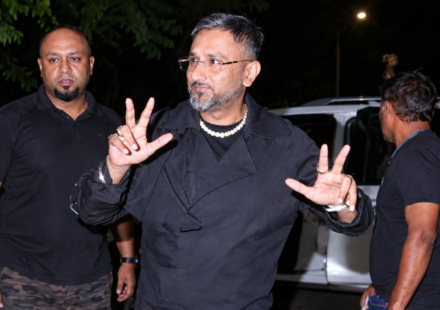
Yo Yo Honey Singh Shares Heartbreaking Tribute After Nephew Vidit Olak Dies in Jalandhar Crash
Indian rapper and singer Yo Yo Honey Singh is mourning the death of his nephew, Vidit Olak, who was killed in a road accident in Jalandhar, Punjab, early Sunday. The crash also claimed the life of Vidit's friend, Aarav Talwar, leaving both families in grief.
Honey Singh expressed his pain through an emotional message on Instagram Stories, describing the period as a “dark decade” for him. His message reflected the devastating personal loss and drew attention to the tragedy involving the family of a prominent figure in the Punjabi music industry.
How the Accident Happened
The accident occurred in the early hours of November 1 on a flyover near the Police Lines area in Jalandhar. According to reports quoting police, the Volkswagen car carrying Vidit Olak and Aarav Talwar collided with a stationary municipal tractor-trolley.
Municipal sanitation workers were reportedly cleaning the flyover and had parked the tractor-trolley to collect garbage. The car was travelling from BMC Chowk towards BSF Chowk when the collision occurred.
Police received information about the crash at around 3 a.m. and reached the scene. Both Vidit and Aarav died in the accident. The precise circumstances leading to the collision were not fully established in the initial reports.
Who Were Vidit Olak and Aarav Talwar?
Vidit Olak was the son of Dinesh Olak, associated with Punjabi music label Speed Records, and the nephew of Yo Yo Honey Singh. His family connection to the music industry brought additional attention to the accident.
Aarav Talwar, the second victim, was reportedly the son of the owner of Pappy Sweets. The two young men were friends and were returning after attending a birthday celebration, according to published reports.
The tragedy has highlighted the sudden and devastating consequences of road accidents, which can affect families and communities without warning.
Honey Singh's Emotional Message
Honey Singh's message on social media conveyed the depth of his grief over losing his nephew. He described the loss as devastating and invoked “Bhole Nath” in his appeal for strength and comfort.
The singer has built a major following through his Punjabi and Hindi music, becoming known for popular songs and collaborations that helped bring rap-influenced music to a wider Indian audience. The personal tragedy has shifted attention away from his professional life to the loss experienced by his family.
Police Response
Police reached the accident site after receiving information in the early morning. Reports stated that the bodies were subsequently handed over to the families after the necessary procedures. The families reportedly did not wish to pursue further legal action at that stage.
The circumstances of the crash, including the presence of the stationary tractor-trolley on the flyover, have raised questions about road safety and the precautions required during municipal cleaning operations. However, responsibility for the collision should not be assumed without established findings from the authorities.
The tragedy is a painful reminder of how suddenly lives can be lost on the road. As Honey Singh and the families of the two victims mourn their loss, the incident has brought renewed attention to the importance of road safety and precautions during roadside maintenance work.
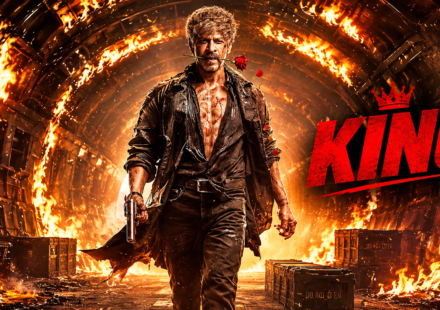
Shah Rukh Khan’s King Lands a ₹175 Crore Overseas Deal, Raising the Stakes for Christmas 2026
Shah Rukh Khan’s upcoming film King has reportedly secured a landmark overseas distribution agreement worth ₹175 crore, putting the highly anticipated Bollywood action thriller under the spotlight even before its theatrical release. The reported deal represents a major vote of confidence in Khan’s international popularity and sets ambitious expectations for the film’s performance in overseas markets.
Dubai-based Phars Films has reportedly acquired the international theatrical distribution rights through a minimum guarantee (MG) arrangement. The agreement is being described in industry reports as a record overseas distribution deal for an Indian film. King is scheduled to arrive in cinemas on December 24, 2026, placing its opening in the lucrative Christmas and New Year holiday period.
What Does the ₹175 Crore Deal Mean?
A minimum guarantee is an arrangement under which a distributor commits an agreed amount for distribution rights, subject to the terms of the contract. It gives the rights holder a defined financial commitment before the film's box-office performance is known, while placing significant commercial responsibility on the distributor.
In the case of King, the reported ₹175 crore commitment signals strong expectations for Shah Rukh Khan’s ability to attract audiences beyond India. However, the deal should not be confused with money the film has already earned from ticket sales. The movie has yet to be released, and its eventual box-office performance remains uncertain.
The reported arrangement also marks a change in the film’s overseas distribution plans. Yash Raj Films had previously been expected to handle the international release. Phars Films is now reported to be taking over the role, with plans to distribute the film directly in the Middle East and work with local distribution partners in other territories.
This could influence how the film is marketed and released in important markets such as North America, the United Kingdom and Germany. The final reach will depend on territory-level agreements, local promotion and the number of screens secured.
Why Overseas Markets Matter for Shah Rukh Khan
International audiences have become an important source of revenue for major Indian productions, particularly films featuring established stars with large fan bases abroad.
Shah Rukh Khan’s 2023 releases Pathaan and Jawan demonstrated his ability to draw audiences across international markets. Both films generated substantial overseas business, providing a benchmark against which the commercial performance of King is likely to be judged.
The new distribution agreement suggests that the overseas market will be central to the film’s financial prospects. A strong performance could reinforce the value of Khan’s international appeal and encourage distributors to make larger commitments for future Indian productions.
However, a record-setting rights deal does not automatically guarantee a box-office hit. Ticket sales, audience reactions, repeat viewership, marketing expenses and the distribution arrangements in individual territories will all influence the final result.
A Star-Studded Film With Major Expectations
Directed by Siddharth Anand, King brings Khan together with a large ensemble cast that includes Deepika Padukone, Suhana Khan, Abhishek Bachchan, Anil Kapoor, Rani Mukerji and Arshad Warsi.
The film also marks an important on-screen collaboration between Shah Rukh Khan and his daughter, Suhana Khan. Their pairing is expected to attract additional attention from fans, although the extent to which that interest translates into ticket sales will only become clear after release.
Anand previously collaborated with Khan on Pathaan, which became a major commercial success. Their reunion has therefore added to expectations surrounding the new project. Nevertheless, the performance of one film cannot determine the outcome of another, particularly when release conditions and competition differ.
Can King Recover the Overseas Investment?
The central question is whether King can generate enough international revenue to justify the reported ₹175 crore minimum guarantee.
Industry estimates cited in published reports suggest that the film may need overseas gross collections in the region of ₹350–375 crore to support the economics of the deal. This is an estimate rather than an officially confirmed break-even figure. The actual amount required will depend on the final contracts, revenue-sharing arrangements, marketing costs and other expenses.
The challenge is considerable. The Christmas holiday season can encourage cinema attendance, particularly among families and younger audiences, but it is also a competitive period for major releases.
International markets may offer opportunities for King, especially where Shah Rukh Khan already has a strong following. At the same time, competing films could affect screen availability, showtimes and audience choices.
A powerful trailer campaign, positive audience response and sustained ticket sales could help the film build momentum beyond its opening weekend. Conversely, a weak reception or limited screen access could make the reported financial target harder to reach.
What the Deal Could Mean for Bollywood
Analysis: If the reported agreement is confirmed and proves commercially successful, it could strengthen confidence in the overseas earning potential of large Indian productions. Distributors may become more willing to pay substantial amounts upfront for films featuring internationally recognised Indian stars.
It could also encourage producers to place greater emphasis on international marketing, release coordination and partnerships with regional distributors. For audiences, a more ambitious overseas strategy could mean wider theatrical availability and more coordinated release campaigns.
But the deal also highlights the financial risks involved in blockbuster filmmaking. A large advance commitment raises expectations, and the distributor must ultimately generate sufficient revenue to make the investment worthwhile.
For now, the ₹175 crore agreement is a major pre-release milestone for King, not proof of its eventual box-office success. The film’s performance after December 24 will determine whether the reported investment translates into a commercial triumph.
The bottom line: King is entering the Christmas box-office race with enormous international expectations. Shah Rukh Khan’s global fan base gives the film a strong starting advantage, but its final success will depend on audience response, overseas distribution and its ability to turn pre-release excitement into sustained ticket sales.
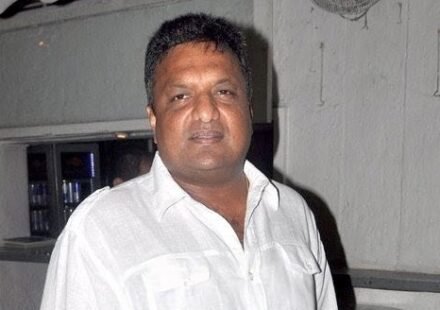
Bollywood Loses a Distinctive Action Filmmaker as Sanjay Gupta Dies After a Fall
Indian filmmaker Sanjay Gupta, widely recognised for directing crime dramas and action thrillers such as Kaante, Zinda and Shootout at Lokhandwala, has died following a fall at his Mumbai residence. His sudden death has left colleagues and members of the Hindi film industry mourning a director whose work helped shape a distinctive style of mainstream action cinema.
Filmmaker Ashoke Pandit publicly confirmed Gupta’s death, saying that he had suffered a head injury at home. Director Milap Zaveri also confirmed the news in comments reported by the media. The incident reportedly occurred on Friday, October 30, with the news becoming public the following day.
What Happened to Sanjay Gupta?
According to preliminary information shared by Mumbai Police, Gupta suffered a fall at his residence in Mumbai and sustained a serious head injury. Family members reportedly discovered him the following morning and took him to a hospital, where he was declared dead.
Police have begun examining the circumstances surrounding the incident. Reports indicate that an accidental death case was registered as part of the initial investigation. The precise sequence of events is subject to the authorities’ findings.
Reports have also differed over Gupta’s age, with some publications describing him as 59 and others as 57. His death, however, has been confirmed by people from the film industry who knew him.
The Films That Defined His Career
Sanjay Gupta built a reputation for making stylish, fast-paced Hindi films, frequently combining crime stories, intense confrontations and urban settings. His filmmaking drew on themes of loyalty, revenge, ambition and the complicated relationships between people operating on the edges of society.
One of his best-known projects was Kaante (2002), a crime thriller featuring Amitabh Bachchan, Sanjay Dutt and Suniel Shetty, among others. The film followed a group of criminals planning a major robbery and became one of the notable ensemble crime films of its period.
Gupta later directed Zinda (2006), a dark thriller starring Sanjay Dutt and John Abraham. The film explored captivity, revenge and the psychological consequences of violence, reflecting the director’s interest in intense, high-stakes narratives.
Another major title in his career was Shootout at Lokhandwala (2007). Based on the 1991 Mumbai police encounter, the film brought a real-life crime incident to the screen through a dramatised account featuring prominent actors. Gupta served as director, producer and co-writer on the project.
He returned to the world of Mumbai crime stories with Shootout at Wadala (2013), which drew inspiration from another real-life encounter. These films helped establish his association with action-heavy narratives rooted in the city's underworld.
Beyond Crime Thrillers
Although Gupta became especially associated with crime and action films, his career included projects across different genres.
He directed Kaabil (2017), starring Hrithik Roshan and Yami Gautam. The film centred on a visually impaired man seeking justice after a devastating personal tragedy and became one of the commercially successful films associated with Gupta's career.
His other directorial projects included Jazbaa (2015), starring Aishwarya Rai Bachchan, the anthology film Dus Kahaniyaan (2007), Acid Factory (2009) and Mumbai Saga (2021).
His more recent work included The Miranda Brothers (2024), a sports drama featuring Harshvardhan Rane and Meezaan Jafri. The project demonstrated that he continued working in Hindi cinema beyond the crime-thriller format that had made him widely known.
His Work as a Producer
Gupta was not limited to directing. He also established himself as a producer through White Feather Films, the production banner he founded in 2001.
His work behind the camera included developing projects, collaborating with actors and helping bring commercially oriented films to audiences. His career involved several recurring creative partnerships, particularly with Sanjay Dutt, with whom he worked on films including Kaante, Musafir, Zinda and Shootout at Lokhandwala.
Before becoming an established filmmaker, Gupta gained experience in post-production and sound design. He also worked as an assistant to director Pankaj Parashar on projects including the television series Karamchand and the film Jalwa.
That early experience formed part of his route into filmmaking, where sound, editing, visual presentation and action sequences became important elements of his style.
Film Industry Pays Tribute
News of Gupta's death prompted tributes from people associated with Hindi cinema. Ashoke Pandit remembered him as a passionate filmmaker and storyteller, while actors and other film personalities expressed their grief publicly.
For colleagues who worked with him, the loss was also personal. His long career brought him into contact with actors, writers, producers and technicians across multiple generations of the industry.
Gupta's filmography reflected a particular strand of commercial Hindi cinema: stories built around dramatic confrontations, morally complicated characters and stylised action. His projects often drew inspiration from crime, revenge and real-world incidents, giving his films a recognisable identity.
A Sudden Loss for Hindi Cinema
Sanjay Gupta's death marks the end of a filmmaking career that spanned several decades. From Aatish: Feel the Fire (1994) to later projects such as Mumbai Saga and The Miranda Brothers, he continued to explore stories built around conflict, ambition and personal struggle.
His work was not confined to a single film or genre, but titles such as Kaante, Zinda and Shootout at Lokhandwala remain central to his reputation.
The circumstances of his death are now being examined by the authorities. As the film industry remembers his contribution, his body of work provides a record of a director who pursued a bold, action-driven approach to Hindi storytelling.