South Korea Proposes Military Talks With North Korea as Border Tensions Rise

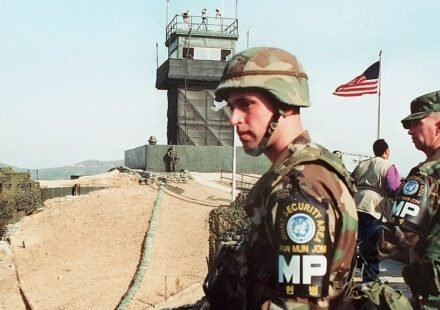
South Korea has renewed its call for military talks with North Korea in an effort to reduce tensions along one of the world’s most heavily fortified borders. The proposal aims to establish a clearer understanding of the land boundary between the two countries and prevent accidental military clashes amid growing security concerns on the Korean Peninsula.
The South Korean Defence Ministry announced the initiative on Friday, October 23, following a series of incidents near the Demilitarized Zone (DMZ), including a landmine explosion in September that injured three South Korean soldiers. Seoul has attributed the blast to mines allegedly planted by North Korean troops south of the Military Demarcation Line. Pyongyang has rejected responsibility for the incident.
Seoul Seeks Clearer Border Arrangements
South Korea’s latest proposal focuses on resolving disagreements over the precise location of the Military Demarcation Line (MDL), which separates the two countries within the DMZ.
South Korean officials say the problem has become more complicated as North Korea strengthens its border infrastructure. Recent activities have reportedly included laying mines, building fences, constructing tactical roads and installing additional defensive barriers.
Seoul has expressed concern that differences in how the two militaries identify parts of the boundary could lead to misunderstandings during routine operations. In a region where troops operate in close proximity, even an unintended crossing can trigger warning shots or a rapid military response.
Deputy Minister for National Defense Policy Kim Hong-cheol announced the proposal, emphasising the need for direct communication between the two militaries. South Korea also wants discussions about restoring communication channels that could help both sides manage incidents before they escalate.
The initiative follows an earlier South Korean offer for military dialogue in November 2025, which North Korea did not accept. It remains unclear whether Pyongyang will respond positively to the latest approach.
Landmine Explosion Adds to Security Concerns
The September incident has become a major source of friction between the neighbours. South Korea’s military concluded that mines placed by North Korean troops caused an explosion south of the demarcation line, seriously injuring two soldiers and injuring another.
Seoul has called on Pyongyang to take responsibility and has said the incident violated the Korean War Armistice Agreement. South Korea has also planned to raise the issue with the United Nations Security Council.
North Korea denies responsibility and has accused the South of provoking tensions along the border. The competing accounts have made it more difficult to establish a shared understanding of the incident.
The dispute illustrates why military communication is important for both countries. Without agreed procedures for investigating border incidents and clarifying troop movements, disagreements can quickly become broader diplomatic or security crises.
North Korea Strengthens Border Defences
North Korea has continued to reinforce sections of its southern frontier, according to South Korean military assessments. The reported construction includes barriers, tactical roads and minefields intended to strengthen the border.
Seoul says North Korean soldiers have crossed the Military Demarcation Line during some of these activities. South Korean forces have responded with warning broadcasts and warning shots, while Pyongyang has disputed Seoul’s characterisation of events.
The border remains especially sensitive because its precise alignment is not equally clear at every location. Some original boundary markers have reportedly disappeared, contributing to disagreements about where the line should be recognised on the ground.
North Korea has also threatened to resume propaganda loudspeaker broadcasts along the border and warned against actions it considers provocative. These developments have added to concerns that a relatively small incident could lead to a wider confrontation.
A Longstanding Conflict Without a Peace Treaty
The two Koreas remain technically at war because the Korean War ended in 1953 with an armistice rather than a formal peace treaty.
The agreement halted large-scale fighting and established the DMZ as a buffer between the two sides. Despite decades of separation, relations have repeatedly deteriorated over military exercises, weapons programmes, border incidents and disagreements over reunification.
North Korea’s leadership has adopted a particularly hard line towards Seoul in recent years, describing the South as a hostile state and showing little interest in conventional inter-Korean dialogue.
South Korea, under President Lee Jae Myung, has pursued efforts to lower tensions and reopen channels of communication. However, previous overtures have not produced a sustained return to military talks.
The latest proposal therefore faces a significant diplomatic obstacle: Seoul can offer negotiations, but meaningful progress requires North Korea to participate.
Can Military Talks Prevent Further Escalation?
If North Korea accepts the proposal, negotiations could provide an opportunity to clarify disputed sections of the border, improve communication between military officials and establish procedures for responding to unexpected incidents.
Such discussions would not automatically resolve the wider political and security differences between the countries. However, clearer arrangements could reduce the risk of soldiers misinterpreting movements or responding too aggressively to an incident near the boundary.
The proposal also reflects the importance of practical risk-reduction measures even when broader political relations remain hostile. Military communication can help prevent local incidents from developing into a larger confrontation.
For now, the next step depends on Pyongyang’s response. With border fortifications expanding and accusations continuing over the September mine blast, South Korea is seeking a diplomatic route to manage immediate security risks.
The latest initiative offers a possible opening for dialogue, but it does not yet signal a breakthrough. Until both sides agree to talks and establish reliable communication, the heavily fortified Korean border will remain a potential flashpoint.