Missing Salvadoran Personnel Feared Dead After Haiti Gang Ambush as Security Crisis Deepens

The discovery of human remains believed to belong to four Salvadoran military personnel missing after an armed gang ambush in Haiti has intensified concerns over the safety and effectiveness of an international security mission tasked with confronting the country’s powerful criminal groups.
The remains were reportedly recovered outside Port-au-Prince on Saturday and were badly burned. According to people cited in the reporting, the condition of the bodies means that forensic examinations and autopsies will be required to establish their identities. The remains were reportedly transferred to a Salvadoran military team at the international airport after the team arrived in Haiti.
The identities had not been officially confirmed in the available reports, and the international security mission had declined to comment. Independent verification of the discovery was also pending at the time of the initial reporting. The circumstances surrounding the deaths, including whether the four personnel were killed during the attack or afterward, remained unclear.
Four Personnel Disappeared After Their Vehicle Was Attacked
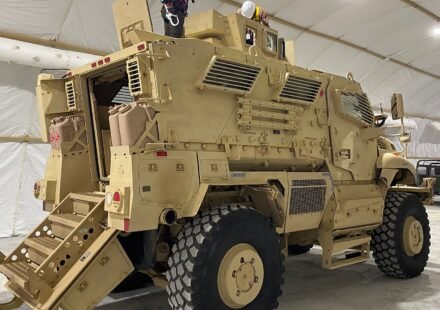
The four Salvadoran personnel disappeared on Sunday after an armored vehicle they were travelling in came under attack on the outskirts of Port-au-Prince. Salvadoran officials said the men escaped from the vehicle after it caught fire while they were returning from a market to their base.
The incident occurred in an area affected by armed gang activity, where security forces face serious risks when travelling through territory controlled by criminal groups. The vehicle was reportedly set ablaze during the assault, while subsequent efforts to locate the missing personnel became a major concern for El Salvador and the wider multinational operation.
The attack also demonstrated the dangers facing personnel deployed to Haiti, where gangs have expanded their territorial influence and challenged the authority of state institutions.
The four men were part of El Salvador’s contribution to the Gang Suppression Force, an international operation authorized by the United Nations to help confront armed groups and improve security in the Caribbean nation.
Bukele Had Announced a Rescue Operation
El Salvador’s President Nayib Bukele announced earlier in the week that his government had launched a military operation to recover the missing personnel. At that stage, Bukele said the men were being held by gangs and demanded their release unharmed.
Additional Salvadoran troops were subsequently deployed to support search and security operations. The reported discovery of the remains could substantially change the immediate focus of those efforts, shifting attention toward identification, establishing the circumstances of the deaths and determining responsibility.
However, the discovery alone does not establish who killed the personnel or whether any particular gang was responsible. No group had publicly claimed responsibility for the ambush in the available reporting.
Local media have linked the incident to armed groups operating in the area, including Chen Mechan and 400 Mawozo. Those links should not be treated as official confirmation of responsibility without further evidence from investigators or authorities.
A Major Test for Haiti’s International Security Mission
The ambush represents a significant challenge for the Gang Suppression Force, known as the GSF. The mission was established to help Haitian authorities confront armed gangs whose influence has weakened public security, disrupted daily life and forced large numbers of residents from their homes.
The force is authorized to reach approximately 5,500 personnel, but reporting indicates that around 2,000 were deployed on the ground at the time of the incident. The gap between its planned strength and actual deployment has raised questions about whether the mission has sufficient personnel and resources to operate effectively across dangerous areas.
International security operations in Haiti have faced persistent obstacles, including shortages of equipment, funding and personnel. Deploying troops is only one part of the challenge: forces must also be able to gather intelligence, move safely, protect key infrastructure and help local authorities maintain control of areas after armed groups are pushed out.
The latest incident could prompt renewed scrutiny of patrol procedures, vehicle protection, intelligence-sharing and emergency response arrangements. These are potential consequences rather than confirmed policy changes; no specific new operational measures had been announced in the reporting about the discovery.
Haiti’s Wider Security Crisis
The violence comes amid a prolonged breakdown in security in Haiti. Armed groups have expanded their control over parts of the capital and surrounding areas, while residents face threats including killings, kidnappings, extortion and the disruption of essential services.
The crisis worsened after the assassination of President Jovenel Moïse in 2021. Since then, political instability and the weakening of public institutions have helped create conditions in which armed groups can operate with considerable influence.
The consequences extend beyond direct violence. Gang activity has obstructed transport routes, complicated the delivery of humanitarian assistance, disrupted commerce and forced families to leave their homes. Estimates cited in recent reporting put the number of people displaced by violence at roughly 1.4 million to 1.5 million.
The security situation has also complicated Haiti’s efforts to restore political stability and prepare for elections. Even when security forces clear an area, maintaining lasting control and enabling residents to return safely remain difficult tasks.
What Happens Next?
The immediate priority is to establish whether the recovered remains belong to the four missing Salvadoran personnel. Forensic examinations and official identification would provide greater certainty about their fate. Investigators would also need to establish how the attack unfolded and gather evidence that could identify those responsible.
The incident may place additional pressure on El Salvador and international partners to reassess how personnel are deployed in high-risk areas. It could also intensify debate over whether the current scale and capabilities of the international mission are sufficient to confront Haiti’s armed groups.
Any response will have to balance the need to protect deployed personnel with the wider objective of improving security for Haitian civilians. An increase in military activity could put additional pressure on gangs, but it could also create further risks for people living in areas where armed groups and security forces operate.
For now, the reported discovery is a serious development in the search for the missing Salvadorans, but important questions remain unanswered. Official identification, a clearer account of the deaths and credible evidence establishing responsibility will be essential to understanding what happened and how the international mission should respond.

Trump Signals Possible Cuba Move After Iran Conflict as Naval Remarks Raise Tensions
US President Donald Trump has renewed his warnings toward Cuba, suggesting that American warships returning from operations connected to Iran could make a stop near the Caribbean island before Washington moves to address its longstanding disputes with Havana. The remarks have added another layer of uncertainty to relations between the United States and Cuba, where economic pressure, political disagreements and security concerns have strained ties for decades.
Trump made the comments on October 23 during a political rally in Fort Myers, Florida. Responding to a question about Cuba from the crowd, he described a possible scenario in which US naval vessels would pass near the island and one ship would stop close to its coastline. He then suggested that Secretary of State Marco Rubio would be sent to complete an agreement.
The comments were framed in a way that left the nature of the proposed action unclear. Trump did not announce a specific naval deployment, timetable or formal military operation against Cuba. Nevertheless, his remarks revived concerns about whether Washington might pursue stronger interventionist measures after its confrontation with Iran.
Trump Links Cuba to the Next Stage of US Foreign Policy
During the Florida rally, Trump indicated that Cuba would receive attention after the Iran issue had been addressed. His description of a naval stop near the Cuban coast was accompanied by a suggestion that Rubio would handle the final stage of a possible deal.
The language was significant because it combined the prospect of a military presence near Cuba with the possibility of a political settlement. However, the president did not explain what such a deal would involve, what conditions Washington might demand or whether Havana had agreed to participate in any proposed arrangement.
The distinction matters. A statement made at a political rally does not establish that military orders have been issued or that diplomatic negotiations have reached an agreement. No confirmed details in the reported remarks established a date for the proposed naval stop or the terms of a settlement.
Trump has previously spoken about changing the relationship between Washington and Havana and has indicated that he wants a substantial change in Cuba's political direction. His latest comments suggest that the administration intends to keep Cuba high on its foreign-policy agenda, although the practical steps it will take remain uncertain.
Marco Rubio Could Play a Central Role
Secretary of State Marco Rubio has been a prominent figure in the administration's approach to Cuba. His background as the son of Cuban immigrants and his longstanding criticism of Cuba's political leadership have made the issue an important part of his public policy profile.
Following Trump's comments, Rubio called on Cubans seeking political change to take advantage of what he described as an opportunity. In a social media statement, he urged those seeking change to consider a discreet partnership with the Central Intelligence Agency.
The statement added to the pressure surrounding Havana because it suggested that Washington's approach could involve more than public diplomatic negotiations. However, the available reporting does not establish the nature, scope or implementation of any proposed intelligence-related cooperation.
Rubio has also argued that Cuba's relationships with countries viewed by Washington as adversaries create national security concerns. Cuban officials, meanwhile, have rejected US pressure and defended the country's sovereignty.
If Rubio is tasked with negotiating a settlement, the central questions will include what concessions the United States expects, what Cuba might accept and whether either government is prepared to reduce tensions through formal diplomatic channels.
Cuba Rejects Washington's Warnings
Cuba's government responded critically to Trump's remarks. Foreign Minister Bruno Rodríguez rejected threats linked to US ambitions toward the island and emphasised Cuba's sovereignty.
His response made clear that Havana does not view the possibility of American naval activity near its coastline as a routine diplomatic matter. For Cuba, the prospect of military pressure from its much larger neighbour carries historical significance.
The United States and Cuba have had a difficult relationship since the Cuban Revolution and the establishment of the island's socialist government. Washington has maintained a broad economic embargo for more than six decades, although the details and enforcement of US policy have changed across administrations.
The two governments have periodically pursued diplomatic engagement, but disagreements over political freedoms, economic restrictions, security and international alliances have repeatedly obstructed progress.
Cuba's rejection of Trump's comments does not necessarily rule out future negotiations. Governments can condemn public threats while maintaining diplomatic contacts behind the scenes. However, the rhetoric could make compromise more difficult if either side believes that negotiations are taking place under military pressure.
Cuba's Economic Crisis Adds to the Pressure
The latest exchange comes as Cuba faces severe economic and energy challenges. The country has experienced fuel shortages, electricity blackouts, inflation and difficulties obtaining essential supplies. Problems with infrastructure have further complicated efforts to maintain reliable power and economic activity.
US sanctions and restrictions on fuel supplies have added to the pressure on the Cuban government. Washington argues that its policy is intended to address concerns about Cuba's government and its relationships with US adversaries. Critics of the restrictions argue that broad economic pressure can worsen hardship for ordinary people.
The economic situation is relevant to the diplomatic dispute because access to fuel, financing, trade and essential goods can influence the choices available to Havana. At the same time, the crisis has several causes, and it would be inaccurate to attribute every economic difficulty to a single US policy.
For the Cuban government, any negotiations with Washington would have to balance the possibility of economic relief against concerns over sovereignty and political control. For the United States, the challenge would be determining whether additional pressure could achieve its objectives or instead make a negotiated settlement harder to reach.
What Could a Naval Presence Mean?
A US warship operating near Cuba would not automatically indicate that an attack was imminent. Naval vessels can operate in international waters for a range of reasons, including transit, surveillance, training and broader military deployments.
However, the context and purpose of any deployment would matter. A ship deliberately positioned close to Cuba as part of an announced pressure campaign could be interpreted by Havana as an attempt at intimidation, particularly if accompanied by demands for political concessions.
Such a development could increase the risk of miscalculation. Military activity near national coastlines can create uncertainty about intentions, especially when public statements contain references to possible intervention. Clear communication and established military-to-military channels can help reduce those risks.
At present, Trump's remarks should not be interpreted as confirmation that a specific operation has been authorised. The reported comments did not establish the vessel involved, the route, the mission's objectives or a departure date.
Any assessment of an actual military move would require further evidence, such as an official deployment announcement or a clear statement from the relevant authorities.
The Iran Connection and Wider Strategic Implications
Trump's reference to warships returning from Iran connects the Cuba issue to the administration's wider security agenda. The remarks suggest that the president is presenting the two countries as successive foreign-policy priorities, although the operational details and timing of any transition have not been confirmed.
For Washington, addressing several international disputes in sequence could involve diplomatic negotiations, sanctions, military positioning or a combination of these measures. Which approach is ultimately pursued in Cuba remains unclear.
The connection also raises questions about military resources and priorities. Any deployment would have to be considered alongside other US commitments, logistical requirements and regional security concerns. A public statement alone does not reveal how naval assets would be allocated or whether a proposed stop would affect existing missions.
For other countries in the Caribbean and Latin America, heightened US-Cuba tensions could create diplomatic complications. Governments in the region may favour dialogue and stability while also maintaining their own positions on sovereignty, sanctions and political reform.
What Happens Next?
The immediate question is whether the administration will follow Trump's remarks with a formal policy announcement, renewed diplomatic negotiations or a visible military deployment. No specific timetable for a naval stop near Cuba was established by the reported comments.
Attention will also turn to Rubio's role and whether the two governments continue their contacts. A negotiated arrangement would require clarity about the issues being discussed, the commitments expected from each side and the mechanisms for implementing any agreement.
For Cuba, the central concerns are likely to include sovereignty, economic pressure and the risk of external intervention. For Washington, the administration's stated security concerns and its objective of changing the relationship with Havana will shape the next steps.
Trump's latest comments have increased uncertainty over the future of US-Cuba relations, but they have not confirmed that military action will take place. The outcome will depend on decisions made by both governments, the course of the Iran conflict and whether diplomacy can produce an arrangement acceptable to the parties involved.
For now, the remarks represent a renewed warning rather than an announced operation. The difference between political rhetoric and an implemented policy will be essential in judging what the United States intends to do next.