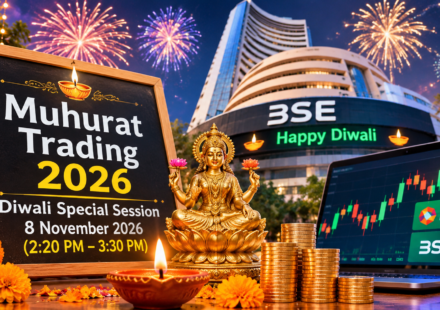
Muhurat Trading 2026: Celebrate the Tradition Without Turning It Into a Risky Bet

As Indian stock markets prepare for their annual Diwali Muhurat Trading session, investors are once again getting an opportunity to begin the new Samvat year with a symbolic market transaction. For many families and traders, buying shares during the auspicious trading window is a long-standing tradition associated with prosperity and financial optimism.
However, market experts and investor education guidelines underline an important distinction: Muhurat Trading is a cultural and symbolic occasion, not an investment strategy. A purchase made during an auspicious hour does not automatically become profitable, and a stock bought on Diwali can lose value just like any other market investment.
The best way to participate is to respect the tradition while making decisions based on research, financial goals and risk management.
When is Muhurat Trading 2026?
The National Stock Exchange (NSE) and Bombay Stock Exchange (BSE) are conducting the special Muhurat Trading session on Sunday, November 8, to mark Diwali Lakshmi Pujan and the beginning of Samvat 2083.
The main equity trading session is scheduled from 2:20 pm to 3:30 pm IST. A pre-opening session will take place from 2:05 pm to 2:20 pm.
The special session allows investors to trade even though Sunday is normally a market holiday. It is shorter than a regular trading day and follows a separate schedule announced by the exchanges.
Investors should check their broker's trading platform and the relevant exchange circular for segment-specific timings, order restrictions and settlement details.
Why investors participate in the tradition
Muhurat Trading has become an established feature of India's financial markets. It is traditionally associated with the beginning of a new Hindu financial year, known as Samvat.
Many business communities consider Diwali an appropriate time to open new account books, begin fresh financial activities and seek blessings for prosperity. The stock market adopted a similar tradition, allowing investors and traders to make symbolic purchases during an auspicious period.
Some investors buy a small quantity of shares to mark the occasion, while others use the session to review their portfolios or begin a longer-term investment.
The emotional and cultural significance of the session is important, but it should not replace financial planning. Market prices continue to be determined by demand, supply, company performance, economic conditions and investor expectations.
1. Decide your budget before the market opens
The first step is to decide how much money you are comfortable investing.
Investors should avoid putting a large amount into the market simply because the occasion is considered auspicious. A symbolic purchase can be small and meaningful without putting household finances under pressure.
Money reserved for rent, education, medical expenses, loan payments or emergency savings should not be used for an occasion-based stock purchase.
A predefined budget also helps prevent emotional decisions during a short trading session, when prices can move quickly.
2. Choose companies based on fundamentals
Investors should examine a company's financial health rather than selecting shares only because they are popular during Diwali.
Important factors include revenue growth, profitability, debt levels, cash flow, management quality and the company's competitive position.
A business with a sustainable model and sound financial performance may deserve consideration for a long-term portfolio. However, even strong companies can face valuation risks, business challenges and market volatility.
Investors should also consider whether the current share price is reasonable compared with the company's earnings and future prospects.
3. Avoid buying stocks because of social media tips
Muhurat Trading often attracts a large number of market participants, including first-time investors. This can make social media recommendations, forwarded messages and unverified stock calls particularly influential.
SEBI's investor education guidance warns people against making investment decisions based on unsolicited stock tips and unrealistic promises of returns.
Investors should independently research any company before placing an order. If professional guidance is needed, they should consult a SEBI-registered investment adviser rather than relying on anonymous online recommendations.
No individual or platform can guarantee profits from a stock market transaction.
4. Stay away from unnecessary leverage and derivatives
A short trading session can encourage inexperienced participants to attempt quick trades. However, using borrowed money or entering complex derivative positions without sufficient knowledge can increase financial losses.
Options and futures involve additional risks, including rapid price movements, expiry-related losses and the possibility of losing a substantial amount of capital.
For investors who do not fully understand these instruments, a simple cash-market transaction may be easier to evaluate than a leveraged trade.
The objective should be to participate responsibly, not to maximise the number of transactions during the special session.
5. Use limit orders and understand market volatility
Because Muhurat Trading operates for a limited period, investors may encounter sudden changes in buying and selling interest.
A limit order allows an investor to specify the maximum price they are willing to pay when buying a share. It can help avoid paying an unexpectedly high price during a sharp movement.
However, a limit order does not guarantee execution. If the market does not reach the specified price, the order may remain unexecuted.
Investors should also check liquidity, the bid-ask spread and applicable brokerage charges before placing an order.
6. Diversify instead of concentrating money in one stock
Putting the entire investment budget into one company can expose an investor to unnecessary concentration risk.
Diversification across companies, sectors and asset classes can reduce the impact of poor performance in a single investment. The appropriate mix depends on financial goals, investment horizon and individual risk tolerance.
The Securities and Exchange Board of India advises investors to consider their objectives, time horizon and ability to handle losses before selecting investments.
For someone beginning their investment journey, diversified and regulated investment products may be worth understanding alongside direct equity investing.
7. Think beyond the one-hour session
The real test of an investment is not whether it was purchased during Muhurat Trading, but whether it continues to fit the investor's financial goals over time.
Investors should have a clear reason for buying a share and decide how they will monitor its performance. A long-term investment should be evaluated through business developments and financial results rather than every small price movement.
They should also retain transaction confirmations, understand settlement obligations and review their holdings after the session.
A tradition should encourage discipline, not speculation
Muhurat Trading provides a unique connection between India's cultural traditions and its financial markets. It offers investors an opportunity to mark the beginning of Samvat 2083, but it does not change the fundamental risks of investing in equities.
A small, researched purchase can be a meaningful way to participate. Chasing popular stocks, borrowing money or making impulsive decisions in the hope of quick profits can turn a positive tradition into an avoidable financial risk.
Ultimately, the best way to get Muhurat Trading right is to approach it with a clear budget, independent research and realistic expectations. The auspicious moment may mark the beginning of a new investment year, but long-term financial discipline is what matters most.
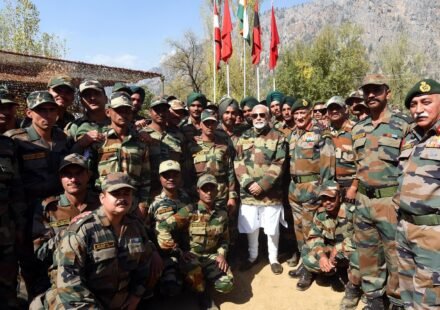
Modi Reaffirms Diwali Tradition With Soldiers, Sends Message of Peace and Prosperity to India
Prime Minister Narendra Modi on Saturday extended warm Deepavali greetings to people across India, wishing them happiness, peace and prosperity. He also confirmed that he would continue his annual tradition of celebrating the festival of lights with members of the country's armed forces, keeping his focus on the soldiers who remain on duty while millions of families celebrate at home.
In a video message shared on his social media accounts, Modi described Diwali as a festival that represents India's determination to overcome darkness. He said the country was being illuminated with lights and extended his wishes to citizens for a joyful and prosperous festive season.
The Prime Minister said he celebrates Deepavali with enthusiasm, just like other people, but has made it a regular practice to spend the occasion among soldiers. He indicated that he would follow the same tradition this year.
"Like you, I celebrate Diwali with great enthusiasm; and as you know, it has become a regular practice of mine to spend this time among our soldiers — a tradition I will continue this year as well," he said in his message.
Modi did not disclose the location where he plans to celebrate the festival with the armed forces. It therefore remains unclear whether he will visit an Army formation, a border post, a naval installation or another military location.
A tradition centred on India's armed forces
Celebrating Diwali with soldiers has become a familiar feature of Modi's public engagements during the festival. Over the years, he has visited military personnel at different locations, including strategically important border areas and naval installations.
These visits have often included interactions with troops, the exchange of festive greetings and sweets, and messages recognising the difficult conditions under which military personnel perform their duties. The Prime Minister has repeatedly described members of the armed forces as an extended family and said that spending the festival with them gives him an opportunity to acknowledge their service.
The tradition also draws attention to the fact that many soldiers cannot return home during major festivals. Personnel deployed along India's borders, in high-altitude areas, at sea and at other sensitive locations must continue their responsibilities even when their families are celebrating.
For these service members, festive occasions can mean long periods away from parents, spouses and children. Their duties may involve extreme weather, difficult terrain, security threats and demanding operational schedules.
By choosing to spend Diwali with troops, the Prime Minister seeks to highlight the contribution of personnel who remain on duty to protect the country during national celebrations.
Message of light, hope and togetherness
Alongside his announcement about meeting soldiers, Modi shared a broader message about the meaning of Diwali. He described the festival as a symbol of the victory of light over darkness, goodness over evil and hope over despair.
In a separate message published through the government's Jan Sampark Portal, he said the occasion offered an opportunity to celebrate India's cultural traditions and strengthen bonds of togetherness.
He expressed the hope that the festival would bring happiness, harmony and prosperity to every household. He also encouraged people to spread kindness, embrace positivity and work towards a brighter future.
The Prime Minister called on citizens to move forward with renewed energy and determination towards building a prosperous and developed India, a goal his government promotes through the vision of 'Viksit Bharat'.
His message combined traditional festive wishes with an appeal for unity, optimism and collective responsibility. The emphasis on togetherness was particularly relevant to a festival widely celebrated through family gatherings, community events, prayers and the exchange of gifts.
Previous Diwali visits to military locations
Modi's association with Diwali celebrations alongside security personnel goes back several years. During earlier occasions, he visited soldiers in locations including Siachen, Gurez Valley, Nowshera, Kargil and Lepcha in Himachal Pradesh.
In 2022, he celebrated Diwali with soldiers in Kargil, where he praised their courage and described the opportunity to spend the festival with them as a special experience. In 2023, he visited Lepcha in Himachal Pradesh and celebrated with security personnel stationed in the region.
In 2025, he celebrated Diwali with Indian Navy personnel aboard the indigenous aircraft carrier INS Vikrant off the western coast near Goa and Karwar. The visit included interactions with naval personnel and activities highlighting the capabilities of the warship.
These occasions have provided opportunities for the Prime Minister to recognise the contribution of the Army, Navy, Air Force and other security personnel. They have also brought public attention to the role of military families, whose members often manage household responsibilities while loved ones remain deployed away from home.
Why the message matters
The announcement carries significance beyond the formal exchange of festive greetings. Diwali is one of India's most widely celebrated festivals, but its timing also highlights the contrast between celebrations in homes and the responsibilities of personnel stationed in difficult or remote areas.
Military deployments do not stop for festivals. Soldiers continue guarding borders, monitoring sensitive locations and carrying out operational duties while the rest of the country observes the occasion.
The Prime Minister's message therefore serves as a reminder that national celebrations are also an opportunity to recognise those who help maintain the country's security. His annual visits have become a visible expression of that recognition.
At the same time, the announcement should not be interpreted as confirmation of a particular military visit or operational programme. The Prime Minister has said that he will continue the tradition, but has not publicly identified the destination or provided details of the schedule.
As Diwali celebrations approach, his message has conveyed two central themes: wishes for peace and prosperity for every household, and appreciation for the soldiers who remain away from their families to perform their duties.
Modi concluded his greeting by wishing the country a happy Diwali, reiterating his commitment to celebrating the festival with India's brave soldiers once again this year.
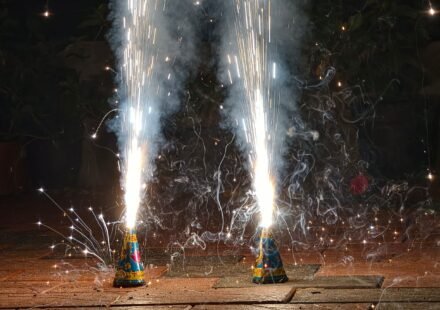
Delhi-NCR Gets a Two-Day Diwali Window for Green Crackers Before Full Ban Returns
The Supreme Court has granted a limited relaxation of firecracker restrictions in Delhi-NCR for Diwali, allowing people to use certified green crackers on November 7 and 8 during specified morning and evening hours. The temporary permission will end on November 8, with the complete ban on firecrackers set to return from November 9.
The decision offers residents a narrow opportunity to include fireworks in their Diwali celebrations while keeping restrictions in place to address the region’s recurring air pollution problem. The court has made clear that the relaxation is conditional: only approved green crackers can be used, strict time limits must be followed, and fireworks are prohibited near designated sensitive locations.
Diwali will be celebrated on November 8 this year. The order therefore covers the day before the festival and the festival itself, rather than creating a general permission to use firecrackers throughout the festive season.
When Can Residents Use Green Crackers?
Under the court’s directions, certified green firecrackers may be burst in Delhi-NCR only during two daily windows on November 7 and 8:
• Morning: 6 am to 7 am
• Evening: 8 pm to 10 pm
Fireworks outside these periods will not be covered by the temporary relaxation. Residents should not interpret the order as permission to use conventional firecrackers or to continue celebrations with fireworks after the permitted hours.
The Supreme Court has also directed authorities to ensure that the restrictions are communicated clearly to the public. Compliance will depend not only on residents understanding the permitted timings but also on local officials monitoring activity and taking action when violations occur.
The court’s approach seeks to accommodate festival traditions for a limited period without abandoning pollution-control measures altogether.
Fireworks Prohibited Near Hospitals, Schools and Other Sensitive Areas
The temporary permission does not apply everywhere. The court has prohibited the bursting of firecrackers within a 300-metre radius of hospitals, nursing homes, primary and district health centres, old-age homes and notified silence zones.
Educational institutions are also covered by the same restriction.
Authorities have been directed to identify these areas as “No-Cracker Zones”, mark their boundaries on the ground and publicise the restrictions. These measures are intended to make the rules easier for residents to understand and for enforcement teams to implement.
Such restrictions are particularly relevant for people who may be more vulnerable to smoke, noise and other effects associated with fireworks. Hospitals and healthcare facilities need to protect patients, while old-age homes may accommodate residents who are sensitive to environmental disturbances.
The practical impact will depend on how clearly the boundaries are marked and whether people follow the restrictions. Residents planning celebrations should check local instructions rather than assume that every public space or residential neighbourhood is covered by the same conditions.
Only Certified Green Crackers Are Permitted
The Supreme Court has not opened the market to all types of fireworks. Its directions distinguish approved green crackers from conventional or unauthorised products.
Manufacturers holding valid certification for green crackers from the Council of Scientific and Industrial Research–National Environmental Engineering Research Institute (CSIR-NEERI), along with the required certification from the Petroleum and Explosives Safety Organisation (PESO), have been permitted to manufacture only eligible products listed on the CSIR-NEERI website during the specified period from November 2 to November 6.
The order also prohibits the manufacture and sale of firecrackers joined together in series, commonly known as ladis or garlands. Crackers containing barium, as well as products that have not been approved by CSIR-NEERI as green crackers, are not permitted.
These requirements are intended to prevent conventional fireworks from being sold or used under the label of environmentally friendlier products. They also place responsibility on manufacturers, traders and enforcement agencies to ensure that products meet the applicable standards.
Consumers should therefore avoid assuming that a packet is legally permitted simply because its packaging describes it as a green or low-pollution firecracker. Certification and compliance with the court’s directions are central to the temporary exemption.
Why Green Crackers Matter in the Pollution Debate
Green crackers have been developed to reduce certain emissions and other environmental effects associated with conventional fireworks. Their formulations and designs aim to limit some polluting substances, smoke and noise.
However, the term “green” does not mean pollution-free. Even approved products can release particulate matter and other emissions when used. Their environmental impact also depends on the number of crackers burned, local weather conditions and the concentration of fireworks activity in a particular area.
Delhi-NCR regularly faces serious air-quality challenges during the post-monsoon and winter periods. Low temperatures, weak winds and atmospheric conditions can contribute to the accumulation of pollutants. Vehicle emissions, construction dust, industrial activity and other sources also affect air quality.
Firecrackers can add to this burden during major celebrations, especially when large numbers are used within a short period. The Supreme Court’s restrictions reflect the challenge of balancing cultural practices with concerns about public health and environmental protection.
The temporary permission does not establish that green crackers are harmless. Instead, it creates a limited exception under specific conditions while the broader restrictions remain in force.
Enforcement Will Determine Whether the Rules Work
The court’s decision also puts the focus on enforcement. Restrictions can have limited practical value if prohibited products remain widely available or if people continue using fireworks outside authorised hours.
Authorities across Delhi-NCR will need to monitor manufacturing, distribution, sales and use. They must also communicate the rules clearly so that residents understand the difference between permitted green crackers and prohibited fireworks.
The court has directed that manufacturers and traders provide monetary security, with violations potentially resulting in the forfeiture of the deposit. This provision is intended to strengthen compliance and create a financial consequence for those who disregard the order.
Enforcement is likely to be especially important in the days immediately before Diwali, when demand for fireworks increases and officials may face pressure to prevent illegal products from entering the market.
Residents also have a role to play by checking product certification, following the authorised timings and avoiding fireworks in restricted zones. Choosing lamps, lights and other non-firework decorations can provide alternatives for households that want to celebrate without adding smoke or noise.
What Happens After November 8?
The relaxation is temporary. The complete firecracker ban across Delhi-NCR is scheduled to be restored from November 9, 2026.
That means the permission should not be interpreted as a permanent change in the region’s firecracker policy. It applies only to the two specified dates and remains subject to the court’s conditions.
For residents, the immediate message is straightforward: only certified green crackers are permitted, only during the designated hours on November 7 and 8, and not within the specified 300-metre exclusion zones. Conventional, barium-containing and unauthorised fireworks remain prohibited.
The decision represents a limited compromise between Diwali celebrations and the continuing need to control air pollution. Whether that balance succeeds will depend on responsible public behaviour and effective enforcement.
The key takeaway: Delhi-NCR has received a two-day, tightly regulated window for green firecrackers, not a general lifting of the ban. From November 9, the complete prohibition returns under the court’s order.