
India FY27 Growth Forecast at 7.3% as Inflation Risks Persist

India’s Finance Ministry expects the country’s economy to grow by 7.3% in the financial year ending March 2027, according to its October economic review. The projection points to continued economic expansion, although policymakers have warned that inflation, volatile energy prices and unfavourable weather conditions could complicate the outlook.
The ministry’s estimate is slightly higher than the Reserve Bank of India’s 7.1% growth forecast issued earlier this month. However, the outlook remains exposed to external shocks, including geopolitical tensions, fluctuations in crude oil prices and uncertainty in global financial markets.
The assessment highlights a central challenge for India’s economy: sustaining strong growth while preventing rising costs from putting pressure on households, businesses and investment.
Why the Finance Ministry Expects Growth of 7.3%
The government’s latest projection reflects its assessment of economic activity and available indicators across major sectors.
Domestic demand, industrial activity, services and investment remain important sources of support. A large consumer market and continued demand for goods and services provide the economy with a degree of resilience, even as international conditions remain uncertain.
India’s growth outlook is also supported by its expanding services sector and efforts to strengthen domestic manufacturing. Infrastructure development, business investment and consumer spending can help sustain economic activity when external demand or international trade conditions become less favourable.
However, a growth forecast is not a final result. Actual performance will depend on developments throughout the financial year, including the pace of consumption, private investment, agricultural output and global demand.
The ministry’s estimate should therefore be understood as an assessment based on current information rather than a guarantee that the economy will expand at precisely that rate.
Inflation Remains a Key Concern
Despite the relatively strong growth projection, the Finance Ministry has warned that near-term inflation will depend on several factors, particularly food supplies, international energy prices and domestic liquidity conditions.
Food prices are especially important in India because changes in the cost of essential items can quickly affect household budgets. Disruptions to agricultural production, transportation or distribution can increase prices even when overall economic activity remains strong.
Higher food costs can also influence spending decisions. When households devote more money to essentials, they may have less available for discretionary purchases such as clothing, consumer electronics, travel and other services.
For businesses, inflation can raise the cost of raw materials, transport, electricity and wages. Companies may absorb some of those expenses, reduce investment or pass part of the increase on to customers.
The eventual impact will depend on the size and duration of price increases, as well as the ability of producers and retailers to manage their costs.
Crude Oil Could Add to Price Pressures
International energy prices remain another major risk for India, which relies heavily on imported crude oil to meet its energy needs.
When oil prices rise, the effects can extend well beyond petrol and diesel. Higher energy costs can increase freight charges, manufacturing expenses and the cost of transporting food and other goods.
If elevated oil prices persist, they can also put pressure on India’s import bill and increase demand for foreign currency. This can contribute to weakness in the rupee, potentially making imported commodities and other overseas purchases more expensive.
The relationship is not automatic, because exchange rates also depend on capital flows, global interest rates and other economic factors. Nevertheless, sustained increases in energy prices can make the task of controlling domestic inflation more difficult.
For consumers, the consequences may include higher transport and household expenses. For businesses, the effects could appear in profit margins, production costs and decisions about future investment.
El Niño Adds Uncertainty to the Agricultural Outlook
The ministry has also highlighted risks associated with an intensifying El Niño, a climate pattern that can alter rainfall and temperature conditions in different parts of the world.
One concern is its potential effect on soil moisture ahead of India’s winter sowing season, when farmers plant rabi crops. Inadequate soil moisture or unfavourable weather could affect planting conditions and agricultural output.
Agriculture remains closely connected to rural employment, household income and demand for consumer goods. If crop production or farm earnings weaken, the effects can spread beyond the agricultural sector.
Food supplies could also be affected, potentially adding to inflationary pressure if production falls short of demand.
However, El Niño does not determine India’s agricultural performance on its own. The distribution of rainfall, irrigation availability, reservoir levels, crop choices and government support measures will also influence the outcome.
Monitoring these conditions will be important for assessing whether weather-related risks translate into a measurable slowdown in agricultural activity or an increase in food prices.
RBI’s Interest-Rate Decisions and Liquidity Management
Monetary policy is another factor in the economic outlook. The Finance Ministry said the effectiveness of the RBI’s recent interest-rate increase in limiting secondary inflation effects would depend partly on active liquidity management.
Interest-rate increases can help contain inflation by making borrowing more expensive and moderating demand. However, monetary policy generally affects the economy with a time lag, and its effects depend on how households, businesses and financial institutions respond.
Liquidity management is also important because the availability and cost of money influence lending conditions, financial-market stability and the transmission of monetary policy.
Policymakers face a balancing act. If inflation remains elevated, further restraint may be needed to prevent price pressures from becoming persistent. At the same time, excessively tight financial conditions could weaken borrowing, investment and consumption.
The appropriate policy response will depend on incoming inflation data, economic activity and the sources of any price increases.
Rupee Pressure and Foreign-Exchange Reserves
The ministry has noted continuing pressure on the rupee from oil prices, portfolio investment outflows and wider global uncertainty.
A weaker rupee can increase the domestic cost of imported goods, including energy and certain industrial inputs. This can contribute to imported inflation and affect companies that depend on overseas supplies.
The government nevertheless retains a substantial external buffer. India’s foreign-exchange reserves stood at approximately $721 billion as of October 16, 2026, equivalent to about 10.3 months of import cover, according to the ministry’s assessment.
Large reserves can help strengthen confidence in the country’s ability to meet external payment needs and manage periods of financial-market volatility. They do not eliminate currency risks, but they provide policymakers with an important source of resilience.
The RBI has also taken measures involving dollar provision for state-run oil companies and steps aimed at limiting currency speculation. Such measures may help reduce short-term exchange-rate volatility, although their effectiveness will depend on market conditions.
What the Growth Outlook Means for Households and Businesses
A 7.3% growth projection suggests that India’s economy is expected to continue expanding at a relatively rapid pace. But the benefits of economic growth depend on how that expansion translates into employment, incomes, investment and purchasing power.
For households, the most immediate issue may be the cost of living. Strong overall growth does not necessarily mean that every family will experience an improvement in living standards, particularly if food, fuel and other essential expenses rise faster than income.
Businesses will be watching demand, borrowing costs, exchange rates and input prices when making decisions about production and investment. Companies that can manage costs and respond to domestic demand may continue to expand, while sectors exposed to imported energy or raw materials could face greater pressure.
For investors, the combination of growth potential and inflation risks means that the economic outlook will depend on more than the headline GDP number. Interest rates, currency movements, corporate earnings and international developments will remain important considerations.
The Road Ahead
India enters the remainder of FY2026–27 with a growth outlook supported by domestic economic activity but exposed to several significant risks.
The Finance Ministry’s 7.3% projection provides an indication of confidence in the economy’s underlying momentum. Yet sustained expansion will depend on food-price management, energy-market developments, agricultural conditions and the ability of policymakers to maintain financial stability.
If domestic demand and investment remain resilient while inflation is contained, India may be able to sustain strong growth through the financial year. If oil prices rise sharply or weather conditions damage agricultural output, the economy could face higher costs and renewed pressure on household spending.
The coming months will help determine whether the current growth outlook can be maintained. For policymakers, the task will be to protect the foundations of economic expansion while ensuring that inflation and external shocks do not undermine its benefits.
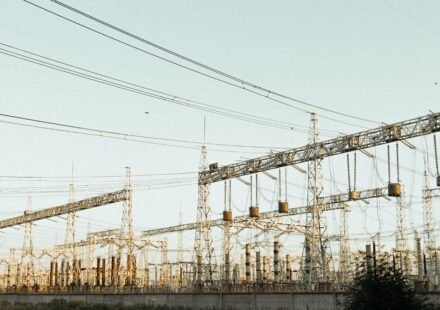
Half of India’s Coal Power Plants Face Critical Fuel Shortages as Electricity Demand Climbs
India’s power sector is facing renewed pressure as nearly half of the country’s coal-fired power plants operate with critically low fuel reserves, highlighting the challenge of balancing rising electricity consumption with reliable coal supplies.
Data from the Central Electricity Authority (CEA) shows that 96 of India’s 191 coal-fired power plants had critically low coal stocks as of October 19. The number has climbed from 60 in mid-September, indicating that the fuel situation remains under strain despite efforts to improve deliveries to power stations.
The situation comes as hotter-than-usual weather, linked to the El Niño climate pattern, continues to support strong demand for electricity. Increased requirements for cooling and irrigation, combined with weaker hydropower generation following below-normal monsoon rainfall, have added to the pressure on thermal power stations.
Although the figures highlight a significant supply challenge, critically low stocks do not automatically mean that plants have stopped operating or that widespread power cuts are imminent. Instead, the classification signals that available fuel inventories have fallen below prescribed safety thresholds.
Coal Inventories Fall Below Critical Levels at 96 Plants
The latest figures indicate a substantial deterioration in the number of plants with critically low coal inventories over recent weeks.
Under the reported classification, a plant is considered critically low on fuel when its available coal is sufficient to generate electricity for fewer than three days. Such limited reserves leave power stations with less flexibility to manage unexpected increases in consumption or delays in incoming coal shipments.
The rise from 60 affected plants in mid-September to 96 by October 19 suggests that fuel availability has struggled to keep pace with the needs of several generating stations.
India relies heavily on coal-fired electricity to meet demand from households, industries, commercial establishments and agricultural users. Consequently, maintaining adequate fuel inventories at thermal power stations is an important part of ensuring a stable electricity supply.
However, the number of plants in the critical category is only one indicator of the situation. The actual impact on electricity generation will also depend on the quantity of coal available at individual stations, the speed of replenishment and the operating capacity of each plant.
Hot Weather Adds to Electricity Consumption
Weather conditions have become a significant factor behind India's elevated electricity requirements.
Higher temperatures increase the use of air conditioners, coolers, refrigerators and other electrical appliances. Agricultural demand for irrigation can also add to consumption, particularly when rainfall is insufficient.
The El Niño-linked weather pattern has contributed to concerns about prolonged heat and electricity demand extending beyond the usual summer peak. This creates additional pressure on generating stations that must continue producing electricity while managing their fuel reserves.
According to figures cited in recent reporting, India's daily peak power demand has been running approximately 45 to 50 gigawatts above the corresponding level a year earlier. The increase has raised the importance of maintaining reliable generation from conventional power sources.
Lower Hydropower Output Increases Dependence on Coal
The pressure on coal stocks is not solely a result of higher consumption. Changes in the electricity generation mix have also contributed to the challenge.
Below-normal monsoon rainfall has reduced the availability of water for hydropower generation in parts of the country. When hydroelectric output declines, other sources must compensate to meet the electricity requirement.
Coal-fired power stations have consequently played a larger role in balancing supply and demand. Higher utilisation can help prevent an electricity shortfall, but it also increases the amount of fuel consumed by thermal plants.
Central Electricity Authority data cited in recent reporting showed that coal-fired electricity generation rose 13.3% year-on-year in September, while hydropower generation declined 20%.
The figures illustrate how changes in weather conditions can affect the broader energy system. When hydropower output weakens at the same time that electricity consumption remains high, coal-fired stations face pressure from both increased dispatch requirements and the need to replenish their inventories.
Government Steps to Strengthen Coal Supplies
The government has been working to improve coal availability through higher supplies and more efficient transportation to power stations.
The Ministry of Coal reported earlier in October that domestic coal stocks at power plants had remained above 18 million tonnes since September 29. It also said the pace of inventory depletion had slowed during the first ten days of October as deliveries improved.
According to the ministry, average daily coal supplies to the power sector reached 2.49 million tonnes during October 1–10, compared with 2.21 million tonnes per day in September. Railway loading also increased, supporting the movement of coal from production areas to generating stations.
These figures provide important context for the latest critical-stock data. Better aggregate supplies and slower overall depletion can coexist with shortages at individual plants because coal is not necessarily distributed evenly across the network. Some stations may continue to face delivery constraints even when nationwide supply indicators improve.
The challenge is therefore not only to increase the total amount of coal available but also to ensure that vulnerable power plants receive fuel when they need it.
Why Coal Imports Remain a Complicated Option
One possible response to domestic fuel pressure is to supplement locally produced coal with imported supplies. However, international prices and currency movements can make this option expensive for power producers.
A report published on October 19 said the government had shelved a proposal to require power plants to blend imported coal with domestic supplies. The reported decision followed concerns about high seaborne coal prices and the increased cost of imports amid broader energy-market uncertainty.
Instead, policymakers were reported to be encouraging Coal India to increase production and seeking more reliable transportation through the railway network.
Higher domestic output and improved logistics could help address supply pressure without imposing the additional costs associated with mandatory imports. However, the effectiveness of this approach will depend on whether production and transportation improvements translate into timely deliveries to the plants with the lowest reserves.
Could the Situation Affect Electricity Supply?
Low coal inventories increase the risk that a power station could face operational constraints if deliveries are delayed or demand rises unexpectedly. However, the current figures alone do not establish that widespread blackouts will occur.
The impact will depend on several factors, including daily electricity demand, coal arrivals, the availability of alternative generating sources and the ability of the power system to transfer electricity between regions.
India's expanding renewable energy capacity provides another source of electricity, but solar and wind generation vary according to weather and time of day. Energy storage can help balance these fluctuations, although limited storage availability can increase reliance on thermal power during periods of high demand or when renewable generation declines.
Maintaining adequate coal stocks is therefore important even as India expands its cleaner energy sources.
What to Watch in the Coming Days
The next key indicators will be the number of plants remaining in the critical-stock category, the pace of coal deliveries and changes in peak electricity demand.
A sustained improvement in railway loading and domestic production could help replenish vulnerable stations. Cooler weather and lower consumption could also reduce pressure on inventories. Conversely, continued heat, weaker hydropower output or transport disruptions could make stock management more difficult.
For now, the latest figures underline a challenge for India's energy system: keeping electricity supplies dependable while demand remains high and fuel inventories at many coal-fired plants remain limited.
The bottom line: Nearly half of India's coal-fired power plants had critically low fuel reserves as of October 19. Government efforts to increase domestic supply and improve rail transportation are under way, but the key test will be whether coal reaches the plants most in need of replenishment before further demand pressures emerge.