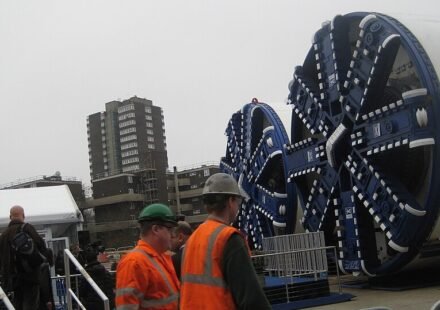
China Tightens Export Rules on Tunnel Boring Machines, Key Parts and Specialised Equipment

China has announced new export controls on tunnel boring machines and several related components, introducing additional licensing requirements for equipment used in major infrastructure projects. The measures, announced by China's Ministry of Commerce and the General Administration of Customs on October 19, are scheduled to take effect on November 18, 2026.
The controls cover tunnel boring machinery, selected critical components and specialised technologies. The announcement also includes certain walking excavators and high-altitude concrete-spraying equipment, broadening the scope beyond underground tunnelling alone.
The measures form part of China's regulatory framework for goods and technologies that may have both civilian and military applications. They do not amount to a blanket ban on exports to every country.
Which machines and components are covered?
China's announcement identifies full-face tunnel boring machines, including earth-pressure-balance and slurry-pressure-balance shield machines, as controlled items.
The restrictions also cover selected components specifically designed for these machines, including:
• Cutterheads used to excavate rock and soil.
• Screw conveyors that remove excavated material.
• Segment erectors that install tunnel-lining sections.
• Main drive systems and other key units.
• Certain technologies used to remanufacture controlled equipment.
Tunnel boring machines are essential for constructing underground metro systems, railway tunnels, road tunnels and other large infrastructure projects. Their specialised components can be difficult to replace quickly if export approvals delay deliveries.
Export procedures will depend on the destination
Under the published rules, exports to sensitive countries and regions with which China has disputes require permission from the competent Chinese commerce authorities. Exports of covered items to those destinations cannot proceed without the required authorisation.
For other destinations, exporters must register the required information and obtain export documentation. Exporters and end users must also undertake not to transfer or supply Chinese-origin controlled items to the specified sensitive destinations without permission.
The new rules therefore introduce additional compliance requirements rather than automatically stopping all international shipments. The practical impact will depend on the equipment involved, its destination and whether the necessary approvals are granted.
Controls extend to other specialised machinery
The announcement also identifies certain walking excavators with specified capabilities, including the ability to cross substantial obstacles, travel through deep water or climb steep slopes.
In addition, it covers specialised wet-spraying machines designed for high-altitude environments, along with selected components and technologies associated with that equipment.
China says the controls are being introduced under its export-control, foreign-trade and customs laws, with the stated objective of safeguarding national security and national interests.
Why tunnel boring machines matter to global infrastructure
Tunnel boring machines can excavate long underground passages while supporting the surrounding ground and, in many systems, installing tunnel-lining segments. They are widely used in urban rail networks, high-speed railway projects, road tunnels and certain energy and water infrastructure developments.
China is an important international supplier of tunnelling machinery. Reuters, citing UN Comtrade data, reported that China exported approximately $793 million worth of self-propelled coal or rock cutters and tunnelling machinery in 2025.
Additional export procedures could affect procurement schedules for overseas construction companies if approvals take time or particular equipment is difficult to source elsewhere. However, the announcement alone does not establish that projects in any specific country will face delays.
What happens next?
The new controls are due to come into force on November 18, 2026. Companies importing the covered machinery or components will need to review the updated control list, confirm the classification of their equipment and check the documentation required for their destinations.
The eventual effect on international supply chains will depend on how applications are processed and how exporters and importing countries adapt to the new requirements.