French Students Vow to Continue Protests After Government Promises 3,000 Teachers

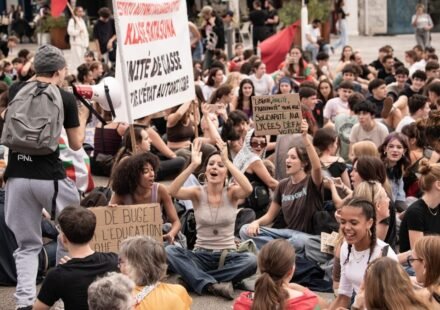
French student unions have vowed to continue their nationwide protests despite securing what they describe as their first significant victory, after the government promised to deploy around 3,000 qualified teachers to schools facing staffing shortages.
The demonstrations, now in their third week, have spread across France as students demand better school conditions, adequate teaching staff and greater investment in public education. According to the education ministry, 141 schools remained closed on Friday, October 9.
The movement has also attracted support from university students and prominent institutions in Paris, increasing pressure on the government to respond to concerns about the country's education system.
Government Promises Additional Teachers
The French government announced the teacher deployment plan late Thursday in an effort to address one of the protest movement's central demands: a shortage of teachers in public schools.
Education Minister Édouard Geffray said the measure would take effect immediately and cost several dozen million euros. The plan involves assigning around 3,000 fully qualified teachers who have not yet started work to schools with the most urgent staffing needs.
Student representatives welcomed the announcement but argued that it should not have taken widespread school blockades to secure action.
Marius Mesnil, a representative of a high school student union, told Franceinfo radio that the government's decision showed continued protest could produce results.
However, the unions have made clear that the concession does not settle their wider concerns about the quality and accessibility of public education.
Why Are French Students Protesting?
Students have raised concerns about staff shortages, overcrowded classrooms, deteriorating school facilities and unequal educational opportunities.
France's public education system has faced growing pressure as the government attempts to control public spending while responding to demands for better-funded services. Students and teachers argue that inadequate staffing and resources are affecting learning conditions, particularly in disadvantaged communities.
Education ministry figures cited in media reports indicate that nearly 10% of teaching hours in French public high schools remain unstaffed. The problem has fuelled concerns that families with greater financial resources may increasingly turn to private schools, potentially widening educational inequality.
Protesters want the government to take more comprehensive action rather than rely on temporary measures.
University Blockades Add to Pressure
The demonstrations have increasingly affected universities, including some of Paris's most prestigious institutions.
Police cleared a blockade at Assas university, a leading French law school, on Friday morning. Nearby, the elite engineering institution Mines Paris also faced disruption from blockades.
The Institut Catholique de Paris announced a shift to remote classes because of a blockade affecting its campus.
The participation of university students has broadened the movement beyond high schools, giving the protests a wider public profile and increasing the challenge facing the authorities.
Thousands Take to the Streets
France's Interior Ministry said approximately 71,500 people took part in demonstrations across Paris and other locations on Thursday.
While many protests were peaceful, authorities reported incidents of violence and vandalism in some areas. The unrest has also raised concerns about injuries among education staff and the impact of school disruptions on students.
Student and teacher unions have called for another round of nationwide school strikes on Tuesday, October 13, signalling that the government's latest commitment has not ended the campaign.
Government Faces a Difficult Balancing Act
The protests present a difficult challenge for the French government, which must address demands for additional education spending while attempting to control public debt.
The dispute has also drawn attention to broader questions about public-service funding and the distribution of government resources. Financial markets and investors are watching how the authorities respond, given France's budgetary pressures.
For the student movement, the promise to deploy additional teachers represents an initial result rather than a final settlement. Whether the government can translate its commitment into meaningful improvements in classrooms may determine the next phase of the protests.
What happens next?
Student and teacher unions are preparing for further nationwide action on October 13. The coming days will test whether the government's teacher deployment plan can ease tensions or whether demonstrations and school blockades will continue.
France Student Protests Escalate as 86,000 Demonstrate, Teen’s Grenade Injury Fuels Anger
France's nationwide high-school protests intensified on Tuesday as about 86,000 people demonstrated outside Paris, while students again blockaded schools across the country. The latest demonstrations come one day after a 15-year-old student lost his hand in a grenade explosion during clashes with riot police in Lens.
86,000 people demonstrate outside Paris
France's Interior Ministry estimated that around 86,000 people joined demonstrations outside Paris on Tuesday morning, with a larger rally expected in the capital later in the day. Protests were also reported in cities including Marseille, Strasbourg, Lyon and Nantes.
The demonstrations are continuing despite the government's efforts to address students' concerns and restore order.
1,800 schools affected
The High School Students Union said around 1,800 high schools were blocked or scheduled to close on Tuesday. Some education authorities have moved classes online because of the disruption.
The latest protests are being driven by complaints over teacher shortages, overcrowded classrooms and deteriorating school buildings.
Teen's injury becomes major focus
The injury to the 15-year-old in Lens has become a major point of contention during the latest protests.
According to local reporting cited by Reuters, the teenager lost his hand and part of his lower arm after picking up a police dispersal grenade that exploded. The Pas-de-Calais prefect confirmed that an investigation had been opened but declined to comment on the exact circumstances of the incident.
The teenager remains hospitalized and was reported to be out of danger.
Government reports thousands of arrests
The Justice Ministry said more than 6,100 people have been arrested since the protests began, with the overwhelming majority being minors. More than 1,800 people are being prosecuted, including 1,483 minors, according to government figures cited by Reuters.
The government has also reported injuries among both police officers and teenagers during the unrest.
Police tactics under investigation
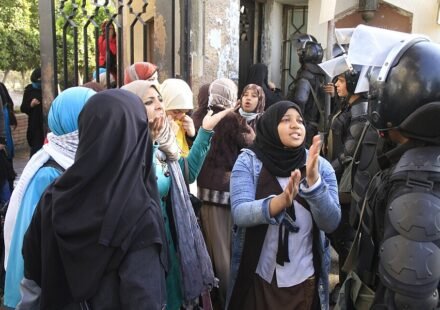
The latest escalation has intensified scrutiny of police crowd-control tactics. Rights groups have accused police of using excessive force, while authorities have defended the need to respond to violence and attacks on property.
Several investigations into police methods are underway, including cases involving serious injuries to young protesters.
The French government has said its priority is restoring order while also responding to students' concerns.
Protests continue across France
Tuesday's demonstrations represent the biggest nationwide day of action so far in the current wave of high-school protests.
The immediate focus is now on whether the large demonstrations remain peaceful and whether further clashes occur between protesters and police.
With thousands of students still participating and hundreds of schools affected, the government faces growing pressure to address the education demands while preventing further violence.