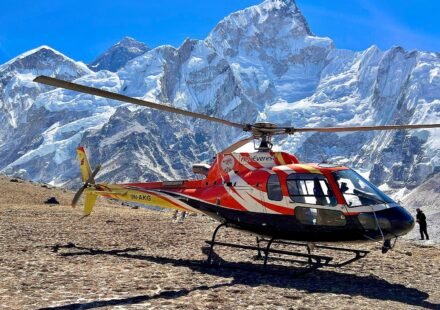
Indian Tourist Killed in Helicopter Collision Near Mount Everest, Investigation Underway

An Indian tourist was killed and several people were injured after two helicopters collided while attempting to land near Mount Everest in Nepal on Tuesday morning, November 3, 2026. The accident occurred at Pheriche, a high-altitude settlement in the Solukhumbu district that serves as an important stop for trekkers travelling towards Everest Base Camp.
The helicopters involved in the collision were operated by Fishtail Air and Air Dynasty, two private aviation companies that provide transportation in Nepal's mountainous regions. The crash has raised fresh questions about aviation safety in an area where helicopters play a crucial role in transporting tourists, climbers, medical evacuees and supplies.
According to initial reports from Nepal, the collision occurred at approximately 8:11 a.m. local time as the aircraft approached a helipad. Authorities have launched an investigation to establish exactly how the two helicopters came into contact and what circumstances led to the fatal accident.
The identity of the Indian tourist was subsequently reported by local media as Vasanth Kumar Balaramaramadu, a 47-year-old resident of Chennai, Tamil Nadu. Another passenger, identified in reports as a New Zealand citizen of Indian origin, was injured and taken for medical treatment.
How the Collision Occurred
The accident took place at Pheriche, in Ward 4 of the Khumbu Pasang Lhamu Rural Municipality in Solukhumbu district. The settlement lies along the popular trekking route to Mount Everest Base Camp and is approximately 150 kilometres northeast of Kathmandu by geographical distance.
Preliminary information indicates that both helicopters were attempting to land in the same area when the collision occurred. Reports suggest that their rotor blades struck each other, causing the aircraft to crash.
The exact sequence of events remains under investigation. Authorities have not yet established whether the collision resulted from a landing error, a communication problem, restricted visibility or another operational factor.
Initial reports also indicate that the accident did not trigger a fire. Rescue personnel and other helicopter operators responded to the incident, while local authorities began collecting information about the aircraft, passengers and flight operations.
Officials are expected to examine the aircraft, review available flight information and assess the conditions at the helipad. Any conclusions about responsibility or the precise cause of the crash will depend on the findings of the investigation.
Indian Tourist Dies, Injured Passenger Receives Treatment
The death of the Indian tourist has brought the tragedy into sharp focus for families in India and travellers visiting Nepal's Himalayan region.
Reports identified the deceased as a 47-year-old man from Chennai. The injured passenger was reported to be a New Zealand citizen of Indian origin who had been travelling aboard the Fishtail Air helicopter.
The injured passenger was evacuated for medical care. Initial reports indicated that he was taken to a hospital in the Kathmandu Valley, while other early accounts described treatment arrangements in the Lukla area. The precise sequence of medical transfers and the latest condition of all injured people should be confirmed through subsequent official updates.
Reports also indicated that pilots sustained injuries, although early accounts differed on the number of people hurt in the accident. Authorities were continuing to establish the complete details.
The incident demonstrates how a relatively short helicopter journey in the Himalayas can carry significant risks. For trekkers and climbers, helicopter transport is often essential because road access is extremely limited or unavailable in many remote settlements.
Why Helicopters Are Essential in the Everest Region
Nepal attracts visitors from around the world who travel to experience Mount Everest and the surrounding Himalayan landscape. Helicopters are widely used to transport tourists, support trekking operations, deliver supplies and evacuate people who become ill or exhausted at high altitude.
Pheriche is an important location along the route to Everest Base Camp. Trekkers travelling through the region may experience altitude-related illnesses, breathing difficulties, exhaustion and dehydration. In emergencies, rapid evacuation can be critical because reaching a hospital by foot may take considerable time.
The terrain makes aviation particularly valuable, but it also creates operational challenges. Mountainous landscapes can restrict flight paths, weather conditions can change quickly, and landing areas may have limited space. Snow and other surface conditions can also complicate landing operations.
These factors do not establish what caused Tuesday's collision. However, they explain why safety procedures, communication between pilots and ground teams, and careful coordination around helipads are especially important in high-altitude aviation.
Accident Raises Questions About Aviation Safety
The collision is likely to prompt renewed scrutiny of helicopter operations in Nepal's busy trekking areas. The country depends on mountain aviation for tourism and emergency services, making reliable safety procedures essential for passengers and flight crews.
Investigators will need to determine how the two helicopters approached the landing area, whether their movements were properly coordinated and whether weather or ground conditions played any role.
The findings could help authorities identify whether additional operational safeguards are needed. Possible areas of review include landing permissions, communication protocols, aircraft separation, helipad management and procedures for handling multiple arrivals.
It is important not to assume that any one of these factors caused the accident before the investigation is complete. A collision involving two aircraft can have several contributing circumstances, and conclusions require evidence rather than speculation.
For aviation companies, the incident is also a reminder that passenger confidence depends on effective risk management, properly trained crews and strict adherence to operating procedures.
Impact on Nepal's Trekking and Tourism Industry
The accident occurred during Nepal's autumn trekking season, when international visitors travel to the Everest region for mountain expeditions and hiking.
Helicopter services are an important part of the tourism economy, particularly for travellers who need transportation between remote settlements or require emergency evacuation. A serious accident can raise concerns among visitors about the safety of mountain flights.
However, the broader impact will depend on the investigation's findings and any measures introduced by Nepalese aviation authorities. A transparent investigation can help establish what happened and identify practical steps to reduce the likelihood of similar incidents.
For travellers planning a Himalayan trip, the incident highlights the importance of following operator instructions, understanding the risks of high-altitude travel and checking current weather and flight conditions.
The immediate priority remains providing medical assistance to injured people and establishing the circumstances of the collision.
The death of the Indian tourist is a tragic reminder of the challenges associated with flying in one of the world's most demanding mountain environments. As investigators examine the accident, the findings will be important not only for the families affected but also for the helicopter operators, tourism businesses and authorities responsible for aviation safety across Nepal's Himalayan region.