Houthi Strikes Hit Yemen’s Aden Airport After Deadly Attack on Presidential Palace

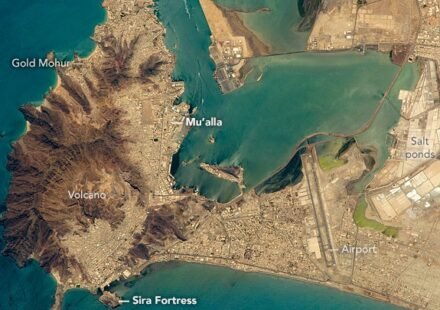
Two missiles struck the airport in Yemen’s southern port city of Aden on Friday night, October 16, according to reports from Yemeni officials. The attack was blamed on the Iran-aligned Houthi movement, adding to growing security concerns in a city that serves as the base of operations for Yemen’s internationally recognised government.
No casualties were immediately reported from the airport strike. Officials said the missiles landed inside the airport grounds, close to a Yemenia Airways passenger aircraft that was preparing for take-off. The aircraft was reportedly moved away from danger.
The strike followed an attack on Aden’s Al-Maashiq presidential palace complex on Thursday, October 15, which killed five people and injured 16, according to Yemen’s Health Ministry. The casualties included security personnel and civilian employees.
Presidential palace attack killed five
The presidential palace complex is an important government site in Aden, which has served as the seat of Yemen’s internationally recognised government since Houthi forces seized the capital, Sanaa, in 2014.
Yemeni officials said the Houthis fired missiles at the palace complex. The country’s prime minister and cabinet members were reported safe after the attack.
The Houthis said they had targeted a military operations headquarters associated with Saudi forces. However, Reuters reported that it could not independently verify the group’s claims about the target.
The latest attacks underline the growing danger facing government-held areas as fighting intensifies between the Houthis and forces backed by a Saudi-led coalition.
Aden remains the government’s operational centre
Despite the attacks, a Yemeni government adviser said the authorities intended to continue operating from Aden. The government has also instructed security and military agencies to take measures to protect state institutions.
Aden’s importance extends beyond politics. The southern port city is a key transport and commercial centre, and its airport is an important connection for passengers travelling into and out of government-held parts of Yemen.
Any sustained disruption to airport operations could affect civilian travel, government movement and humanitarian activities.
Yemen’s conflict enters a more dangerous phase
Yemen’s civil war began in 2014 when Houthi forces took control of Sanaa and pushed the internationally recognised government out of the capital. Saudi Arabia intervened militarily in 2015 in support of the government.
A truce agreed in 2022 reduced major hostilities for a period, but fighting has intensified again in recent weeks. Government forces have been seeking to regain territory, while the Houthis have continued missile and drone operations.
The renewed violence is also unfolding amid wider regional tensions involving Saudi Arabia and other countries. Recent attacks attributed to the Houthis have targeted infrastructure in Saudi Arabia, including airports and energy-related sites.
Civilian safety and humanitarian concerns
The latest strikes raise further concerns about the safety of civilians and essential infrastructure. Yemen has endured years of conflict, displacement, food insecurity and pressure on its healthcare system.
Further attacks on airports, ports or government facilities could make travel and the delivery of essential supplies more difficult. The full impact of the latest airport strike, including any longer-term disruption to flights, was not immediately clear.
The situation remains fluid, and further official information will be needed to establish the extent of damage and whether airport operations have been affected.
Pakistan-Saudi Defence Pact Moves Into Action as Houthi Threat Raises Regional Stakes
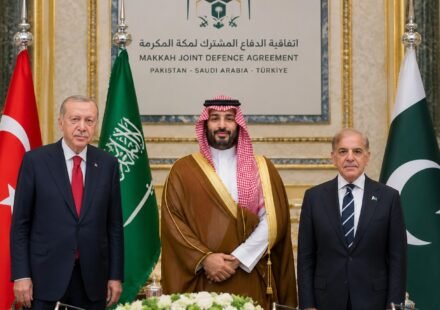
Saudi Arabia, Pakistan and Türkiye have moved their newly formed Makkah defence alliance into its first major operational phase after a sharp escalation in attacks by Yemen's Iran-backed Houthi movement.
The three countries activated the collective-defence mechanism during an emergency meeting in Riyadh on October 5, agreeing to begin practical implementation of their defence commitments and take measures to provide agreed military forces and capabilities for rapid deployment inside Saudi Arabia.
The development has raised questions about how far the so-called "Mecca Pact" could go and whether it could eventually draw Pakistan and Türkiye into direct military operations against the Houthis.
What triggered the pact?
The immediate backdrop is a renewed escalation in Yemen and a series of attacks targeting Saudi Arabia.
Houthi forces have launched missiles and drones toward Saudi territory, while Saudi-backed Yemeni government forces have intensified their campaign against the Houthis along the Red Sea coast and near the strategically important Bab el-Mandeb Strait.
Saudi Arabia, Pakistan and Türkiye condemned what they described as attacks on Saudi cities, civilian and economic facilities and attempts to target the holy cities of Makkah and Madinah.
The Makkah Agreement for Joint Defence, signed earlier this year, treats an armed attack against one member as a matter of collective security. The latest meeting was the first major test of that commitment.
What has Pakistan agreed to do?
Pakistan has not publicly disclosed the precise size or nature of any new deployment under the alliance.
Islamabad has, however, committed to the practical implementation of the collective-defence arrangements. Pakistani officials have stressed that the alliance is defensive in nature and that its implementation will remain subject to national laws.
Pakistan already maintains a long-standing defence relationship with Saudi Arabia and has previously deployed military personnel and equipment to the kingdom.
The new arrangement could therefore initially focus on defensive capabilities such as air defence, reconnaissance, intelligence sharing and military coordination rather than Pakistani forces entering Yemen for combat operations.
Türkiye's role is also significant
Türkiye is another important member of the alliance, but Ankara faces its own legal restrictions.
Turkish officials have indicated that support for Saudi Arabia currently includes defensive and technical assistance, military equipment, intelligence and weapons systems. Turkish parliamentary ratification remains an important factor before any formal deployment of Turkish troops under the pact.
That means the alliance is not yet functioning like a conventional military bloc with an automatic joint battlefield response.
How far could the Mecca Pact go?
For now, the most likely focus is protecting Saudi territory, critical infrastructure and the holy cities.
The October 5 joint statement specifically calls for the rapid deployment of agreed military forces and capabilities in Saudi Arabia, subject to the national legislation of the three countries.
That wording is important.
There is currently no publicly announced joint command structure, standing multinational force or published agreement authorising Pakistani or Turkish troops to conduct combat operations inside Yemen.
The pact therefore appears to be moving toward stronger collective deterrence rather than an immediate joint offensive against the Houthis.
Why Yemen remains the biggest test
Saudi Arabia is already deeply involved in the Yemen conflict through its support for the internationally recognised Yemeni government.
Recent fighting around Mocha and the Bab el-Mandeb Strait has increased the strategic importance of the conflict. The waterway is a critical route for international shipping, making the fighting relevant far beyond Yemen and Saudi Arabia.
A major question now is whether attacks on Saudi territory will lead the alliance to expand its military response.
Pakistan has historically been cautious about becoming directly involved in the Yemen conflict. Any large-scale Pakistani combat deployment could therefore carry significant regional and domestic implications.
Could this become a larger regional alliance?
The three countries are already working to strengthen military coordination, intelligence sharing and defence capabilities.
Pakistan, Saudi Arabia and Türkiye also agreed earlier to institutionalise cooperation under the Makkah Agreement, including defence-industry cooperation, joint technology development and greater cohesion between their armed forces.
The alliance could consequently evolve beyond the immediate Yemen crisis into a broader regional security framework.
But its future will depend on how the three governments define an "attack" requiring a collective response and whether they can agree on common military procedures.