Turkey Prepares Technical Defence Support for Saudi Arabia Amid Houthi Attacks

Turkey is preparing to expand technical and defensive military support for Saudi Arabia as the kingdom faces continued missile and drone attacks by Yemen’s Houthi movement, according to officials familiar with Ankara’s plans.
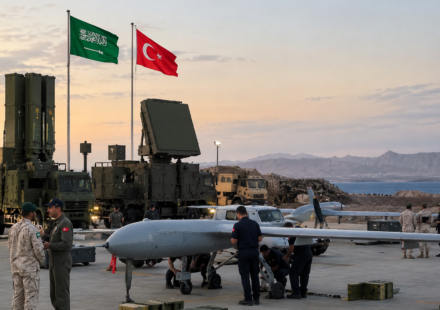
The assistance is expected to focus on protecting Saudi territory and critical infrastructure rather than sending Turkish forces into Yemen for offensive operations. Turkish officials and regional sources have indicated that Ankara could provide technical teams, air-defence capabilities, electronic warfare support and other military assistance as Saudi Arabia seeks to strengthen its defences.
The move comes after Saudi Arabia, Turkey and Pakistan agreed to move toward implementing their collective-defence commitments under the Makkah Joint Defence Agreement. The pact, signed in August, treats an armed attack against one of the three countries as an attack against all three, although the precise operational obligations are still being worked out.
Focus on Saudi Arabia’s defence
Turkey’s immediate role is expected to centre on defensive capabilities. Turkish officials have previously said Ankara could meet Saudi Arabia’s military requirements in certain technical areas.
Analysts cited by The National said Turkey was more likely to provide advisory assistance, border protection, air and missile defence systems and intelligence cooperation than to launch a large-scale operation involving Turkish troops inside Yemen. Turkish-made systems could also be operated by Saudi personnel with training and technical assistance from Turkey.
Reports have also indicated that Turkey has maintained technical teams and defensive equipment in Saudi Arabia, including systems intended to protect important infrastructure. Additional equipment and personnel could be deployed if the Turkish parliament authorises a broader military role.
Houthi attacks increase pressure on Riyadh
Saudi Arabia has faced a series of missile and drone attacks attributed to the Houthis, increasing pressure on Riyadh to reinforce its air-defence network.
Earlier reports said Saudi air defences intercepted ballistic missiles aimed at areas including Taif and Yanbu, while Houthi forces claimed attacks on Saudi targets. The escalation has also raised concerns over the security of energy infrastructure and important Red Sea trade routes.
The conflict has therefore pushed Saudi Arabia to seek greater cooperation with regional partners. France and Britain have also been involved in defensive measures around Saudi territory, while Pakistan and Turkey have been discussing their responsibilities under the Makkah defence agreement.
Turkey seeks to avoid direct Yemen intervention
Ankara has repeatedly presented the Makkah agreement as a defensive arrangement rather than an offensive alliance. Turkish Foreign Minister Hakan Fidan has said assistance could range from intelligence and logistics to ammunition and, depending on the scale of a threat, military units.
That distinction is significant because direct Turkish military involvement against Houthi positions inside Yemen could substantially widen Ankara’s role in the conflict.
For now, the reported preparations point primarily toward strengthening Saudi Arabia’s ability to detect and intercept missile and drone threats and protect its territory.
A new test for the Makkah defence pact
The developing Saudi-Houthi confrontation is becoming an early test of the Makkah Joint Defence Agreement between Saudi Arabia, Turkey and Pakistan.
While the agreement creates a framework for collective security, its practical implementation depends on each country’s domestic legal procedures and political decisions. Turkey, in particular, requires parliamentary approval for certain overseas military deployments.
The immediate emphasis from Ankara appears to be on defensive assistance, technical cooperation and protecting Saudi territory, rather than committing to a direct offensive campaign in Yemen.
Yemen Launches Major Offensive to Retake Houthi-Held Territory
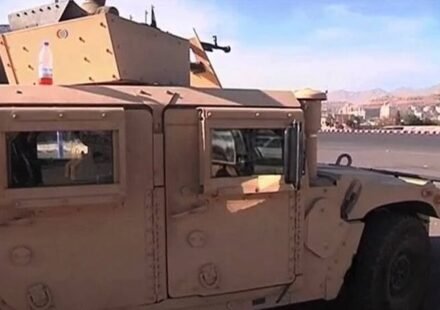
Yemen’s Saudi-backed, internationally recognised government has launched a major military campaign to retake territory controlled by the Iran-backed Houthi movement, marking a sharp escalation in the country’s long-running conflict.
President Rashad al-Alimi, chairman of Yemen’s Presidential Leadership Council, announced the operation in a televised address on Sunday. He said government forces had been ordered to restore state authority across the country.
Government Forces Target Houthi Positions
Yemeni military forces said they had carried out strikes against Houthi targets in Sanaa, Saada and Taiz.
The fighting has intensified around Taiz, where Houthi forces have attempted to strengthen their position along a key route linking the city with Aden. Government forces and their allies have also increased military activity along the Red Sea front.
The offensive follows recent Houthi advances along Yemen’s western coast, including gains around the strategically important Bab el-Mandeb area. The waterway is a major route for international shipping between the Red Sea and Gulf of Aden.
Conflict Enters a Dangerous Phase
The Houthis seized Sanaa in 2014 and have since maintained control over large parts of northern and western Yemen.
A fragile truce that had reduced major fighting collapsed earlier this year, while recent battlefield advances have renewed fears of a wider conflict.
Saudi Arabia has backed Yemen’s internationally recognised government and is expected to provide significant military support to the new campaign. The United States has also provided intelligence support to Saudi operations, according to Reuters.
The Houthis have responded with missile and drone attacks against Saudi targets, raising the risk of further regional escalation.
Red Sea Security at Risk
The latest offensive could have consequences beyond Yemen.
The Bab el-Mandeb Strait is one of the world’s important maritime chokepoints. Any prolonged fighting near the waterway could threaten commercial shipping and increase pressure on already disrupted regional trade.
The escalation also comes amid wider tensions involving Iran, Saudi Arabia and the United States, increasing the possibility that Yemen could become another major front in the regional conflict.
For millions of Yemenis, renewed fighting could further worsen an already severe humanitarian crisis.
Source attribution: Reuters, Associated Press and Al Jazeera.
Yemen Strikes Houthi Targets in Sanaa as Trump Warns Iran of ‘Easy or Hard Way’
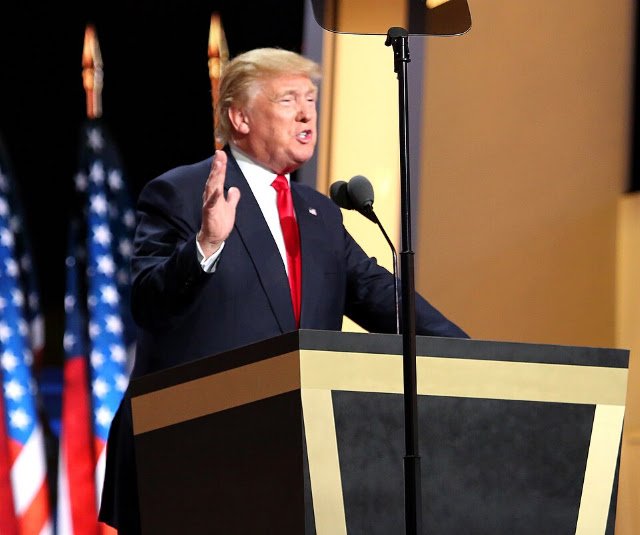
Yemen's internationally recognised government forces have launched strikes against Houthi-controlled areas in the capital Sanaa and the northern province of Saada, adding to growing tensions across the region as US President Donald Trump warned Iran that it could face the “easy way or the hard way.”
The latest escalation comes as the wider conflict involving Iran, the United States, Saudi Arabia and Yemen's Iran-aligned Houthi movement continues to put pressure on key Middle Eastern security and energy routes.
Yemeni forces target Houthi areas
Yemen's armed forces, which are aligned with the internationally recognised government, said early Sunday that they were carrying out strikes against Houthi positions in Sanaa and Saada.
A military spokesperson said the forces were targeting what he described as “vital targets” belonging to the Houthis, but did not provide further details about the locations hit or report casualty figures.
The Houthi-run Al Masirah television network had earlier reported an attack on Sanaa that it attributed to Saudi Arabia. There was no immediate confirmation from Riyadh regarding that report.
The strikes represent another escalation in fighting between Houthi forces and forces backed by Saudi Arabia and Yemen's internationally recognised government.
Houthi attacks raise regional tensions
The latest strikes followed claims by the Houthis that they had attacked an Aramco facility in Riyadh using missiles and drones.
Reuters reported that a large plume of smoke and fire was seen near a Saudi Aramco facility in the Saudi capital. The Houthis said the operation was carried out in response to Saudi-led strikes in Yemen, although Saudi authorities and Aramco had not immediately confirmed the reported damage.
The exchange has raised concerns about a wider confrontation in the region, particularly because the conflict is unfolding alongside the continuing US-Iran confrontation.
The Houthis have previously targeted Saudi territory and shipping as their conflict with Saudi-backed Yemeni forces has intensified.
Trump warns Tehran
At the same time, President Donald Trump signalled that Washington was approaching a decision on its next steps toward Iran.
Speaking to reporters on Saturday, Trump said Iran had been severely damaged and warned that Tehran would face a choice between what he called the “easy way” and the “hard way.”
Trump did not specify what decision he was considering. His remarks came after senior US national security officials held a private meeting at Camp David to discuss Iran and the escalating Saudi-Houthi conflict in Yemen.
Trump also claimed that Iran was moving away from plans to develop a nuclear weapon, although tensions between Washington and Tehran remain high.
Yemen conflict becomes part of wider regional crisis
The renewed fighting in Yemen is taking place against the backdrop of a much broader regional confrontation.
The Houthis are aligned with Iran, while Yemen's internationally recognised government receives support from Saudi Arabia and other regional partners. The conflict had largely remained under a fragile truce after 2022, but hostilities intensified again this year as the wider US-Iran confrontation spread across the region.
The fighting has also raised concerns over the Red Sea and Bab el-Mandeb, major routes for international shipping and energy transportation.
Any prolonged disruption in the region could put additional pressure on shipping costs, energy markets and supply chains.
Civilians caught in escalating fighting
The renewed military operations are also worsening the humanitarian situation in Yemen.
Al Jazeera reported that fighting has displaced more civilians, with families seeking shelter in expanding tent camps as violence intensifies.
The latest developments underline the growing difficulty of containing the Yemen conflict as military operations involving the Houthis, Saudi-backed forces and the wider US-Iran confrontation increasingly overlap.
For now, the scale of damage from the latest strikes remains unclear, and there has been no independently verified assessment of casualties from the attacks on Sanaa and Saada.
Source attribution: This report is based on current reporting from Reuters, Al Jazeera and other contemporary sources. Claims made by the conflicting sides have been identified as such where independent confirmation was not immediately available.