
Actor Imran Khan Asked to Leave India by October 28: What the OCI Rules Say

Bollywood actor Imran Khan has been asked to leave India by October 28 after participating in a protest against Chief Election Commissioner Gyanesh Kumar in Mumbai on October 10. The development has brought the legal status of Overseas Citizen of India (OCI) cardholders and their participation in political demonstrations into focus.
According to reports by The Times of India and The Indian Express, the actor, who holds US citizenship and an OCI card, received a notice from the Foreigners Regional Registration Office (FRRO) following a complaint concerning his participation in the demonstration.
The protest at Mumbai’s August Kranti Maidan called for the resignation of the Chief Election Commissioner. Imran Khan was among those detained by police during the demonstration.
BJP leader Kirit Somaiya had sought action against the actor, alleging that his participation raised questions under the rules applicable to foreign nationals and OCI cardholders.
The notice does not, by itself, establish that the actor has committed a criminal offence. The precise legal grounds and any further proceedings will be important in determining the outcome.
Why Was He Asked to Leave India?
Media reports say the notice invokes provisions of the Immigration and Foreigners Act, 2025, which governs matters including the entry, stay and removal of foreign nationals in India.
Section 7 empowers the Central Government to regulate the entry, departure and continued presence of foreigners, including imposing conditions on their stay. Section 29 provides for the removal of foreign nationals in circumstances covered by the law.
The precise grounds cited in an individual notice matter. A complaint or allegation does not automatically prove a violation, and the legal validity of any action depends on the applicable provisions and circumstances.
The case has also raised questions about the distinction between political rights available to Indian citizens and the immigration privileges granted to OCI cardholders.
What Is an OCI Card?
The Overseas Citizen of India scheme was introduced for eligible people of Indian origin who hold foreign citizenship. Despite its name, an OCI card does not confer Indian citizenship.
OCI cardholders receive specified privileges, including a lifelong, multiple-entry visa to India, subject to applicable rules and conditions. They may also receive certain benefits relating to education, property and professional activities.
However, OCI cardholders cannot vote in Indian elections or contest elections to Parliament or state legislatures. They remain foreign nationals and are subject to Indian immigration laws.
The Ministry of Home Affairs publishes official information about the scheme, its benefits and its restrictions.
Can OCI Cardholders Participate in Protests?
The legal position requires a distinction between attending a public gathering and exercising political rights reserved for citizens.
Article 19 of the Indian Constitution guarantees citizens freedoms that include speech and peaceful assembly, subject to reasonable restrictions. These citizen-specific protections do not apply to foreign nationals on the same basis.
At the same time, The Indian Express reported that OCI rules do not expressly make attendance at every public protest an automatic violation. Whether particular conduct breaches a law, visa condition or government order depends on the facts and the applicable legal provisions.
Therefore, an OCI cardholder’s presence at a protest should not automatically be treated as proof of a criminal offence. Any immigration action must be assessed against the relevant law and the specific grounds cited by authorities.
Can the Government Cancel an OCI Card?
Yes. Section 7D of the Citizenship Act, 1955, provides for cancellation of OCI registration on specified grounds. These include certain cases involving fraud or misrepresentation, conduct affecting national interests and other grounds set out in the law.
The Ministry of Home Affairs also issued a notification in August 2025 specifying additional grounds for cancellation under the Citizenship Act.
Cancellation of OCI registration and an order requiring a person to leave India are separate legal actions. The consequences and procedures depend on the provision being used. The law provides for a reasonable opportunity to be heard in relevant OCI-cancellation proceedings.
In Imran Khan’s case, reports of a notice asking him to leave India should not be confused with confirmation that his OCI registration has been cancelled.
What Happens Next?
The immediate deadline reported in the notice is October 28, 2026. Further developments may clarify the precise legal basis of the order and whether the actor challenges it or seeks other legal remedies.
The case has prompted wider discussion about how immigration rules apply to foreign nationals who participate in demonstrations, particularly when the protest concerns public institutions and political accountability.
The central legal questions are whether the conduct cited by authorities falls within the relevant statutory provisions, what conditions applied to the actor’s stay and what remedies may be available under Indian law.
Islamabad Takes Control of Khyber Pakhtunkhwa Amid Political Tensions
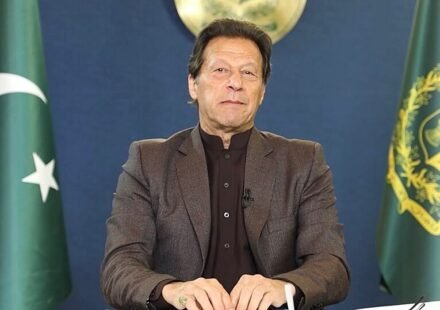
Pakistan has declared a state of emergency in Khyber Pakhtunkhwa and suspended the provincial government led by jailed former Prime Minister Imran Khan’s Pakistan Tehreek-e-Insaf (PTI) party, escalating the country’s political confrontation.
President Asif Ali Zardari approved the federal cabinet’s recommendation on Sunday, October 11, 2026. The federal government said the measure was necessary because of deteriorating security conditions and what it described as the provincial administration’s failure to cooperate adequately in the fight against militancy.
The decision places the northwestern province under governor-led administration and comes amid preparations for PTI supporters to march towards Islamabad to demand Khan’s release.
Emergency Declared Under Pakistan’s Constitution
Pakistan’s government invoked Articles 232 and 234 of the Constitution to introduce emergency measures and governor’s rule in the province.
Law Minister Azam Nazeer Tarar said the provincial government’s executive powers had been transferred to the governor, who will be assisted by an 11-member advisory council. The arrangement is initially expected to remain in place for six months.
The federal government has also announced the deployment of troops to assist with maintaining law and order.
Officials said the measures were intended to address security challenges in a region bordering Afghanistan, where militant attacks have been a longstanding concern.
Government Cites Militant Violence
The government led by Prime Minister Shehbaz Sharif has accused the PTI administration of failing to provide adequate support for counterterrorism operations.
Officials have pointed to militant violence and attacks on security personnel and public infrastructure as reasons for taking control of the province.
The federal government has cited a sharp increase in terrorism-related incidents over recent years. These figures and the government’s assessment of provincial responsibility remain part of the political dispute.
Khyber Pakhtunkhwa has faced security challenges linked to militant groups operating near the Afghan border. However, responsibility for addressing the violence and the effectiveness of federal and provincial policies have been disputed between the two sides.
PTI Rejects the Move
PTI has strongly opposed the emergency declaration, describing it as an attempt to undermine the province’s elected government and political autonomy.
A spokesperson for Khan’s party characterised the decision as a coup disguised as an emergency, warning that it could deepen instability rather than resolve the security crisis.
The party has also argued that the provincial administration needs adequate resources and coordination to confront militancy. The federal government, by contrast, maintains that the emergency measures are justified by the security situation.
The dispute raises questions about provincial autonomy, constitutional powers and the balance between security requirements and elected regional governance.
Decision Comes Before Planned Islamabad March
The emergency declaration coincides with PTI’s efforts to mobilise supporters for a march on Islamabad demanding Khan’s release from prison.
Khan has been jailed since 2023 and remains a central figure in Pakistan’s political confrontation. His party has continued to campaign for his release and challenge the federal government’s actions.
Authorities have been preparing security measures to prevent demonstrators from entering the capital. The latest decision could further intensify tensions between PTI supporters and the federal administration.
The timing has also raised concerns about whether the emergency will affect political activity, demonstrations and negotiations between the government and opposition.
What Happens Next?
The immediate focus will be on how the governor-led administration operates, whether security conditions improve and how PTI responds to the suspension of its provincial government.
The federal government has said the measures are constitutional and necessary to restore order. PTI maintains that the decision threatens democratic representation and provincial autonomy.
Parliamentary proceedings and any legal challenges could become important in determining the future of the arrangement. The situation is likely to remain politically sensitive as Pakistan confronts both security challenges and a deepening dispute between the governing coalition and Khan’s party.