Gulf Nations on Alert as Washington Weighs New Military Action Against Iran

The United States has reportedly warned several Gulf Arab countries to prepare for the possibility of a brief but intense military campaign against Iran following the November 3 US midterm elections. The reported warning comes amid growing indications that Washington and Israel are preparing options for renewed strikes, even as diplomatic efforts to resolve the confrontation continue.
According to people briefed on discussions with Gulf governments, the communications were conveyed through diplomatic and military channels. The reported preparations suggest that the Trump administration wants to retain the option of launching another offensive if negotiations fail.
President Donald Trump has not made a final decision on whether to authorise further attacks. However, people familiar with his thinking have indicated that he is considering a major operation that could target Iranian infrastructure and nuclear-related facilities.
The White House has declined to comment on potentially sensitive military planning, while reiterating that Trump wants to prevent Iran from acquiring a nuclear weapon. The administration's public position leaves open both military action and a negotiated settlement.
US Military Strengthens Its Regional Readiness
The reported warning to Gulf governments comes as US forces prepare for several possible scenarios in the Middle East.
According to the reporting, the US military is moving a Patriot air-defence system from Texas to strengthen regional protection. Personnel have also reportedly been moved away from bases considered vulnerable to potential Iranian retaliation.
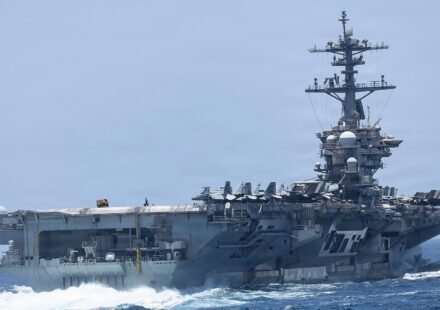
US forces are replenishing ammunition and preparing aircraft for possible operations. An additional aircraft-carrier strike group and a Marine expeditionary unit are also expected to reinforce the region, although the timing and final composition of deployments could change.
These preparations would provide Washington with additional options if the president decides to resume offensive operations. They do not, by themselves, prove that an attack has been ordered or establish which targets might be selected.
The reported preparations also underline the importance of protecting US personnel and facilities. Any renewed campaign could expose American bases, naval forces and regional partners to retaliation involving missiles, drones or attacks on infrastructure.
Why the Midterm Elections Matter
The reported timing places the potential campaign after the November 3 congressional midterm elections.
Trump has said the United States will not launch another attack before the elections. Reports citing people familiar with the planning suggest that the administration is considering its options for the period afterwards.
The political calendar is relevant because a new military campaign could affect public debate over national security, military spending and the economic consequences of the conflict. However, the reported timing does not establish that the elections are the sole reason for any possible delay.
The administration would still have to weigh military objectives, the risk of Iranian retaliation, regional security and the possibility of a diplomatic agreement.
For now, the post-election scenario remains a reported contingency rather than a confirmed operational decision.
Nuclear Facilities and Military Infrastructure Could Be Targets
Iran's nuclear programme remains central to the confrontation between Tehran and Washington.
The United States has previously carried out strikes against Iranian nuclear facilities alongside Israel. The new reporting indicates that a potential future operation could again include nuclear-related sites and other strategic infrastructure.
Washington says it wants to prevent Iran from developing nuclear weapons. Tehran maintains that its nuclear programme is peaceful and has opposed military pressure and restrictions imposed by the United States.
A renewed campaign could seek to damage Iran's nuclear-related capabilities, missile infrastructure or other military assets. The exact objectives and target list of any future operation have not been publicly confirmed.
Military action would also carry significant uncertainty. Damage to facilities would not automatically resolve questions about nuclear material, technical expertise or the long-term direction of Iran's programme.
International inspectors have not been able to conduct normal verification activities at several facilities damaged in earlier strikes. The International Atomic Energy Agency has reported no detected reconstruction activity at those sites, while stressing that the absence of physical access limits what it can independently verify.
That distinction is important: an attack could damage infrastructure, but a lasting resolution of nuclear concerns would also require reliable monitoring and an agreed diplomatic framework.
Iran Warns of Retaliation
Iran has warned that another attack would trigger a response against US interests and other targets in the region.
During the earlier phase of the conflict, Iranian retaliatory operations affected military facilities and critical infrastructure across parts of the Gulf. A new confrontation could place additional pressure on countries hosting US forces or providing logistical support.
Gulf governments face a difficult security calculation. They have reasons to maintain defence cooperation with Washington, but they also have strong interests in avoiding a wider conflict that could threaten cities, ports, airports, energy installations and commercial shipping.
Even countries that are not directly involved in combat could face disruption if attacks spread beyond military targets or if regional airspace and maritime routes become unsafe.
The possibility of retaliation is one reason additional air-defence capabilities and the protection of military personnel feature prominently in the reported US preparations.
Gulf Security and Global Oil Markets at Risk
The consequences of renewed hostilities could extend well beyond the immediate battlefield.
The Gulf is central to global energy production and transportation. Any escalation that threatens oil facilities, shipping routes or commercial vessels could raise concerns about supply disruptions and increase volatility in international energy markets.
Oil prices can respond quickly to perceived risks, even before a physical interruption to supplies occurs. A sustained escalation could raise transportation and insurance costs, while uncertainty over energy shipments could affect import-dependent economies.
For countries such as India, which relies heavily on imported crude oil, a prolonged rise in global oil prices could increase the cost of imports and add pressure to domestic fuel prices and inflation. The actual impact would depend on the scale and duration of any disruption, as well as exchange rates and government policy.
Gulf states would also face potential economic costs if instability disrupted aviation, tourism, investment or commercial activity. This gives regional governments an incentive to pursue de-escalation even while preparing for possible security emergencies.
These outcomes are risks rather than established consequences of the latest warning. Their likelihood would depend on whether fighting resumes and how far any new confrontation spreads.
Diplomatic Efforts Have Yet to Produce a Breakthrough
Regional mediators are continuing efforts to revive negotiations between Washington and Tehran, but significant differences remain.
The United States wants meaningful constraints on Iran's nuclear programme and assurances that it cannot develop nuclear weapons. Iran has its own demands concerning security, sanctions and the terms under which negotiations would resume.
The two sides have not announced a comprehensive agreement resolving those disputes. The reported military preparations indicate that Washington is maintaining pressure while preserving the option of renewed force.
Diplomacy could still provide a way to prevent another round of fighting. An agreement that establishes clear nuclear commitments, credible verification and a framework for addressing security concerns could reduce the risk of further attacks.
However, a breakdown in negotiations could leave both sides facing a more dangerous choice between continued pressure and renewed military action.
What Happens Next?
The immediate focus will be on diplomatic contacts, the movement of US military assets and any further statements from Washington, Tehran and regional governments.
Trump's final decision remains unknown. The reported warning to Gulf states should therefore be understood as an indication of possible future military planning, not proof that another campaign is inevitable.
If strikes resume, the consequences could include Iranian retaliation, disruption to regional transport and energy infrastructure, and renewed uncertainty over the nuclear dispute. If negotiations make progress, the same military preparations could remain unused while diplomatic channels continue working.
For Gulf governments, the challenge is to prepare for potential escalation without allowing contingency planning to become a substitute for diplomacy. For the wider international community, the priority will be preventing a new confrontation from destabilising an already fragile regional security environment.
The coming weeks could prove important for the future of US-Iran relations. Whether the confrontation moves towards renewed military action or negotiations will depend on decisions that have not yet been publicly finalised.

UN Nuclear Watchdog Sees No Sign Iran Is Rebuilding Bombed Nuclear Sites
The United Nations’ nuclear watchdog has found no evidence that Iran has attempted to repair or reconstruct nuclear facilities damaged in US and Israeli military strikes, but serious questions remain over the country’s nuclear material and the international community’s ability to verify its status.
Rafael Grossi, director general of the International Atomic Energy Agency (IAEA), delivered the assessment during a briefing to the UN Security Council on Tuesday. He said the agency had detected no repair or reconstruction activity at the affected facilities since June 2025, when attacks on Iran’s nuclear infrastructure disrupted international inspection work.
The assessment provides an important update on Iran’s nuclear programme. However, the absence of detected rebuilding activity does not mean inspectors have verified the complete condition of the damaged sites or established the current location and status of all Iran’s declared nuclear material.
Inspectors Still Lack Access to Key Nuclear Facilities
The IAEA has been unable to carry out its normal verification activities at several Iranian nuclear facilities damaged during the military attacks. Grossi told the Security Council that remote monitoring had revealed no signs of reconstruction, but he stressed that satellite-based observation cannot replace physical inspections.
The affected locations include Iran’s Fordow fuel-enrichment plant, enrichment facilities at Natanz, parts of the Isfahan nuclear complex and the Khondab heavy-water research reactor.
Without direct access, inspectors cannot independently establish the full extent of the damage, determine whether equipment has been moved or confirm the current condition of the facilities. The agency has repeatedly called on Tehran to allow inspectors to resume their work.
The situation leaves an important gap in international oversight: information gathered remotely can help identify visible changes, but it cannot answer every question about activities inside damaged or restricted facilities.
Concern Over 440.9 Kilograms of Enriched Uranium
One of the central concerns is Iran’s previously declared stockpile of uranium enriched to 60% purity.
The IAEA has estimated that the stockpile stood at approximately 440.9 kilograms, or 972 pounds. Uranium enriched to this level is well above the concentration generally required for civilian nuclear power generation, although it is below the roughly 90% enrichment level commonly associated with weapons-grade uranium.
Grossi said the agency has not been able to verify the status of this material since its inspectors lost access following the June 2025 attacks. The agency therefore cannot confirm that all nuclear material subject to its safeguards remains accounted for.
This distinction is crucial. The lack of evidence that damaged facilities are being rebuilt does not establish what has happened to the uranium stockpile or resolve questions about Iran’s wider nuclear activities.
The IAEA is seeking the information and access required to determine the status of the material and fulfil its international safeguards responsibilities.
Iran and the United States Remain at Odds
The dispute over nuclear inspections is unfolding amid a wider confrontation between Iran, the United States and Israel.
US President Donald Trump has defended military action as necessary to prevent Iran from acquiring nuclear weapons. He has also previously described the damage caused by earlier US strikes as having effectively destroyed Iran’s nuclear programme.
Iran, meanwhile, maintains that its nuclear programme is peaceful and has criticised military attacks and international scrutiny of its nuclear activities.
The latest IAEA assessment introduces an important qualification into the debate. The agency has not identified efforts to rebuild the damaged facilities, but because inspectors lack access to most of the affected sites, it cannot provide a comprehensive, on-the-ground verification of their current condition or the status of all relevant nuclear material.
The findings therefore do not, by themselves, establish whether Iran has abandoned its nuclear ambitions or whether all potential proliferation concerns have been resolved.
Diplomatic Efforts Could Offer a Way Forward
Grossi has urged Iran to consider gradual technical steps that could make it possible for inspectors to return. He has also pointed to diplomatic engagement and regional mediation as potential ways to address Tehran’s security concerns while restoring international verification.
The IAEA has said that technical groundwork for an arrangement to facilitate the return of inspectors has advanced. However, a workable agreement would still need to establish how inspectors could access facilities, verify nuclear material and resolve outstanding safeguards questions.
Restoring inspections would not automatically settle the wider political dispute between Tehran and Washington. It could, however, give international governments and the agency a more reliable basis for assessing developments inside Iran.
For Iran, renewed cooperation could help address concerns about its nuclear programme. For the United States and other countries, independent verification would provide stronger evidence for evaluating whether Iran is meeting its safeguards obligations.
What the Latest Assessment Means
The latest findings point to two issues that should not be confused: the absence of detected reconstruction at damaged nuclear sites and the unresolved status of Iran’s nuclear material.
The first suggests that the IAEA has not observed a visible effort to rebuild the affected facilities. The second highlights the limits of what the agency can currently confirm without access to those sites and the information it has requested.
If inspections resume, the agency could improve its understanding of the damage, verify relevant nuclear material and provide a clearer assessment of Iran’s activities. If access remains restricted, uncertainty is likely to persist, making diplomatic efforts and independent monitoring increasingly important.
For now, the IAEA’s position is measured: it has detected no repair or reconstruction activity at the damaged facilities, but it cannot fully verify the situation without access. The next significant development will depend on whether Iran and the international community can agree on practical steps to restore inspections.