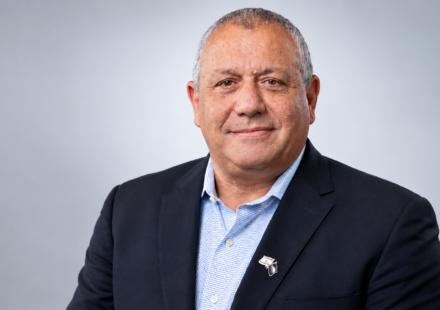
Eisenkot Gets First Chance to Replace Netanyahu as Israel Faces Coalition Deadlock

Israeli President Isaac Herzog has selected former military chief and opposition leader Gadi Eisenkot to attempt to form the country’s next government, giving Prime Minister Benjamin Netanyahu’s principal political challenger the first opportunity to assemble a parliamentary majority following an inconclusive general election.
Herzog informed Eisenkot of his decision on Saturday evening, November 7, after consultations with political parties represented in the Knesset. The formal appointment is scheduled to take place at the President’s Residence in Jerusalem on Sunday.
The decision marks an important moment in Israel’s political transition, but it does not mean Netanyahu has been removed from office or that Eisenkot has already secured the premiership. He must now negotiate with rival political factions and obtain sufficient support to establish a functioning government.
According to the president’s office, political factions representing 67 members of parliament recommended Eisenkot for the task, compared with 46 lawmakers who supported Netanyahu. Seven lawmakers did not recommend either candidate.
Election results leave parliament divided
The October 27 general election failed to produce a clear parliamentary majority, leaving Israel facing complicated coalition negotiations.
Eisenkot leads the Yashar party and a four-party alliance that secured 48 seats in the 120-member Knesset. Netanyahu’s broader right-wing and religious-nationalist bloc won 53 seats, despite Likud emerging as the largest individual party with 27 seats.
A government requires the support of at least 61 lawmakers to command a parliamentary majority.
The results also produced a significant outcome for Arab-led political parties, which collectively secured 19 seats. Their representatives endorsed Eisenkot during consultations with Herzog, helping him receive more recommendations than Netanyahu.
The recommendations played a central role in the president’s decision. However, parliamentary endorsements during the consultation process do not automatically translate into votes for a government when it faces a confidence test.
The political challenge is therefore far from resolved. Both major camps remain short of the number required to govern independently.
Eisenkot receives 28 days to negotiate
Under Israel’s government formation process, Eisenkot will initially have 28 days to negotiate a coalition. President Herzog can grant an additional extension of up to 14 days if the negotiations require more time.
During this period, Eisenkot will need to find common ground among parties with different political positions, security priorities and demands on domestic policy.
One possible route involves cooperation with Arab-led parties, whose combined parliamentary strength could provide the numbers needed for a majority. However, Eisenkot has ruled out forming a government directly with those parties, creating uncertainty over whether their support could be secured in another arrangement.
Another possibility involves negotiations with ultra-Orthodox parties, including Shas and United Torah Judaism. Their support could potentially help Eisenkot reach the 61-seat threshold, although political disagreements and competing demands could complicate such an agreement.
A minority government supported by parties from outside the coalition is another potential arrangement. However, such a government would face the challenge of maintaining parliamentary confidence and securing support for legislation.
Eisenkot has also faced disagreements within the wider opposition camp over the conditions under which different parties could participate in a government.
Netanyahu seeks to retain power
Netanyahu remains Israel’s longest-serving prime minister and is seeking to continue his political leadership despite the loss of his coalition’s parliamentary majority.
His Likud party won more seats than any other individual party in the election, but the combined strength of his wider political bloc was insufficient to reach the required majority.
Before Herzog announced his decision, Netanyahu called for a national unity government involving Zionist political factions. He also criticised the possibility of an administration relying on support from Arab-led parties.
The opposition has rejected Netanyahu’s appeal, arguing that a change in government is necessary after his long period in office and the political disagreements surrounding his administration.
If Eisenkot fails to form a government within the permitted period, Herzog may invite another candidate, potentially giving Netanyahu an opportunity to negotiate his own coalition.
If subsequent attempts also fail, Israel could face another general election. Until a new government is formally established, Netanyahu is expected to remain in a caretaker capacity.
Former military chief enters the centre of politics
Eisenkot, 66, served as chief of staff of the Israel Defense Forces from 2015 to 2019. He entered parliamentary politics in 2022 and later became one of the prominent figures opposing Netanyahu’s government.
His military background has been central to his political identity, particularly on national security and regional threats.
Eisenkot also served as an observer in Netanyahu’s wartime cabinet during the first eight months following the Hamas-led attack on Israel on October 7, 2023. He subsequently returned to the opposition.
His family has also been personally affected by the Gaza conflict. His son and two nephews were killed while serving in the fighting.
Although Eisenkot has presented himself as an alternative to Netanyahu’s leadership, his positions on several security questions remain hawkish. He has opposed Palestinian statehood and supported dismantling Hamas’s military capabilities.
He has also criticised violence by Israeli settlers against Palestinians in the occupied West Bank and called for action against those responsible.
These positions illustrate that a potential change in Israel’s leadership would not necessarily mean a complete shift in the country's security and regional policies.
Political negotiations could shape Israel’s next government
The coming weeks are expected to be dominated by negotiations over coalition membership, military service, domestic policy and the government's approach to the conflict involving Palestinians and regional security challenges.
Arab-led parties have gained greater parliamentary influence following the election, but their role in a future government remains uncertain. Their support could become important in parliamentary calculations even if they are not formally included in a coalition.
For Netanyahu, the president’s decision represents a setback in his effort to remain in office. For Eisenkot, it begins a difficult political test that will require agreements among parties that have not always shared the same priorities.
The immediate question is whether Eisenkot can turn the recommendations he received from lawmakers into a stable parliamentary arrangement.
Israel now enters another phase of political negotiations, with the possibility of a new government dependent on the outcome of discussions over the next several weeks. Until those negotiations produce a successful confidence vote, Netanyahu remains prime minister and the country's political future remains unsettled.
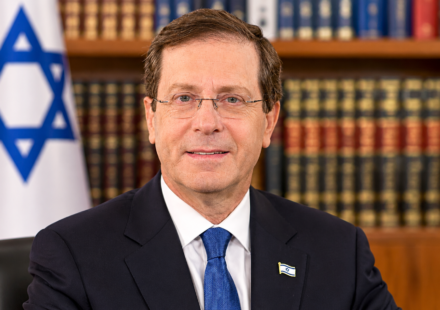
Israel’s Government Formation Battle Enters Crucial Phase as Herzog Sets Sunday Decision
Israel’s political future is heading towards a decisive moment after President Isaac Herzog announced that he will name a lawmaker to receive the first opportunity to form the country’s next government on Sunday, November 8. The announcement comes after inconclusive parliamentary elections and consultations with political factions left the country facing a complicated coalition-building process.
The October 27 election did not produce a clear parliamentary majority for either Prime Minister Benjamin Netanyahu or his main challenger, former military chief Gadi Eisenkot. With political blocs divided and several parties maintaining conditions over whom they are willing to support, the president now faces the difficult task of choosing the candidate he believes can successfully assemble a governing coalition.
Herzog made his position clear on Thursday, November 5, after completing consultations with representatives of the factions elected to the 26th Knesset. He said that parties representing 67 lawmakers had recommended Eisenkot for the task, while factions representing 46 lawmakers had backed Netanyahu. Seven lawmakers did not recommend either candidate.
Although Eisenkot received more recommendations, Herzog cautioned that the figures alone did not settle the question. He said that mutual vetoes between political blocs and disagreements within the blocs themselves made it difficult to determine who could actually form a stable government. The president said he would hold further personal discussions with party leaders before making his decision.
Eisenkot receives backing from a majority of lawmakers
The recommendations have put Eisenkot in a significant position in the government formation process. Two Arab-led political groupings, which together won 19 seats in the election, also recommended him for the mandate. Their support contributed to the total of 67 lawmakers backing his candidacy.
The Joint List, which secured 11 seats, announced its recommendation for Eisenkot on Thursday. The United Arab List, also known as Ra’am, had already indicated its support. Their decisions gave Eisenkot a larger number of parliamentary recommendations than Netanyahu, although the support does not automatically guarantee that he can secure a working majority.
Eisenkot leads the centrist Yashar party and is a former chief of staff of the Israel Defense Forces. His political alliance includes several parties that campaigned against Netanyahu’s continued leadership. However, the opposition grouping faces its own challenges, including disagreements over the role of Arab-led parties in a future coalition and the distribution of important government positions.
Eisenkot and some of his potential partners have previously expressed reservations about forming a government that depends on Arab-led parties. That creates a political complication: the recommendations that strengthened his position before the president may not translate easily into a coalition agreement.
Netanyahu’s Likud remains the largest single party
Netanyahu’s Likud party emerged from the October 27 election as the largest individual party, winning 27 seats in the 120-member Knesset. However, the wider religious-nationalist bloc aligned with the prime minister secured 53 seats, short of the 61 required for a parliamentary majority.
The opposition parties aligned against Netanyahu secured 48 seats, while Arab-led parties won a combined 19 seats. The results therefore produced a fragmented parliament in which coalition negotiations and the positions of smaller factions could determine who ultimately takes office.
Netanyahu received recommendations from factions representing 46 lawmakers. His position also faced a setback when the ultra-Orthodox United Torah Judaism party declined to recommend either candidate during its consultation with Herzog. The party has been a longstanding ally of Netanyahu, making its decision an important development in the post-election negotiations.
The party’s position could influence future discussions over religious education, military service exemptions and the participation of ultra-Orthodox communities in national institutions. Such issues have been among the sensitive subjects in Israeli coalition politics.
What happens after the president makes his choice?
Under Israel’s government formation process, the lawmaker selected by the president will initially receive 28 days to form a government. If additional time is needed, the president can grant an extension of up to 14 days, taking the maximum period to 42 days.
The candidate must negotiate with political parties, agree on policy priorities and secure sufficient parliamentary support to establish a coalition. The process can involve discussions over ministerial appointments, legislation, budget priorities, security policy and other issues that divide the parties.
If the nominated candidate fails to form a government, the process may move to another candidate or lead to another election, depending on the constitutional steps that follow. Until a new coalition takes office, Netanyahu will continue to serve as prime minister in a caretaker capacity.
Herzog’s decision on Sunday will therefore mark the beginning of another stage rather than the immediate formation of a new government. Even the candidate who receives the mandate will have to overcome difficult negotiations before taking office.
Election integrity becomes another political flashpoint
The post-election period has also been marked by disputes over allegations of possible vote tampering. Netanyahu has raised claims of foreign interference involving Arab-led parties. However, Israel’s Central Election Committee said that the integrity of the election had not been compromised.
The committee’s position is significant because public confidence in the electoral process is essential during a contested transfer of political power. Election officials have urged political leaders to protect trust in democratic institutions and avoid statements that could undermine confidence in the results.
The controversy has added another layer of tension to an already difficult political situation. Arab-led parties have rejected accusations directed at them, while their increased parliamentary representation has made their recommendations an important part of the government formation arithmetic.
A consequential Sunday for Israeli politics
The decision expected on November 8 will offer the first clear indication of how Israel’s next government formation attempt will proceed. Eisenkot has received more recommendations from lawmakers, but the president is required to consider the practical ability of a candidate to assemble a coalition rather than simply count endorsements.
Netanyahu, meanwhile, retains the leadership of the largest individual party but faces the challenge of expanding his bloc beyond its current strength. Both sides must navigate political disagreements, competing demands and the positions of smaller parties.
For Israel, the immediate question is not only who receives the mandate, but whether that person can bring together enough lawmakers to govern. The coming days will show whether the country can move towards a new coalition or remains caught in another period of political uncertainty.