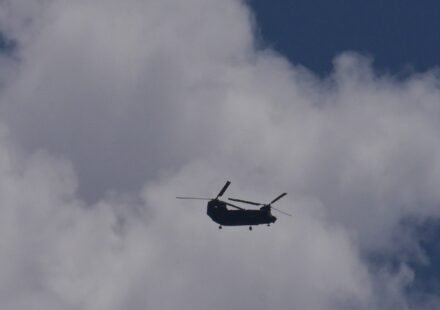
Italian Chinook Helicopter Crash in Bosnia Kills Four, Injures 11

Four people were killed and 11 others injured after an Italian military CH-47 Chinook helicopter crashed during a training exercise near Brčko in northern Bosnia and Herzegovina on October 29, 2026.
The helicopter was taking part in routine training activities connected with the European Union’s military mission in Bosnia and Herzegovina. A total of 15 people were reportedly on board when the aircraft crashed.
The incident has prompted an investigation into the circumstances surrounding the accident, while the injured personnel are receiving medical treatment.
Four People Killed in the Crash
Italy’s Defence Ministry confirmed that four people died in the accident. Two of the victims were members of the Italian Army, while the other two belonged to the Italian Red Cross Volunteer Military Corps.
The remaining 11 people were injured. Initial reports indicated that their condition was stable and that they were receiving medical care.
Authorities reported no civilian casualties or damage to civilian buildings and infrastructure. However, the loss of four personnel represents a serious incident for the Italian contingent involved in the training operation.
Officials have not yet confirmed what caused the helicopter to crash.
Helicopter Was Involved in Training Activities
The aircraft was a CH-47 Chinook, a heavy-lift military helicopter used to transport troops, equipment and supplies. The helicopter is designed to support a range of military operations, including logistical missions and the movement of personnel over challenging terrain.
The aircraft was operating near Brčko when it went down during a training activity. Authorities have not established whether the accident involved a mechanical problem, adverse operating conditions, human factors or another cause.
Investigators will need to examine the available evidence before reaching a conclusion. Until then, any explanation for the crash should be treated as unconfirmed.
What Is the EUFOR Althea Mission?
The helicopter was associated with EUFOR Althea, the European Union’s military operation in Bosnia and Herzegovina. The mission was launched in 2004, taking over peacekeeping responsibilities from NATO.
EUFOR supports efforts to maintain a safe and secure environment and helps implement the military provisions of the Dayton Peace Agreement, which ended the Bosnian War in the 1990s.
International forces continue to operate in the country as Bosnia and Herzegovina manages political and ethnic divisions that remain part of its post-war environment.
The helicopter accident is therefore significant for the personnel involved in the mission, although there is no confirmed indication that it will affect the operation’s broader responsibilities.
Investigation to Establish the Cause
EUFOR has launched an investigation to determine what led to the crash. Authorities have urged the public to avoid spreading unverified information while investigators establish the facts.
The inquiry is expected to examine the circumstances of the flight and the available technical and operational evidence. Depending on the findings, authorities may consider additional inspections, changes to training procedures or other safety measures.
No specific cause has been confirmed so far, and officials have not established whether a technical fault contributed to the accident.
Possible Impact on Military Aviation Safety
The crash could lead to renewed scrutiny of flight safety procedures for military training operations. If investigators identify a maintenance issue or operational weakness, authorities may consider measures to reduce the likelihood of similar accidents.
However, it would be premature to conclude that the incident points to a wider problem with Chinook helicopters. Any broader safety recommendations will depend on the investigation’s findings.
The immediate priorities remain supporting the injured, informing the families of those killed and establishing exactly what happened near Brčko.
The accident highlights the risks faced by military personnel during training, even when they are not involved in combat. The investigation will be crucial in determining whether further precautions are needed and in providing answers to the families and colleagues of those affected.