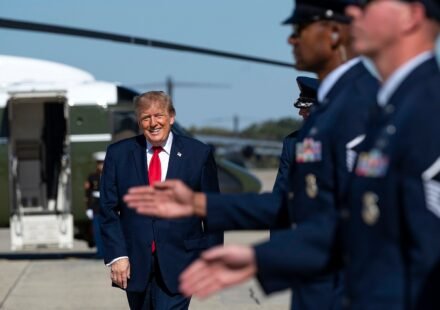
Trump Attacks Reporter’s Appearance After Being Questioned About His Health

US President Donald Trump sparked controversy after responding with personal insults when a journalist questioned him about his health and his decision to cancel planned campaign appearances in Kansas. During the exchange on October 29, 2026, Trump told the reporter, “You look like hell,” and criticised his physical appearance rather than limiting his response to the question.
The confrontation took place as Trump spoke to reporters after returning from a campaign event in South Carolina. The journalist, Reuters correspondent Jacob Bogage, asked whether Trump’s decision to skip a planned trip to Kansas had anything to do with fatigue from weeks of travelling across the country.
Trump rejected the suggestion that he was unwell and insisted that he felt “perfect.” However, the exchange quickly became tense, drawing attention to the way the president responds to questions about his health and public schedule.
Trump Turns Health Question Into Personal Attack
Bogage initially asked Trump how he was feeling after an intensive campaign schedule. When the reporter followed up by asking whether travel fatigue had influenced the Kansas cancellation, Trump reacted angrily.
After learning that the journalist worked for Reuters, Trump criticised the news organisation and described the reporter as “sick.” He then shifted his comments towards the journalist’s appearance, calling him out of shape and telling him to improve his fitness.
The reporter attempted to explain that he wanted to make sure the president was doing well. Trump nevertheless continued his criticism, ending the exchange with the remark, “You are disgusting. Put yourself in shape. You look like hell.”
The episode quickly attracted attention because the original question concerned the president’s health and a change in his campaign plans. Instead of providing a detailed explanation of his schedule, Trump made the journalist’s physical appearance a central part of the exchange.
Why Did Trump Cancel the Kansas Appearance?
Trump had been expected to travel to Salina, Kansas, to campaign for Republican Senator Roger Marshall ahead of the November 3 midterm elections. He told reporters that he did not feel a personal appearance in Kansas was necessary because he believed Marshall was doing well.
A planned campaign appearance in Dubuque, Iowa, was also cancelled. Republican organisers said Trump would instead participate in remote campaign events, allowing him to address voters in multiple states without attending every rally in person.
The cancellations came after Trump had carried out an intensive campaign schedule, with appearances across several states to support Republican candidates. He was still expected to attend another campaign event in Florida on October 30.
The cancellations alone do not establish that Trump was experiencing a health problem. His explanation was that he did not need to travel to Kansas, while the reporter’s question raised the possibility of fatigue after repeated campaign appearances.
Trump Says His Health Is Fine
During the exchange, Trump firmly rejected the suggestion that he was unwell. He said he felt “perfect” and defended his decision to continue campaigning.
The incident, however, renewed public discussion about questions surrounding the president’s health and stamina. Such questions can arise when a political leader changes travel plans or undertakes a demanding schedule, particularly during an election campaign.
There was no confirmed evidence in the exchange that Trump cancelled the Kansas appearance because of an illness. His remarks represented his own assessment of his condition, while the reason for the journalist’s question was to seek clarification about the cancelled trip.
A distinction is important: questioning a public official about health and fitness for office is a legitimate part of political scrutiny, but a single exchange does not establish a medical conclusion.
A Wider Debate About Press Relations
The confrontation also highlighted tensions between Trump and members of the press. His response moved from disputing the premise of the question to criticising the journalist personally and attacking the organisation he represented.
For journalists, asking public officials to explain changes in their schedules is part of holding political leaders accountable. For political figures, the way they answer such questions can influence how voters view their openness, temperament and willingness to engage with scrutiny.
Trump’s supporters may see his remarks as a forceful response to what he regarded as an unfair question. Critics may view the personal insults as an attempt to deflect attention from a reasonable question about his public schedule.
What Could the Incident Mean Politically?
The exchange comes just days before the US midterm elections, when control of Congress is at stake. Trump has been actively campaigning for Republican candidates, and his appearances are part of the party’s effort to maintain its narrow majorities in the House and Senate.
Analysis: The immediate political impact of the confrontation is uncertain. However, repeated clashes with journalists can shape news coverage and influence broader discussions about transparency, presidential conduct and the relationship between political leaders and the media.
The cancellations may also prompt further questions about how campaigns balance in-person appearances with remote events during the final days before an election. Tele-rallies allow candidates to reach voters across several states, but they do not provide the same face-to-face campaigning as public rallies.
For now, Trump maintains that his health is fine and that the Kansas trip was unnecessary. The exchange does not prove that health concerns caused the cancellations. Its broader significance lies in the way a question about presidential fitness turned into a personal confrontation between the president and a reporter.