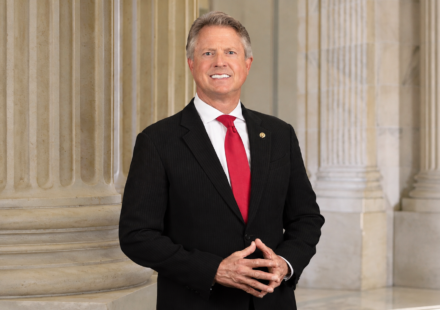
Kansas Senate Debate Turns to Diesel Prices as Marshall Blames Ukraine War

Rising diesel prices have become a major issue in Kansas's closely watched US Senate race, with Republican Senator Roger Marshall arguing that Ukraine's war with Russia—not the US conflict with Iran—is responsible for the recent surge in fuel costs. His comments have drawn a sharp response from Democratic challenger Adam Hamilton, exposing a wider dispute over energy prices, foreign policy and the economic consequences of war.
The exchange took place during the candidates' final Senate debate before the November 3 election. Diesel prices are especially important in Kansas, where farmers and agricultural businesses depend heavily on the fuel to operate tractors, harvesters and transport trucks.
According to figures cited during the debate, diesel in Kansas was averaging around $6.32 per gallon, nearly twice its price a year earlier. The increase has put additional pressure on farmers already dealing with elevated input costs and tight operating margins.
Marshall Points to the Ukraine War
Marshall, a Republican seeking another term in the Senate, attributed the rise in diesel prices to Ukraine's continuing conflict with Russia. His argument reflects President Donald Trump's position that Ukrainian attacks on Russian oil refineries have disrupted fuel supplies and contributed to higher prices.
Damage to refineries can reduce the availability of refined petroleum products, including diesel. If supplies become tighter while demand remains strong, prices can rise in affected markets. The impact depends on the scale of the disruption, alternative supply sources, transportation costs and broader international market conditions.
Marshall has also expressed interest in the possibility of importing additional Russian diesel if doing so could help bring the conflict closer to an end. However, he has not fully embraced the proposal as a straightforward solution.
His position comes amid growing political pressure over fuel affordability. Higher diesel costs affect not only individual drivers but also farmers, trucking companies, freight operators and businesses that rely on diesel-powered machinery.
Democratic Challenger Blames the Iran Conflict
Hamilton, the Democratic nominee challenging Marshall, rejected the senator's explanation and argued that the US conflict with Iran is the more direct cause of rising energy costs.
The war has disrupted international oil markets and raised concerns about the movement of energy supplies through the Strait of Hormuz, a strategically important shipping route connecting the Persian Gulf with global markets.
Any sustained interruption to oil shipments through the strait can affect global supply expectations and increase price volatility. Because oil is traded internationally, disruptions can influence fuel costs even in countries that produce substantial quantities of their own energy.
Hamilton has criticised the administration's approach to Iran and argued that the conflict is imposing avoidable economic costs on American households and businesses. He has also called for a suspension of federal fuel taxes and an end to the war.
The disagreement reflects the candidates' broader differences over US military involvement abroad, energy policy and how the government should respond when international conflicts raise domestic living costs.
What Is Driving Higher Diesel Prices?
The causes of fuel-price increases are rarely limited to a single event. International crude oil prices, refinery capacity, inventories, transportation costs, seasonal demand and geopolitical risks can all influence what consumers pay.
The Iran conflict has created a direct risk to global energy flows, particularly because of uncertainty surrounding shipping through the Strait of Hormuz. When traders anticipate shortages or disruptions, prices can rise before physical supplies are significantly reduced.
At the same time, the Ukraine war has affected energy infrastructure and trade since Russia's full-scale invasion in 2022. Attacks on refineries and other facilities can interfere with the production and distribution of refined fuels, potentially tightening supplies in particular markets.
These factors are not mutually exclusive. Both conflicts can influence energy markets, although the degree to which each one contributes to the current US diesel price depends on market conditions and the timing of supply disruptions.
Marshall's explanation therefore represents a political interpretation of the price surge rather than proof that the Iran conflict has played no role. Similarly, attributing the entire increase to the Iran war would overlook other possible contributors.
Why Kansas Farmers Are Particularly Exposed
Diesel is essential to large-scale farming. Tractors, combines, irrigation equipment and heavy trucks often rely on it, making fuel a significant operating expense during harvest and planting seasons.
Higher prices can reduce farmers' profits, particularly when crop prices do not rise enough to offset additional costs. Farmers may have limited flexibility to delay fuel purchases or reduce machinery use during time-sensitive agricultural operations.
Transport costs can also rise when diesel becomes more expensive. Trucking companies may pass some of the additional expense to customers, potentially increasing the cost of moving agricultural products, food and other goods.
Marshall has previously called for assistance for farmers facing rising diesel expenses. In September, he urged the US Department of Agriculture to consider temporary, targeted relief for producers during the 2026 harvest season.
The issue has therefore become both an economic concern and a political test for candidates seeking support from rural communities.
Fuel Prices Become an Election Issue
The dispute carries particular significance because the Kansas Senate contest is being fought against a backdrop of elevated fuel prices and dissatisfaction over the cost of living.
Marshall has previously acknowledged the political importance of gasoline prices, while maintaining that national security objectives can justify some short-term economic costs. His support for the Iran conflict has exposed him to criticism from voters concerned about higher bills.
Hamilton is using those concerns to challenge the senator's explanation of the fuel-price increase and his support for the administration's foreign policy.
The candidates' competing arguments illustrate how international conflicts can become central to domestic elections when their economic effects reach household budgets and local businesses.
What Happens Next?
The future direction of diesel prices will depend on several factors, including developments in Iran, the condition of energy infrastructure affected by the Ukraine war, refinery output, global demand and the availability of alternative supplies.
If shipping disruptions ease and oil markets become more stable, some upward pressure on fuel prices could weaken. However, renewed attacks, supply interruptions or prolonged geopolitical uncertainty could keep prices elevated.
For Kansas farmers and transport operators, even a temporary period of high diesel prices can create substantial financial strain. The debate has placed that concern at the centre of the Senate race, but the underlying price question will ultimately be shaped by energy-market developments as well as government policy.
The central dispute between Marshall and Hamilton is not simply about which war is responsible. It is also about how US foreign policy should be weighed against its economic consequences—and what government officials should do to reduce the burden on people who depend on affordable fuel.