Russian Bombing of Ukraine Aid Centre Kills 26, Leaving Families and Rescue Teams in Crisis

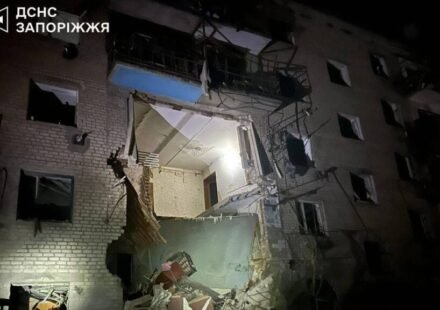
At least 26 people have been killed after Russian aerial attacks struck a school being used to distribute humanitarian assistance in southeastern Ukraine, turning a place of refuge into the scene of a devastating tragedy. The attack took place on November 2 in Komyshuvakha, a frontline village in the Zaporizhzhia region, where civilians had gathered to receive essential supplies.
The school was no longer operating as a normal educational facility because of the security risks associated with the nearby fighting. Instead, it served as a humanitarian aid distribution point and a shelter for residents who remained in the area despite the ongoing war.
Ukrainian authorities reported that two rescue workers and four police officers were among those killed. Five people were receiving hospital treatment, including two rescue workers. Officials also reported that dozens of people were missing as emergency teams searched damaged buildings for survivors.
The attack has renewed concerns about civilian safety in areas close to the frontline, where access to food, medical assistance and secure shelter can become increasingly difficult as fighting intensifies.
School Used to Distribute Humanitarian Aid
Komyshuvakha is located in southeastern Ukraine, in the Zaporizhzhia region, an area that has experienced repeated attacks during the war between Russia and Ukraine.
Because of the danger facing residents, the school targeted in the latest attack was not holding regular classes. It had instead become an important location where people could collect humanitarian assistance and seek protection.
According to Ukrainian President Volodymyr Zelenskyy, the first aerial bombs struck the school as residents were arriving to receive assistance. He said further bombs subsequently hit a nearby shelter where people had taken refuge.
The circumstances described by Ukrainian officials suggest that the attacks affected both the aid distribution operation and a location where civilians were seeking safety. The precise circumstances and responsibility for individual strikes remain matters for further investigation.
The deaths of rescue personnel and police officers have added to the seriousness of the incident. Emergency workers often operate in dangerous conditions during attacks, attempting to reach injured people, evacuate residents and prevent additional casualties.
The reported loss of these personnel could also complicate emergency operations in an area already facing significant security challenges.
Rescue Operations Continue Amid Security Risks
Following the bombing, emergency responders began searching the damaged buildings and surrounding area for people who might have survived.
Rescue operations in frontline settlements can be particularly difficult because damaged structures may collapse further, roads can be obstructed and additional attacks may force personnel to suspend their work.
Ukrainian officials reported that five people were hospitalised following the incident. Authorities also said a number of people remained missing, raising fears that the death toll could change as search operations continued.
The presence of rescue workers among the casualties has highlighted the dangers faced by emergency personnel responding to attacks. Their work requires them to enter damaged sites and reach people who may be trapped beneath rubble, often while security conditions remain uncertain.
The full scale of the damage and the final number of casualties will depend on the outcome of the rescue operation and subsequent official assessments.
For families waiting for information about missing relatives, the hours following such an attack can be especially distressing. Authorities must identify victims, establish who remains unaccounted for and provide accurate information to affected families.
Why Civilian Aid Centres Matter in the War
Humanitarian distribution centres play an essential role in communities affected by prolonged fighting. They provide access to food, basic supplies and other forms of assistance when normal services are disrupted.
In frontline areas, residents may have limited opportunities to obtain necessities because shops and public facilities have closed, transport routes have become unsafe or local supply networks have been damaged.
Schools and community buildings are sometimes repurposed to meet these needs when they are no longer able to perform their original functions safely. However, their use as shelters and aid centres does not remove the danger posed by nearby military operations.
The incident in Komyshuvakha illustrates how civilians can face serious risks even when gathering for essential humanitarian support rather than participating in military activities.
For people who have remained in their homes despite the fighting, aid distribution may be one of the few available ways to obtain regular assistance. An attack on such a location can therefore affect not only those killed or injured but also the wider community that depends on its services.
The consequences may continue after the immediate emergency ends, particularly if the facility is too badly damaged to resume operations.
Renewed Questions About Civilian Protection
The bombing has intensified concerns about the protection of civilians and humanitarian personnel in Ukraine's frontline communities.
International humanitarian law requires parties to an armed conflict to distinguish between civilians and combatants and to take precautions to minimise civilian harm. Attacks directed against civilians or civilian objects are prohibited, subject to the applicable legal rules and circumstances.
However, determining whether a particular attack violated international law requires a careful examination of the available evidence, including the intended target, the circumstances of the strike and the information available to those responsible.
Ukrainian officials have condemned the incident and accused Russian forces of carrying out the attacks. Russia's account of the incident and any subsequent official response are important to documenting the competing claims, but the available reports do not establish an independently verified explanation from Moscow for this specific strike.
An investigation could help clarify the circumstances surrounding the bombing, the sequence of attacks and the extent of the damage.
The deaths of civilians, police officers and rescue workers demonstrate the serious human consequences of continued hostilities in populated areas.
A War With Continuing Humanitarian Consequences
The attack comes as Ukraine continues to face the combined challenges of military operations, civilian displacement and damage to essential infrastructure.
Communities near the frontline often have to adapt to changing security conditions while attempting to maintain access to healthcare, food and shelter. Humanitarian organisations and local authorities must balance the urgent need to provide assistance against the risks of operating in areas exposed to attack.
The loss of a functioning aid distribution centre can make that task more difficult, particularly for older people, families with children and residents who cannot easily leave the area.
The incident also demonstrates why humanitarian access and effective civilian protection remain central concerns in any effort to reduce the suffering caused by the war.
For the families of those killed, the immediate priority is to receive reliable information and support. For survivors, the next challenge will be finding medical care, secure shelter and continued access to essential supplies.
As rescue teams continue their work, the bombing in Komyshuvakha stands as another devastating reminder of the risks faced by civilians living close to the fighting. Preventing further loss of life will require effective protection measures, safe humanitarian access and efforts to reduce attacks affecting populated areas.