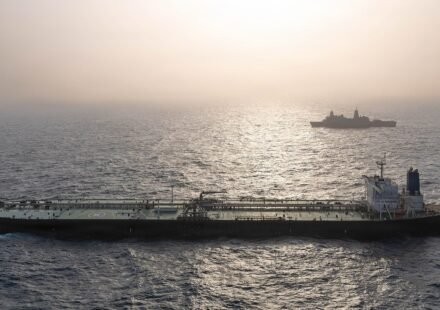
Explosives Strike Oil Tanker in Hormuz, Putting 27 Indian Seafarers in Danger

A crude oil tanker carrying 27 Indian seafarers was struck by explosive devices in the Strait of Hormuz, raising fresh concerns about the safety of commercial shipping along one of the world's most important energy routes. All the Indian crew members were reported safe after the incident, while the vessel continued its journey following an engine-room fire.
The Panama-flagged tanker, MT LOUISE 1, was targeted on October 30, 2026, according to maritime security reports. Two limpet mines were reportedly attached to the vessel's hull by a small boat before detonating. The explosions caused a fire in the engine room and temporarily disabled the tanker.
The crew managed to extinguish the fire. Authorities reported no injuries among the crew and no environmental damage from the incident. The vessel subsequently continued towards its next port of call.
Where Did the Attack Take Place?
The incident occurred approximately 25 nautical miles, or around 46 kilometres, northeast of Khasab in Oman, according to the United Kingdom Maritime Trade Operations (UKMTO), which monitors maritime security incidents.
The agency confirmed that the crew was safe, the fire had been extinguished and the vessel was continuing its voyage. Maritime security sources identified the tanker as MT LOUISE 1.
The identity of those responsible for the attack has not been established. It would therefore be premature to attribute the incident to any particular government or armed group.
Limpet mines are explosive devices that can be attached directly to a ship's hull. Their use against a moving commercial vessel presents a serious security challenge because a small boat can approach a tanker without necessarily attracting immediate attention.
Indian Government Confirms Crew Members Are Safe
India's Union Minister for Ports, Shipping and Waterways, Sarbananda Sonowal, said all 27 Indian seafarers aboard MT LOUISE 1 were safe and had suffered no injuries.
The government said it was monitoring the situation and coordinating with the ship management company to protect the crew's safety and well-being.
The incident was particularly concerning because another oil tanker carrying Indian nationals had also come under attack in the same waterway the previous day.
On October 29, the Liberia-flagged very large crude carrier MT ARZANAH, carrying two Indian nationals, was targeted in a separate projectile attack. The minister confirmed that both Indian nationals were safe.
Together, the two incidents involved 29 Indian seafarers aboard two vessels targeted on consecutive days. All 29 were reported safe, with no injuries.
Why the Strait of Hormuz Is So Important
The Strait of Hormuz connects the Persian Gulf with the Gulf of Oman and the Arabian Sea. It is a critical passage for international oil and gas shipments, making its security important for energy-exporting countries, shipping companies and fuel-importing economies such as India.
Any sustained disruption in the strait could delay oil deliveries, increase shipping insurance costs and force vessels to reconsider their routes. Even when ships are not sunk or cargoes are not lost, repeated attacks can make operators more cautious about sending vessels through the area.
For India, the risks extend beyond the safety of its seafarers. Higher transport and insurance costs can add to the cost of imported energy, potentially putting pressure on fuel prices and businesses that depend on oil.
However, a single incident does not automatically mean that global oil prices will rise. The impact will depend on whether attacks continue, how shipping companies respond and whether oil supplies are materially disrupted.
A Growing Challenge for Maritime Security
The attack highlights the vulnerability of commercial vessels travelling through congested shipping lanes during periods of conflict. Unlike large missile systems, limpet mines can be relatively inexpensive and do not necessarily require sophisticated equipment to deploy.
Maritime security specialists have warned that the ability of a small craft to attach explosives to a moving tanker and leave the area creates a difficult protection problem. Shipping companies may need to reassess vessel monitoring, security procedures and coordination with naval authorities.
The incident also comes amid wider tensions involving Iran and the United States. Reports have described restrictions on shipping through the strait and repeated attacks against commercial vessels since the conflict escalated in February 2026. However, responsibility for the attack on MT LOUISE 1 remains unconfirmed.
What Happens Next?
The immediate priority is to establish who carried out the attack and whether commercial vessels face further threats. Authorities and shipping operators will also need to assess the tanker for damage and determine what additional precautions may be necessary.
For Indian seafarers, the safe return of the crew members is the most important immediate outcome. For the wider shipping industry, the incident is another warning that even a limited attack can threaten crew safety and disrupt a vessel's operations.
If similar incidents continue, shipping companies could face higher insurance premiums, longer security checks and greater operating costs. India and other countries that depend on energy transported through the region will have a strong interest in protecting commercial shipping and preventing further escalation.
For now, the confirmed outcome is that the tanker was damaged, a fire broke out in its engine room, and all 27 Indian seafarers remained safe. The identity of those responsible has yet to be established.