Iran-Linked Security Alert Prompts US to Move Military Aircraft Away From UK Airbase

The United States has moved several military aircraft away from a British airbase following a reported security threat linked to Iran, raising fresh concerns about the protection of American military facilities in Europe.
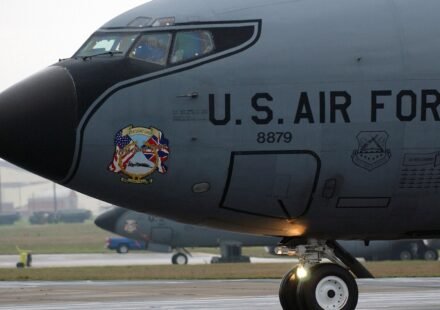
The aircraft were stationed at Royal Air Force (RAF) Mildenhall in Suffolk, eastern England. Two US aerial refuelling tankers diverted to Germany on Monday, November 9, while several other aircraft were subsequently relocated to Germany and other locations.
The movement reportedly followed intelligence about a possible threat involving Iran. However, US officials have not publicly explained the precise nature of the warning or confirmed whether it indicated an immediate danger to the base.
The development has drawn attention because RAF Mildenhall is an important centre for American air operations in Europe. The installation hosts US Air Force personnel and units, including the 100th Air Refueling Wing, which supports military aircraft operating across the region.
Aircraft moved from RAF Mildenhall
The reported relocation involved US refuelling aircraft operating from RAF Mildenhall. Two tankers initially diverted to Germany earlier on Monday, with other aircraft moved later in the day.
Aerial refuelling tankers are important to military operations because they allow combat aircraft, surveillance planes and other military assets to remain airborne for longer distances and periods. Their ability to support aircraft in flight makes them a significant part of the US military's air operations.
The movement of these aircraft does not, by itself, establish that an attack was imminent. Military aircraft can be shifted between bases for operational, logistical and security reasons.
The US Air Force did not provide a detailed explanation of the specific aircraft movements. Its general response was that American aircraft regularly rotate between installations and operating locations for a variety of reasons.
The British Ministry of Defence also avoided commenting on the operational decisions of another country's military. It said aircraft and other assets move regularly according to operational requirements.
Security alert raised at two British bases
Security arrangements at RAF Mildenhall and nearby RAF Lakenheath were reportedly increased to Force Protection Condition Charlie, commonly known as FPCON Charlie.
This is the second-highest level in the US Department of Defense's force-protection system. It is used when intelligence indicates that a terrorist action or attack is likely.
The reported change in security status suggests that American authorities were treating the warning seriously. However, it does not publicly establish the identity of a potential attacker, the intended target or the timing of any possible action.
RAF Lakenheath is another major US military installation in Suffolk. It hosts American fighter units and plays an important role in US air operations in Europe.
The increased alert at both locations highlights the wider security attention surrounding American military facilities in Britain. These installations operate under British sovereignty while hosting US forces under long-standing defence arrangements between the two countries.
Officials have not disclosed the exact nature of the threat
One of the most important unanswered questions is what prompted the aircraft relocation.
The reported warning has been linked to Iran, but American officials are still assessing whether the threat was immediate or part of a broader security concern. No detailed public account has established what kind of operation was suspected or whether a specific plan had been detected.
The distinction matters. A general intelligence warning can lead to precautionary measures even when there is no confirmed attack plan. Moving aircraft to different locations can reduce their exposure and provide military commanders with greater operational flexibility.
The relocation also does not mean that RAF Mildenhall has been closed or that all US military activity in Britain has stopped. The available information concerns the movement of aircraft and the reported increase in security measures at two installations.
Earlier withdrawal from RAF Fairford
The latest development follows a separate security episode involving RAF Fairford in Gloucestershire.
In September, several people were arrested following an incident near the base. Additional arrests were later made in connection with suspected assistance to Iranian intelligence. The investigation raised concerns about possible threats to American military personnel and aircraft.
The Pentagon subsequently confirmed that US B-1 bombers previously deployed at RAF Fairford had returned to their home stations in the United States.
RAF Fairford has been used by American bombers during military operations, including strikes against Iran. The base has therefore attracted attention amid the wider security tensions between Washington and Tehran.
British Prime Minister Andy Burnham previously said there were indications that the Fairford activity may have been coordinated in Iran. Tehran has denied involvement in the alleged plot.
The Fairford episode and the latest movement from Mildenhall are separate developments. There is no public confirmation that the two incidents were part of one coordinated operation.
Why RAF Mildenhall matters to US operations
RAF Mildenhall has an important role in supporting American military activity across Europe and beyond. Its air-refuelling capabilities allow US aircraft to operate over longer distances without relying entirely on intermediate landing locations.
The base is also part of the broader network of US military installations in the United Kingdom. These facilities support training, logistics, intelligence and operational deployments.
Moving aircraft away from a base can therefore have practical consequences for flight planning and support operations. However, the relocation of tankers does not necessarily mean that American military capability in the region has been significantly reduced. Aircraft can be repositioned while continuing to operate from alternative locations.
The decision also reflects the balance military commanders must maintain between protecting personnel and equipment and keeping aircraft available for operational duties.
What happens next?
The immediate focus will be on the assessment of the reported threat and the security arrangements at RAF Mildenhall and RAF Lakenheath.
US authorities may continue to review intelligence, adjust protection measures and decide when aircraft can return or whether they should remain at alternative locations. Any decision will depend on the assessment of the risk and operational requirements.
For now, the precise warning has not been made public, and neither the United States nor Britain has confirmed that an attack was about to take place.
The aircraft movement is therefore a significant security precaution, but it should not be interpreted as proof of an imminent Iranian attack. Further official information will be needed to establish the nature of the threat and whether it has been neutralised.