Missing Salvadoran Personnel Feared Dead After Haiti Gang Ambush as Security Crisis Deepens

The discovery of human remains believed to belong to four Salvadoran military personnel missing after an armed gang ambush in Haiti has intensified concerns over the safety and effectiveness of an international security mission tasked with confronting the country’s powerful criminal groups.
The remains were reportedly recovered outside Port-au-Prince on Saturday and were badly burned. According to people cited in the reporting, the condition of the bodies means that forensic examinations and autopsies will be required to establish their identities. The remains were reportedly transferred to a Salvadoran military team at the international airport after the team arrived in Haiti.
The identities had not been officially confirmed in the available reports, and the international security mission had declined to comment. Independent verification of the discovery was also pending at the time of the initial reporting. The circumstances surrounding the deaths, including whether the four personnel were killed during the attack or afterward, remained unclear.
Four Personnel Disappeared After Their Vehicle Was Attacked
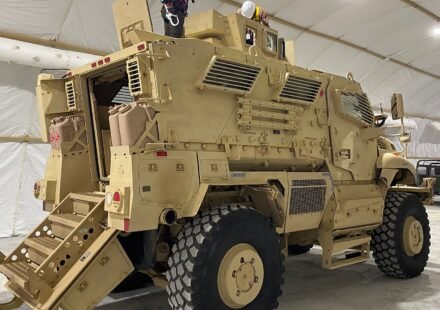
The four Salvadoran personnel disappeared on Sunday after an armored vehicle they were travelling in came under attack on the outskirts of Port-au-Prince. Salvadoran officials said the men escaped from the vehicle after it caught fire while they were returning from a market to their base.
The incident occurred in an area affected by armed gang activity, where security forces face serious risks when travelling through territory controlled by criminal groups. The vehicle was reportedly set ablaze during the assault, while subsequent efforts to locate the missing personnel became a major concern for El Salvador and the wider multinational operation.
The attack also demonstrated the dangers facing personnel deployed to Haiti, where gangs have expanded their territorial influence and challenged the authority of state institutions.
The four men were part of El Salvador’s contribution to the Gang Suppression Force, an international operation authorized by the United Nations to help confront armed groups and improve security in the Caribbean nation.
Bukele Had Announced a Rescue Operation
El Salvador’s President Nayib Bukele announced earlier in the week that his government had launched a military operation to recover the missing personnel. At that stage, Bukele said the men were being held by gangs and demanded their release unharmed.
Additional Salvadoran troops were subsequently deployed to support search and security operations. The reported discovery of the remains could substantially change the immediate focus of those efforts, shifting attention toward identification, establishing the circumstances of the deaths and determining responsibility.
However, the discovery alone does not establish who killed the personnel or whether any particular gang was responsible. No group had publicly claimed responsibility for the ambush in the available reporting.
Local media have linked the incident to armed groups operating in the area, including Chen Mechan and 400 Mawozo. Those links should not be treated as official confirmation of responsibility without further evidence from investigators or authorities.
A Major Test for Haiti’s International Security Mission
The ambush represents a significant challenge for the Gang Suppression Force, known as the GSF. The mission was established to help Haitian authorities confront armed gangs whose influence has weakened public security, disrupted daily life and forced large numbers of residents from their homes.
The force is authorized to reach approximately 5,500 personnel, but reporting indicates that around 2,000 were deployed on the ground at the time of the incident. The gap between its planned strength and actual deployment has raised questions about whether the mission has sufficient personnel and resources to operate effectively across dangerous areas.
International security operations in Haiti have faced persistent obstacles, including shortages of equipment, funding and personnel. Deploying troops is only one part of the challenge: forces must also be able to gather intelligence, move safely, protect key infrastructure and help local authorities maintain control of areas after armed groups are pushed out.
The latest incident could prompt renewed scrutiny of patrol procedures, vehicle protection, intelligence-sharing and emergency response arrangements. These are potential consequences rather than confirmed policy changes; no specific new operational measures had been announced in the reporting about the discovery.
Haiti’s Wider Security Crisis
The violence comes amid a prolonged breakdown in security in Haiti. Armed groups have expanded their control over parts of the capital and surrounding areas, while residents face threats including killings, kidnappings, extortion and the disruption of essential services.
The crisis worsened after the assassination of President Jovenel Moïse in 2021. Since then, political instability and the weakening of public institutions have helped create conditions in which armed groups can operate with considerable influence.
The consequences extend beyond direct violence. Gang activity has obstructed transport routes, complicated the delivery of humanitarian assistance, disrupted commerce and forced families to leave their homes. Estimates cited in recent reporting put the number of people displaced by violence at roughly 1.4 million to 1.5 million.
The security situation has also complicated Haiti’s efforts to restore political stability and prepare for elections. Even when security forces clear an area, maintaining lasting control and enabling residents to return safely remain difficult tasks.
What Happens Next?
The immediate priority is to establish whether the recovered remains belong to the four missing Salvadoran personnel. Forensic examinations and official identification would provide greater certainty about their fate. Investigators would also need to establish how the attack unfolded and gather evidence that could identify those responsible.
The incident may place additional pressure on El Salvador and international partners to reassess how personnel are deployed in high-risk areas. It could also intensify debate over whether the current scale and capabilities of the international mission are sufficient to confront Haiti’s armed groups.
Any response will have to balance the need to protect deployed personnel with the wider objective of improving security for Haitian civilians. An increase in military activity could put additional pressure on gangs, but it could also create further risks for people living in areas where armed groups and security forces operate.
For now, the reported discovery is a serious development in the search for the missing Salvadorans, but important questions remain unanswered. Official identification, a clearer account of the deaths and credible evidence establishing responsibility will be essential to understanding what happened and how the international mission should respond.