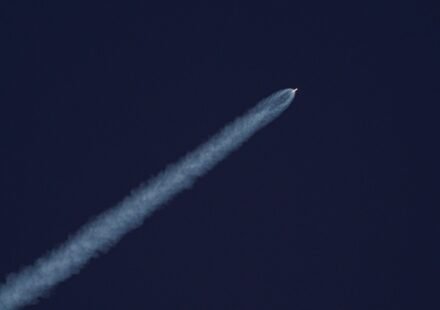
North Korea Tests New AI-Powered Torpedo as Naval Weapons Development Accelerates

North Korea has tested a new high-speed, precision-guided torpedo equipped with artificial intelligence (AI), according to the country’s state-run Korean Central News Agency (KCNA). The underwater test reportedly took place on Thursday, October 15, as Pyongyang continues efforts to strengthen its naval capabilities.
The weapon, identified as the Zam-2.0, is designed to use AI technology for target detection and guidance, KCNA reported on Saturday. North Korean authorities described the test as a success and said the upgraded system represented an important step in the development of the country’s navy.
The claims have not been independently verified, and North Korea did not publicly disclose detailed technical specifications or provide enough information to independently assess the weapon’s operational performance.
North Korea claims improvements in torpedo technology
According to KCNA, the latest test was conducted to confirm technological upgrades to the new torpedo system. The agency said the test demonstrated improvements in propulsion efficiency and the performance of the weapon’s propulsion system.
KCNA also reported that more than 180 related tests had been conducted over the previous five years as part of efforts to improve propulsion technology.
The use of AI in target detection and guidance is a significant claim because these functions can help a weapon identify and track targets. However, the extent to which the Zam-2.0 can operate autonomously, distinguish between different targets or function under challenging underwater conditions remains unclear.
North Korea has not released sufficient independent technical evidence to establish the system’s accuracy, range, speed or combat readiness.
Test follows submarine-launched cruise missile launches
The torpedo test comes amid a series of North Korean weapons activities. According to KCNA, the country also tested two types of strategic cruise missiles launched from a submarine on Wednesday, October 14.
Pyongyang said those launches were intended to assess naval mission capabilities and the reliability of its deterrence systems.
The latest developments indicate that North Korea is continuing to invest in underwater weapons and submarine-based strike capabilities. Such systems can complicate military planning because underwater weapons may be harder to detect and track than some weapons launched from land.
Nevertheless, the military effectiveness of North Korea’s latest systems cannot be determined from official statements alone.
Korean Peninsula tensions remain elevated
North Korea’s weapons development is taking place amid continuing security tensions on the Korean Peninsula. Pyongyang has repeatedly described its weapons programmes as necessary for national defence and deterrence, while South Korea and the United States view several North Korean missile and military developments as potential security threats.
South Korea has also been pursuing advanced weapons technology. Recent developments include testing a domestically developed hypersonic weapon, according to Reuters reporting.
The competing military programmes have contributed to concerns about an expanding regional arms race. Improvements in precision guidance, underwater weapons and missile technology could affect how regional militaries prepare for and respond to potential conflict.
What the AI-equipped torpedo could mean
AI-assisted target detection and guidance could potentially allow a torpedo to process sensor information and adjust its course toward a selected target. In underwater environments, however, navigation and target identification can be challenging because visibility is limited and sound-based sensors are affected by environmental conditions.
The practical value of such technology depends on several factors, including sensor performance, communication limitations, navigation reliability and the system’s ability to distinguish genuine targets from misleading signals.
North Korea’s announcement does not establish how effectively the Zam-2.0 performs these tasks in real-world conditions. Further technical information or independent assessments would be needed to determine whether the system offers a major operational advantage.
For now, the announcement provides another indication of Pyongyang’s interest in modernising its naval weapons, but important questions remain about the torpedo’s capabilities and deployment status.
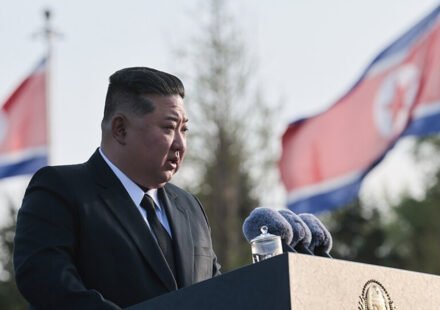
North Korea Warns US Over Taiwan Support, Reaffirms Backing for Russia
North Korea has criticised the United States over its military support and arms sales to Taiwan, accusing Washington of increasing tensions in the Taiwan Strait. At the same time, North Korean leader Kim Jong Un has reaffirmed Pyongyang’s continued support for Russia and its strategic partnership with Moscow.
The latest statements were reported by North Korea’s state-run Korean Central News Agency (KCNA) on Wednesday. They come as tensions remain high over Taiwan’s security and as North Korea and Russia continue to deepen their military and diplomatic ties.
Pyongyang Criticises US Military Support for Taiwan
In a KCNA commentary, North Korean international affairs analyst Kim Myong Chol accused the United States of undermining regional stability through its support for Taiwan.
The commentary focused on the recent arrival of US-made fighter aircraft in Taiwan. The first two of 66 F-16V Block 70 fighter jets ordered by Taiwan from the United States in 2019 arrived on the island last week.
North Korea argued that Washington should consider the consequences of its military involvement in Taiwan. The commentary warned that US support could contribute to a confrontation involving China.
Pyongyang also reiterated its support for Beijing’s “One China” principle. North Korea’s position is closely aligned with China’s claim over Taiwan, which Beijing regards as part of its territory.
Taiwan, which has its own democratically elected government, rejects Beijing’s sovereignty claims and maintains that its future should be determined by its people.
Kim Jong Un Reaffirms Support for Russia
Separately, Kim Jong Un pledged continued support for Russia in a birthday message to Russian President Vladimir Putin, according to KCNA.
Kim said North Korea would continue expanding cooperation with Moscow under the two countries’ comprehensive strategic partnership. He also expressed confidence that Russia’s efforts to defend what it describes as its sovereignty and security interests would ultimately succeed.
The message did not explicitly refer to Russia’s war in Ukraine. However, North Korea has become an important military partner for Moscow since the two countries significantly strengthened their relationship.
North Korea and Russia signed a mutual defence pact in June 2024, further formalising their security relationship.
North Korea’s Growing Role in Russia’s War
North Korea has been accused by Ukraine and Western countries of providing military assistance to Russia during the war in Ukraine. Ukrainian and South Korean estimates cited by Reuters indicate that North Korea has sent between 14,000 and 15,000 troops to support Russia since 2024.
Pyongyang has also been reported to have supplied Russia with artillery ammunition and ballistic missiles. North Korea and Russia have both strengthened their cooperation despite international criticism and sanctions.
Ukraine has separately alleged that Russia may have shared military technology with North Korea in return for Pyongyang’s support. Kyiv has said it believes Russia could be providing technological assistance related to drones and other weapons systems.
Taiwan and Russia Become Part of Wider Security Tensions
The two statements from Pyongyang highlight North Korea’s increasingly close alignment with both China and Russia.
China remains North Korea’s most important traditional political and economic partner, while Russia has emerged as a major security partner for Pyongyang in recent years. North Korea’s support for China’s position on Taiwan therefore adds another dimension to the broader rivalry between Washington and Beijing.
The United States, meanwhile, maintains that Taiwan should have the means to defend itself and has continued providing weapons to the island despite not having formal diplomatic relations with Taipei.
The arrival of the new F-16V aircraft is part of Taiwan’s efforts to strengthen its defence capabilities amid growing military pressure from China.
For North Korea, opposing US military involvement in Taiwan also fits into its broader criticism of Washington’s security alliances and military policies in East Asia.
A More Closely Aligned Pyongyang
The latest comments suggest that North Korea is continuing to strengthen its relationships with Moscow and Beijing while opposing US security policies in the region.
The developments come as tensions remain elevated across several parts of East Asia, including the Taiwan Strait and the Korean Peninsula. North Korea’s growing military cooperation with Russia has also become a major concern for the United States, South Korea, Japan and European governments.
While Pyongyang’s latest statements do not announce any new military action, they underline its continued opposition to US involvement in Taiwan and its commitment to expanding cooperation with Russia.