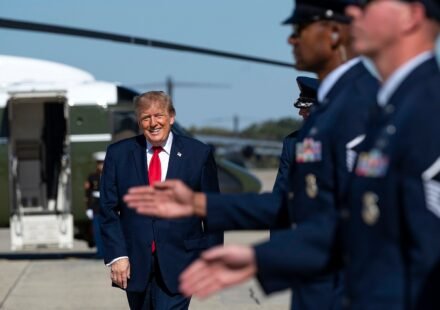
Trump Attacks Reporter’s Appearance After Being Questioned About His Health

US President Donald Trump sparked controversy after responding with personal insults when a journalist questioned him about his health and his decision to cancel planned campaign appearances in Kansas. During the exchange on October 29, 2026, Trump told the reporter, “You look like hell,” and criticised his physical appearance rather than limiting his response to the question.
The confrontation took place as Trump spoke to reporters after returning from a campaign event in South Carolina. The journalist, Reuters correspondent Jacob Bogage, asked whether Trump’s decision to skip a planned trip to Kansas had anything to do with fatigue from weeks of travelling across the country.
Trump rejected the suggestion that he was unwell and insisted that he felt “perfect.” However, the exchange quickly became tense, drawing attention to the way the president responds to questions about his health and public schedule.
Trump Turns Health Question Into Personal Attack
Bogage initially asked Trump how he was feeling after an intensive campaign schedule. When the reporter followed up by asking whether travel fatigue had influenced the Kansas cancellation, Trump reacted angrily.
After learning that the journalist worked for Reuters, Trump criticised the news organisation and described the reporter as “sick.” He then shifted his comments towards the journalist’s appearance, calling him out of shape and telling him to improve his fitness.
The reporter attempted to explain that he wanted to make sure the president was doing well. Trump nevertheless continued his criticism, ending the exchange with the remark, “You are disgusting. Put yourself in shape. You look like hell.”
The episode quickly attracted attention because the original question concerned the president’s health and a change in his campaign plans. Instead of providing a detailed explanation of his schedule, Trump made the journalist’s physical appearance a central part of the exchange.
Why Did Trump Cancel the Kansas Appearance?
Trump had been expected to travel to Salina, Kansas, to campaign for Republican Senator Roger Marshall ahead of the November 3 midterm elections. He told reporters that he did not feel a personal appearance in Kansas was necessary because he believed Marshall was doing well.
A planned campaign appearance in Dubuque, Iowa, was also cancelled. Republican organisers said Trump would instead participate in remote campaign events, allowing him to address voters in multiple states without attending every rally in person.
The cancellations came after Trump had carried out an intensive campaign schedule, with appearances across several states to support Republican candidates. He was still expected to attend another campaign event in Florida on October 30.
The cancellations alone do not establish that Trump was experiencing a health problem. His explanation was that he did not need to travel to Kansas, while the reporter’s question raised the possibility of fatigue after repeated campaign appearances.
Trump Says His Health Is Fine
During the exchange, Trump firmly rejected the suggestion that he was unwell. He said he felt “perfect” and defended his decision to continue campaigning.
The incident, however, renewed public discussion about questions surrounding the president’s health and stamina. Such questions can arise when a political leader changes travel plans or undertakes a demanding schedule, particularly during an election campaign.
There was no confirmed evidence in the exchange that Trump cancelled the Kansas appearance because of an illness. His remarks represented his own assessment of his condition, while the reason for the journalist’s question was to seek clarification about the cancelled trip.
A distinction is important: questioning a public official about health and fitness for office is a legitimate part of political scrutiny, but a single exchange does not establish a medical conclusion.
A Wider Debate About Press Relations
The confrontation also highlighted tensions between Trump and members of the press. His response moved from disputing the premise of the question to criticising the journalist personally and attacking the organisation he represented.
For journalists, asking public officials to explain changes in their schedules is part of holding political leaders accountable. For political figures, the way they answer such questions can influence how voters view their openness, temperament and willingness to engage with scrutiny.
Trump’s supporters may see his remarks as a forceful response to what he regarded as an unfair question. Critics may view the personal insults as an attempt to deflect attention from a reasonable question about his public schedule.
What Could the Incident Mean Politically?
The exchange comes just days before the US midterm elections, when control of Congress is at stake. Trump has been actively campaigning for Republican candidates, and his appearances are part of the party’s effort to maintain its narrow majorities in the House and Senate.
Analysis: The immediate political impact of the confrontation is uncertain. However, repeated clashes with journalists can shape news coverage and influence broader discussions about transparency, presidential conduct and the relationship between political leaders and the media.
The cancellations may also prompt further questions about how campaigns balance in-person appearances with remote events during the final days before an election. Tele-rallies allow candidates to reach voters across several states, but they do not provide the same face-to-face campaigning as public rallies.
For now, Trump maintains that his health is fine and that the Kansas trip was unnecessary. The exchange does not prove that health concerns caused the cancellations. Its broader significance lies in the way a question about presidential fitness turned into a personal confrontation between the president and a reporter.
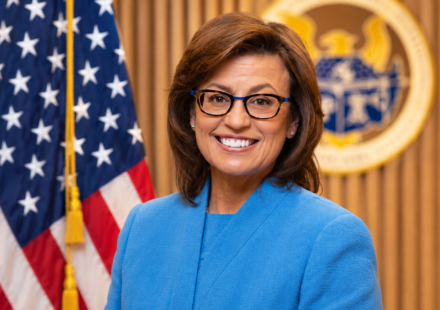
US Media Freedom Dispute Deepens as FCC Democrat Calls for Stronger Resistance to Regulatory Pressure
A growing dispute between the US broadcast industry and federal communications regulators is raising fresh questions about press freedom, government oversight and the role of media during an election campaign. Anna Gomez, the sole Democratic commissioner on the Federal Communications Commission (FCC), has urged broadcasters to respond more forcefully to actions by the Trump administration that she says risk influencing how news organisations cover politically sensitive issues.
Gomez directed her appeal towards the National Association of Broadcasters (NAB), the industry group representing radio and television broadcasters. Her intervention followed a warning from FCC Chairman Brendan Carr concerning the broadcast of allegedly fabricated opinion polls ahead of the November 3, 2026, US midterm elections.
The disagreement has developed into a broader debate over where legitimate regulation ends and potential interference with editorial independence begins. While the FCC has responsibilities for regulating broadcast stations, Gomez argues that its authority should not be used to discourage lawful reporting simply because published information is politically inconvenient for the government.
Anna Gomez Urges Broadcasters to Take a Stronger Position
Gomez has criticised what she views as an insufficient response from broadcasters to regulatory pressure. In a letter to NAB President and Chief Executive Officer Curtis LeGeyt, she argued that the industry's public response had not matched the seriousness of the challenges facing its members.
She warned that broadcasters could face increasing uncertainty if regulatory powers were used to influence coverage during an important election period. In her assessment, the issue extends beyond individual networks or specific polls because government action could affect editorial decisions across the broadcasting sector.
Her appeal places responsibility on media organisations to defend their professional independence and legal rights rather than relying solely on occasional public statements expressing concern.
Gomez's position is that broadcasters should be able to report on available information in good faith without fearing regulatory consequences merely because the subject is politically contentious. She has also questioned whether the FCC's existing rules provide a sufficient legal basis for the threats described by its chairman.
The dispute is especially significant because the November elections will determine the composition of the US Congress for the remainder of the current congressional term. Polling information, candidate interviews and political reporting are likely to remain prominent in news coverage as voters assess the parties and their candidates.
Brendan Carr's Warning About Fabricated Election Polls
FCC Chairman Brendan Carr has warned broadcasters against airing or amplifying fabricated election polling. He has argued that federal broadcast licences prohibit stations from engaging in news distortion or promoting broadcast hoaxes.
The warning followed revelations involving Wedgewood Polls, a group that said it had published fabricated midterm election surveys as an experiment to examine whether media organisations and polling aggregators would report the results. The polls were subsequently included in some polling averages, raising concerns about the verification of political data.
The episode highlights a genuine challenge for newsrooms. Polling figures can spread rapidly across television, radio, websites and social media, and inaccurate numbers may influence public perceptions if they are presented without appropriate context.
However, an important distinction exists between knowingly presenting fabricated information as genuine and reporting the existence or results of a poll that later proves unreliable. Gomez has argued that broadcasters should not be punished for reporting publicly available polling information in good faith.
Carr's warning has therefore raised a separate legal question: what evidence and circumstances would be necessary for the FCC to take action against a broadcaster under its news-distortion or broadcast-hoax policies?
Why the First Amendment Is Central to the Dispute
The First Amendment to the US Constitution protects freedom of speech and freedom of the press. Those protections are central to the debate over whether government regulators can penalise media organisations for editorial decisions.
Broadcasters operate within a regulatory framework because they use licensed broadcast spectrum. The FCC oversees individual broadcast stations and certain aspects of their operations. That authority, however, does not mean the commission has unlimited power over the content of news coverage.
Gomez has argued that reporting polling results that the administration dislikes does not, by itself, establish a violation of the rules cited by Carr. Her position is that regulatory action must be supported by the applicable legal standards and evidence rather than political disagreement with the information being reported.
The FCC chairman's warning, by contrast, focuses on the responsibility of broadcasters not to disseminate fabricated information. The distinction between these positions is important: preventing deliberate broadcast deception and restricting legitimate journalism are different matters.
Determining whether a particular broadcast violates the law would depend on the specific facts, the rules being applied and any relevant judicial interpretation. A public warning alone does not establish that a broadcaster has committed a violation.
ABC License Review Adds to Industry Concerns
The current disagreement follows another major dispute involving the FCC and Disney-owned ABC television stations.
In April 2026, the commission ordered an early review of the licences held by all eight ABC-owned broadcast stations. The move attracted scrutiny because it came amid repeated criticism of broadcasters and journalists by President Donald Trump.
ABC and Disney challenged the review in court, arguing that the action was retaliatory and violated constitutional protections for free expression. The government's position in the legal dispute has included arguments concerning the court's jurisdiction and the procedures governing challenges to FCC decisions.
The case illustrates the wider conflict between a regulator's authority to review broadcast licences and concerns that such authority could be used to influence editorial choices.
The NAB had previously warned that the early licence review created uncertainty for broadcasters and called for caution to avoid destabilising local stations that provide services to viewers and listeners.
These developments have contributed to the industry's concern that regulatory decisions could affect not only major national media brands but also the local stations that operate under individual federal licences.
NAB Responds to the Call for Action
NAB President Curtis LeGeyt welcomed Gomez's support for broadcasters' rights and the First Amendment principles underpinning a free press. He said the organisation would continue working with Gomez and other policymakers to protect broadcasters' rights.
The response signals that the industry group intends to remain involved in the debate, although the extent of any future legal or public campaign has not been established.
Broadcasters face a difficult balancing act. They must verify information carefully, avoid presenting false claims as established facts and comply with applicable regulations. At the same time, they have an interest in ensuring that regulators do not use licensing powers to influence legitimate political reporting.
A stronger response from the industry could involve public statements, legal challenges where appropriate, discussions with lawmakers or requests for clearer guidance on the application of FCC rules. These are possible avenues for addressing the dispute, rather than confirmed steps that the NAB has committed to taking.
What the Dispute Could Mean for Election Coverage
The timing of the dispute makes it particularly consequential. As the November 3 midterm elections approach, broadcasters are likely to report on polling, campaign events, candidate statements and voter concerns.
If news organisations become uncertain about whether reporting particular polling results could trigger regulatory scrutiny, editors may take a more cautious approach. That could affect how quickly information is reported and how much attention is given to controversial or disputed data.
This is a potential consequence, not proof that broadcasters have already changed their coverage. The actual impact will depend on how the FCC applies its rules, whether further enforcement actions occur and how courts interpret the relevant legal standards.
There is also a public-interest concern on the other side of the debate. Audiences need reliable information, and fabricated surveys can mislead voters when they are mistaken for legitimate research. Media organisations therefore have a responsibility to explain who conducted a poll, how it was carried out and what limitations affect its findings.
The challenge is to protect the public from deliberate misinformation without turning regulatory oversight into a mechanism for controlling legitimate reporting.
What Happens Next?
The dispute is likely to remain focused on the legal boundaries of FCC authority, the independence of broadcasters and the treatment of election-related polling. Further statements from the commission, broadcasters or lawmakers could clarify how the agency intends to apply its rules.
The legal challenge concerning ABC's station licences is another important development to watch because its outcome could affect the wider debate over regulatory authority and editorial independence.
For now, Gomez is calling for a more assertive industry response, Carr is warning broadcasters against airing fabricated polling, and the NAB has reaffirmed its commitment to protecting broadcasters' rights.
The central question is not simply whether broadcasters should be held accountable for false information. It is whether the rules are applied according to clear legal standards and reliable evidence, without discouraging legitimate journalism.
As the election approaches, the way this dispute develops could influence the relationship between federal regulators and the US broadcast industry, as well as public confidence in the independence of political news coverage.