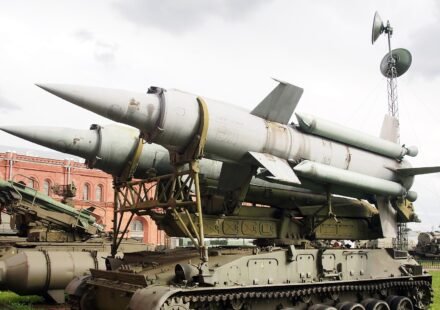
Russian Air Defences Intercept 92 Drones in Major Overnight Alert Over Leningrad Region

Russian air-defence forces reportedly intercepted 92 drones over the northwestern Leningrad region early on Wednesday, in a large overnight aerial alert that has renewed attention on the security of an important industrial and export area.
Regional Governor Aleksandr Drozdenko announced the figure in a message on Telegram. The reported interceptions took place over the Leningrad region, which surrounds St. Petersburg and is located northwest of Moscow.
The exact locations where the drones were detected and intercepted have not been fully disclosed. Authorities have also not provided a complete account of possible damage or disruptions linked to the incident.
The reported figure of 92 drones has not been independently verified. Information released so far does not establish how many drones were directed towards particular facilities or whether any reached their intended targets.
Leningrad region's strategic importance
The Leningrad region is an important part of Russia's economic and transport network. Its location along the Baltic Sea gives it access to major maritime routes used for international trade.
The region includes the ports of Ust-Luga, Primorsk and Vysotsk, which are important for Russian oil and grain exports. It is also home to the Kirishi oil refinery, one of the country's largest petroleum-processing facilities.
These installations make the area strategically significant for Russia's energy and commercial activities. Any prolonged disruption to transport, industrial production or port operations could have wider economic consequences.
However, there has been no confirmation that the 92 drones intercepted on Wednesday caused damage to these facilities. Their presence in the wider region should not be taken as evidence that any specific port or industrial site was struck during this incident.
Air-defence response
The announcement indicates that Russian air-defence units were active during the overnight alert. Drones detected in the region were reportedly engaged and brought down before the authorities announced that 92 had been intercepted.
Officials have not released detailed information about the types of weapons or air-defence systems used during the operation. They have also not published a full breakdown of the locations where the interceptions took place.
Such details are often restricted during military operations because they can reveal information about defensive capabilities and the protection of important infrastructure.
For residents, a large drone alert can create uncertainty even when authorities report successful interceptions. Falling debris, temporary restrictions and precautionary security measures can affect communities near the areas where air-defence operations take place.
At present, the available public information does not provide a complete picture of the impact on local residents or essential services.
Wider pressure from drone warfare
The incident comes as drone attacks have become a major feature of the Russia-Ukraine war. Both countries have increasingly relied on unmanned aerial vehicles to target military positions, infrastructure and facilities considered important to the opposing side.
Long-range drones have changed the security environment far beyond the immediate front lines. Industrial areas, energy installations, transport networks and cities located deep inside national territory have all become part of the wider security challenge.
For Russia, protecting its western regions is particularly important because of their industrial concentration and access to the Baltic Sea. The Leningrad region's proximity to international borders and major trade routes adds another layer of concern.
Air-defence systems are therefore required to monitor large areas and respond to incoming threats that may travel at different altitudes and along changing routes.
The reported interception of 92 drones illustrates the scale of the aerial alert, although the available information does not establish the precise operational circumstances behind it.
Questions remain over the full impact
Several important details remain unclear following the governor's announcement. Authorities have not provided a comprehensive account of where the drones were intercepted, whether any buildings or infrastructure were damaged, or whether emergency services had to respond to incidents on the ground.
Independent verification is also difficult during an active military conflict. Information released by officials on either side may not provide the complete picture, particularly when military operations and national security are involved.
The number announced by the regional governor should therefore be treated as an official Russian claim rather than an independently confirmed total.
The latest incident underlines the continuing pressure that drone warfare is placing on Russia's regional security arrangements. The Leningrad region's ports, industrial facilities and energy infrastructure make it an especially important area to protect.
Further information from regional authorities will be needed to establish whether Wednesday's operation caused any damage or disruption beyond the reported interceptions.

Canada Expands Russia Sanctions, Targets 62 More Individuals and Organisations
Canada has announced another expansion of its sanctions against Russia, adding 38 organisations and 24 individuals to its list of targeted entities. The latest measures focus partly on people and organisations connected to the development of ballistic missile technology and cyber activities, widening Ottawa’s efforts to restrict networks it believes are supporting Russia’s military and strategic capabilities.
The announcement marks another step in Canada’s continuing response to Russia’s war against Ukraine. By extending the sanctions list, the Canadian government is seeking to increase pressure on individuals and organisations considered connected to activities that could strengthen Russia’s military capabilities or support its broader operations.
The latest expansion covers a total of 62 additional targets. However, the announcement available on November 9 did not provide a complete public breakdown of the names, business connections or specific restrictions applying to each newly listed individual and organisation.
Ballistic Missile Technology and Cyber Activities in Focus
Two areas highlighted in the latest announcement are ballistic missile technology and cyber activities. Both have become important elements of modern military and national security competition.
Ballistic missile development involves sophisticated engineering, specialised components and access to advanced technology. Restrictions targeting organisations connected to this field are intended to make it more difficult for Russia to obtain the expertise, equipment or support required to strengthen its missile-related capabilities.
Cyber activities represent another significant concern. Governments increasingly view cyber operations as part of wider national security challenges because digital networks can be used for intelligence gathering, disruption, espionage and other strategic purposes.
Canada's decision to include targets linked to these activities indicates that its sanctions policy is not limited to traditional military equipment or direct battlefield operations. It also seeks to address technological and digital networks that may contribute to Russia's strategic capabilities.
The full identities and roles of the newly sanctioned targets will be important in understanding how extensively the measures affect Russia's defence and technology-related networks.
How Canadian Sanctions Work
Canada imposes Russia-related sanctions under its Special Economic Measures Act and the associated Special Economic Measures (Russia) Regulations.
Depending on the designation and applicable legal provisions, sanctions can restrict financial transactions, dealings in property, the provision of services and other economic activities involving listed individuals or organisations.
For people and businesses operating in Canada, compliance with these restrictions is important. Financial institutions and other regulated organisations must take steps to ensure that prohibited transactions do not take place.
The consequences can extend beyond the immediate targets. Companies that maintain business relationships with sanctioned organisations may need to review contracts, payment arrangements, suppliers and international partnerships to determine whether their activities remain legally permissible.
The precise impact of the November 9 announcement will depend on the identities of the listed targets and the restrictions attached to their designations.
Canada's Wider Pressure Campaign Against Moscow
The latest announcement forms part of a broader sanctions campaign that Canada has maintained since Russia's annexation of Crimea in 2014 and expanded significantly following the full-scale invasion of Ukraine in 2022.
Over the years, Ottawa has introduced restrictions targeting Russian officials, businesses, financial networks, defence-related organisations and individuals accused of supporting activities connected to the war.
Earlier measures in 2026 addressed several areas of concern. These included Russia's defence-industrial sector, energy-related revenue networks, financial enablers and vessels associated with the country's so-called shadow fleet.
Canada also introduced measures concerning individuals connected to the unlawful deportation and forced transfer of Ukrainian children. These actions demonstrate that its sanctions policy covers not only military and economic interests but also alleged human rights violations.
The August 2026 sanctions against defence manufacturer Streit Group provided another example of Canada's focus on military supply networks. Ottawa said the company had a history of supplying defence products to Russian entities and that its armoured vehicles had been used by Russian National Guard forces.
The new November measures add another layer to this wider approach, with particular attention to missile technology and cyber-related activities.
What the New Measures Could Mean for Russia
Sanctions are designed to create economic and operational obstacles rather than produce an immediate change on the battlefield. Their impact depends on how effectively restrictions limit access to international financial systems, specialised technology, suppliers and commercial networks.
Targeting additional individuals and organisations can make it more difficult for sanctioned networks to operate through international business relationships. It can also increase compliance requirements for companies and financial institutions that have dealings with potentially affected parties.
However, sanctions do not automatically prevent all restricted activity. Targeted organisations may attempt to use intermediaries, alternative suppliers or complex corporate structures to maintain access to goods and services.
This is why enforcement, information sharing and coordination with international partners remain important parts of sanctions policy.
For Canada, the challenge will be ensuring that the latest designations are implemented effectively and that the restrictions reach the networks they are intended to affect.
Ukraine Remains Central to Canada's Policy
Canada has consistently linked its Russia-related sanctions to support for Ukraine's sovereignty and territorial integrity. The measures are part of a wider diplomatic and economic strategy involving Western governments and other international partners.
Ottawa's position is that increasing pressure on Russia can raise the costs of continuing the war and limit access to resources that support its military operations.
The latest announcement also reflects the growing importance of technology in international security policy. Modern conflicts increasingly involve missile systems, digital infrastructure, intelligence networks and advanced manufacturing. Governments are therefore broadening sanctions beyond conventional military suppliers.
The addition of 38 entities and 24 individuals signals that Canada intends to continue expanding its approach.
What Comes Next?
The next important development will be the publication and implementation of the detailed sanctions designations. The identities of the newly listed individuals and organisations, along with the precise legal restrictions, will help determine the practical impact of the announcement.
For now, Canada's decision sends a clear diplomatic message: Ottawa intends to maintain economic and technological pressure on networks it considers connected to Russia's military and strategic activities.
The effectiveness of the new measures will ultimately depend on enforcement, international cooperation and whether the targeted networks can find alternative ways to access restricted technology and services.
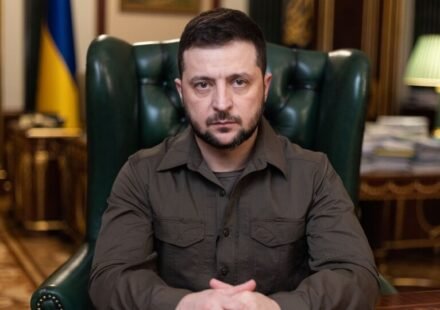
Zelenskyy Questions US Decisions as Ukraine Faces Delays in Military Suppor
Ukrainian President Volodymyr Zelenskyy has criticised recent decisions by the United States concerning military assistance to Ukraine, saying some actions taken by Washington are difficult to explain between partners. His remarks highlight growing uncertainty over the future of US support as Russia’s war against Ukraine continues.
Speaking during a meeting with a US congressional delegation on Monday, Zelenskyy pointed to delays in weapons deliveries, restrictions affecting military technology and gaps in advance warnings about incoming attacks. He suggested that the combined developments raised questions about whether political considerations were slowing assistance to Kyiv.
Delays in Weapons Deliveries Raise Concerns
Zelenskyy said Ukraine was still waiting for certain missile deliveries that had already been funded through the Prioritised Ukraine Requirements List (PURL) programme, which helps coordinate the purchase of US military equipment for Ukraine.
According to the Ukrainian president, one package was awaiting approval from US Defence Secretary Pete Hegseth. He argued that the delay was particularly concerning because Ukraine continues to need air-defence equipment to protect its cities and critical infrastructure from Russian attacks.
The Ukrainian leader said Kyiv had not received a full explanation for the decisions affecting assistance. He stressed that the issue was not simply about military supplies but also about the reliability of cooperation between the two countries.
Concerns Over Intelligence and Satellite Communications
Zelenskyy also raised concerns about restrictions on Ukraine’s use of the Starshield satellite system, which supports military communications and certain operational activities.
He said Ukraine had not received advance warnings about attacks on three occasions during the preceding week, despite having generally relied on information shared by its partners to prepare for Russian strikes.
Such warnings can be crucial for moving personnel, protecting civilians and preparing air-defence systems. However, the precise circumstances surrounding the reported gaps in warning information were not fully detailed.
The concerns come as Ukraine faces continued Russian missile and drone attacks, including strikes on energy infrastructure that can disrupt electricity, heating and water supplies.
Zelenskyy Offers a Conditional Proposal on Russian Oil Refineries
The Ukrainian president also addressed Washington’s demands concerning Ukrainian attacks on Russian oil infrastructure.
Zelenskyy said Ukraine would consider suspending strikes on Russian oil refineries for 30 days if the United States supplied interceptors for the Patriot air-defence system, which Ukraine uses to counter ballistic missiles and other aerial threats.
The proposal links a possible pause in attacks on Russian energy facilities to additional defensive assistance for Ukraine. It remains unclear whether Washington will accept the condition or whether the proposal will become part of formal negotiations.
Diplomatic Efforts Continue Despite Disagreements
Despite his criticism, Zelenskyy indicated that Ukraine continued to pursue diplomatic engagement with Washington. A Ukrainian delegation was expected to meet US presidential envoys Steve Witkoff and Jared Kushner in Norway in the coming days, although the schedule remained subject to confirmation.
The planned discussions could provide an opportunity to address disagreements over military support and explore possible steps towards ending the war.
For Kyiv, maintaining access to weapons, intelligence and communications technology remains central to its defence against Russia. For Washington, balancing military assistance with its diplomatic objectives presents a continuing challenge.
Zelenskyy’s latest remarks underline the uncertainty surrounding the relationship between the two countries. Whether the disagreements lead to changes in US policy or are resolved through further talks remains to be seen.