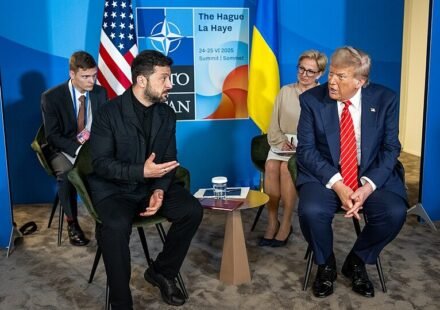
Trump Turns Up Heat on Zelenskyy: ‘Get a New President’ Remark Sparks Fresh Ukraine Row

US President Donald Trump has called for Ukraine to elect a new president, escalating tensions with Ukrainian President Volodymyr Zelenskyy after he criticised Washington’s decision to allow Russian diesel supplies amid the ongoing war.
Speaking to reporters at the White House on October 10, Trump argued that Ukraine needed a leader willing to reach an agreement to end the conflict with Russia. His remarks came a day after he announced a diesel supply arrangement with Russian President Vladimir Putin, a move that drew strong criticism from Kyiv and several European officials.
“I suggest they get a new leader who can make a deal,” Trump said, adding that he believed it was time for Ukraine to have a new president.
The comments marked another public dispute between Washington and Kyiv over how to end Russia’s full-scale invasion of Ukraine, which began in February 2022.
Zelenskyy Calls Russian Diesel Deal a Weak Decision
Zelenskyy strongly criticised the agreement, arguing that easing restrictions on Russian fuel exports could provide Moscow with additional revenue to sustain its military campaign.
The Ukrainian president described the decision as a weak move by Washington and warned that allowing Russia to sell petroleum products would help finance a war that should be brought to an end.
Zelenskyy also expressed frustration that the agreement was announced while Ukrainian officials were holding discussions with US representatives about possible ways to end the conflict.
Kyiv has consistently urged Washington and its allies to increase pressure on Moscow rather than relax restrictions on Russian energy exports.
The dispute has raised questions about coordination between the United States and Ukraine at a time when diplomatic efforts to end the war remain uncertain.
Trump Defends Deal to Ease Diesel Supply Restrictions
Trump has defended the agreement as a way to increase fuel supplies and address high energy costs affecting American consumers and businesses.
He announced that Russia would immediately provide more than 300,000 tonnes of diesel, followed by additional shipments. The White House presented the move as part of an effort to improve fuel availability as prices remain a concern ahead of the US midterm elections.
The US Treasury Department also issued a temporary licence easing sanctions on certain Russian diesel shipments. The precise commercial arrangements, payment terms and longer-term implications of the agreement were not fully clear in initial reports.
The decision represents a significant policy shift from the sanctions pressure Washington has applied to Russia over its invasion of Ukraine.
Critics argue that allowing additional Russian energy exports could undermine those efforts and provide Moscow with financial benefits. Supporters of the arrangement point to the need to address energy supply and domestic price pressures.
Trump Blames Ukraine’s Attacks on Russian Energy Infrastructure
Trump has also criticised Ukrainian attacks on Russian oil refineries and other energy infrastructure, arguing that they contribute to fuel-price pressures.
He said Zelenskyy should stop targeting Russian refineries, warning that the attacks could create further problems for global energy markets.
Ukraine has defended its strikes as part of its campaign against Russian military and energy infrastructure supporting the invasion. Kyiv has also accused Moscow of repeatedly attacking Ukrainian cities and critical infrastructure.
The two sides remain far apart over the conditions required for a ceasefire or broader peace agreement.
Ukrainian Officials Defend Zelenskyy
Ukraine’s Foreign Minister Andrii Sybiha defended Zelenskyy following Trump’s comments, saying the Ukrainian people had the right to decide who leads their country.
His response underlined Kyiv’s position that Ukraine’s political future should be determined domestically rather than through pressure from foreign governments.
The public exchange also highlights the delicate relationship between the two countries as US officials continue to explore diplomatic options for ending the war.
Peace Efforts Face Fresh Uncertainty
The dispute emerged as Ukrainian, European and US representatives continued discussions about a possible framework for ending the conflict. The diesel agreement has complicated those efforts by creating new disagreements over sanctions, Russian energy revenue and the strategy for securing peace.
Russia has maintained its military campaign while insisting that any settlement must address its demands. Ukraine, meanwhile, has called for security guarantees and measures to prevent further Russian attacks.
It remains uncertain whether the latest diplomatic discussions will produce a breakthrough. Trump’s call for new Ukrainian leadership adds another layer of political tension to negotiations already complicated by competing demands.
For Ukraine, the immediate challenge remains defending its territory while seeking international support. For Washington, the disagreement raises questions about how to balance energy costs, relations with Moscow and commitments to Kyiv.
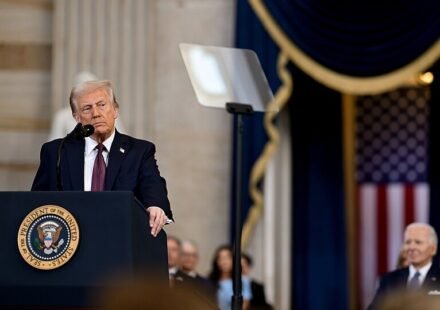
Trump Announces Russian Diesel Deal; Zelensky Warns It Could Prolong Ukraine War
US President Donald Trump has announced an agreement for Russia to supply diesel to the United States and global markets, drawing sharp criticism from Ukrainian President Volodymyr Zelensky, who warned that easing pressure on Moscow could help prolong the war in Ukraine.
Trump announced the arrangement on October 9 following a telephone conversation with Russian President Vladimir Putin. He said the Russian side would begin supplying more than 300,000 tons of diesel immediately, followed by additional shipments in the coming weeks and months.
The announcement comes as Washington faces pressure to address high fuel prices and continues diplomatic efforts aimed at ending Russia’s war against Ukraine.
Trump Says Lower Fuel Prices Are a Priority
Trump said the planned supplies would help increase the availability of diesel in the American and international markets. He highlighted lower prices for American consumers, farmers, ranchers and truckers as a major priority.
According to the Associated Press, Trump outlined an initial shipment of more than 300,000 tons, followed by another 500,000 tons in November and further deliveries thereafter. He also referred to an additional three million tons within a short period.
However, details about the payment arrangements, the precise delivery schedule and the overall implementation of the agreement were not immediately clear.
The announcement follows a period of elevated energy prices and disruption in global fuel markets. Additional supplies could help improve availability, although the actual effect on prices will depend on delivery volumes, refining capacity, transportation costs and broader market conditions.
Zelensky Criticises the Decision
Zelensky strongly criticised the arrangement, describing it as a gift to Putin and arguing that allowing Russia to sell petroleum products could provide Moscow with additional revenue while its war against Ukraine continues.
In a statement shared on social media, the Ukrainian president said easing sanctions without a clear and lasting de-escalation agreement was a sign of weakness. He argued that the move could enable Russia to continue its military campaign rather than encourage a meaningful reduction in hostilities.
Zelensky also questioned the timing of the announcement, which came as Ukrainian, American and European representatives were holding discussions in Miami about possible steps towards ending the conflict.
The Ukrainian government has repeatedly called for stronger pressure on Moscow and continued international support for Kyiv. Its position is that economic concessions should be linked to concrete steps towards reducing the fighting.
A Shift in US Pressure on Moscow
The diesel announcement raises questions about the direction of US policy towards Russia. Washington has imposed extensive restrictions on Russian energy-related trade since Moscow launched its full-scale invasion of Ukraine in February 2022, seeking to limit revenues that help finance the war.
The new arrangement appears to mark a shift in that approach. The Associated Press reported that the US Treasury issued a temporary licence easing restrictions on Russian diesel sales.
The move also comes after Trump signed additional Russia-related sanctions legislation in September, according to the AP report. The relationship between those measures and the new fuel arrangement could become an important issue as the administration explains how the policy will operate.
The agreement does not, by itself, establish that broader sanctions have been permanently removed. The scope and duration of any exemptions, along with the conditions attached to them, remain important details to watch.
Diesel Prices and the Global Energy Market
Diesel is a critical fuel for freight transport, agriculture, construction and industrial activity. Changes in its supply can affect the cost of moving goods and operating heavy machinery, making fuel prices an important economic issue.
Additional Russian supplies could contribute to market availability if shipments are delivered as announced. However, it is too early to conclude that the agreement will substantially reduce prices for American consumers or have a major effect on the wider global market.
Prices are influenced by several factors, including crude oil costs, refinery operations, transport infrastructure, geopolitical tensions and demand. The volume of fuel that actually reaches buyers—and when it arrives—will therefore be crucial in determining the deal’s impact.
Diplomacy Continues Amid Disagreements
The diesel announcement coincided with diplomatic discussions involving US and Ukrainian representatives, alongside European participants, in Miami. The talks focused on developing proposals intended to move negotiations towards a possible end to the war.
The disagreement over Russian fuel highlights the different priorities facing Washington and Kyiv. The Trump administration has emphasised fuel availability and prices, while Ukraine has warned that easing restrictions without reciprocal steps from Russia could weaken efforts to end the conflict.
Putin has said Russia is prepared to supply oil and petroleum products to American and global markets. However, the announcement has not resolved the wider disagreements over the war, sanctions or the conditions required for a lasting settlement.
For now, attention will focus on whether the proposed diesel shipments proceed, how US sanctions exemptions are applied and whether the energy arrangement has any connection to progress in peace negotiations.