Haiti Sets New Election Timeline as Salvadoran Military Deployment Raises Security Questions

Haiti has announced a fresh timetable for national elections as the country struggles to contain armed gangs, while El Salvador plans to send more than 2,000 soldiers to support security operations and efforts to locate four missing Salvadoran personnel.
The Provisional Electoral Council has scheduled the first round of presidential and parliamentary elections for July 18, 2027, with a second round and local elections planned for October 4, 2027. The revised calendar replaces an earlier plan for voting in December 2026, which authorities reconsidered amid worsening insecurity.
The announcement comes as Haiti faces a prolonged political vacuum, widespread gang violence and serious obstacles to restoring normal public life. The presidency has remained vacant since President Jovenel Moïse was assassinated in 2021, and the country has not held a general election since 2016.
At the same time, El Salvador's planned military deployment has raised questions about how international security operations will be coordinated, who will command the additional troops and how civilians will be protected during operations against armed groups.
Election Schedule Moves Into 2027
Under the new electoral calendar, Haiti will hold the first round of presidential and legislative voting on July 18, 2027. A second round, alongside local elections, is scheduled for October 4.
Electoral authorities are also preparing the next stages of candidate registration and voter enrolment. The council expects to publish the final list of candidates by mid-January, while the voter-registration deadline is May 20, according to the announced timetable.
The revised schedule is intended to provide a route back to elected government after years of political instability. However, setting dates does not guarantee that voting can take place safely across the country.
Armed groups control significant parts of Port-au-Prince and have expanded their influence beyond the capital. Insecurity has restricted movement on major roads, disrupted public services and forced many residents to leave their homes.
These conditions create practical problems for election preparations. Electoral officials must be able to reach communities, establish registration facilities, distribute materials and ensure voters can travel to polling stations without facing unacceptable risks.
The government and electoral authorities will therefore need to demonstrate progress on security well before the first round begins. Otherwise, the new timetable could face further disruption.
Why El Salvador Is Sending More Than 2,000 Troops
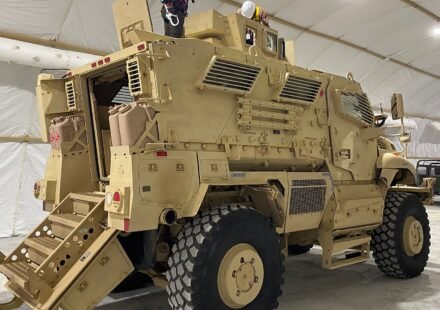
El Salvador has announced plans to deploy more than 2,000 soldiers to Haiti as part of an effort to help locate four missing Salvadoran aviation technicians and support operations against armed gangs.
The technicians disappeared on October 18 after their vehicle was attacked and caught fire in an area near Port-au-Prince. They were serving in connection with an international security mission supporting Haitian police.
El Salvador's President Nayib Bukele announced an operation to recover the missing personnel. Additional Salvadoran forces have since arrived in Haiti, with the latest deployment intended to expand the effort.
Bukele also discussed the operation with Haitian Prime Minister Alix Didier Fils-Aimé. Statements from both governments described an intention to strengthen cooperation on rescue efforts and security challenges.
However, important operational details remain unclear. The available reports do not establish whether all the additional troops will formally join the United Nations-backed Gang Suppression Force or operate under a separate arrangement. Their precise command structure, rules of engagement and length of deployment have also not been fully explained.
Questions Over Command and Accountability
The arrival of a large additional contingent could increase the personnel available for security operations, but it also makes coordination especially important.
Haiti's security response involves national police, international personnel and multiple partners providing logistical or operational support. If additional troops operate alongside an existing international mission, clearly defined responsibilities will be necessary to avoid confusion over authority and decision-making.
Security experts have questioned how the Salvadoran contingent will be integrated into the wider operation. Uncertainty over command arrangements and the scope of the mission could complicate coordination with Haitian police and other international forces.
There are also concerns about accountability. Security operations in densely populated areas can expose civilians to gunfire, explosions, displacement and restrictions on movement. Clear rules for the use of force, mechanisms for investigating incidents and access to medical assistance will be important safeguards.
The deployment's effectiveness will depend not only on the number of troops involved but also on the clarity of its objectives, cooperation with Haitian institutions and the protection of residents.
Gang Violence Continues to Disrupt Daily Life
Armed gangs have weakened state authority in parts of Haiti, particularly around the capital. Their activities have disrupted transport routes, restricted access to essential services and contributed to a humanitarian emergency.
The violence has also affected healthcare. Medical facilities face pressure from injuries, shortages and difficulties transporting patients through dangerous areas.
Doctors Without Borders reported treating 30 people injured by gunfire or drone explosions between October 18 and 26. The organisation has called for civilians to be protected and for wounded and sick people to retain access to medical facilities.
Blocked roads and dangerous travel conditions can delay emergency treatment even when hospitals remain operational. For people in affected communities, reaching a clinic or obtaining basic supplies can become a serious challenge.
The security crisis also has economic consequences. Businesses may reduce operating hours or close, transport becomes less reliable, and families can lose access to jobs and regular income. These pressures make it harder for the government to prepare for elections and restore confidence in public institutions.
Elections Depend on More Than a Calendar
Haiti's election timetable represents an important administrative step, but the central challenge is creating conditions in which citizens can participate safely and meaningfully.
Authorities must address voter registration, access to polling stations, the security of election workers and the movement of ballot materials. They must also ensure that people displaced by violence are not effectively excluded from the process.
The problem is particularly difficult in areas where gang-controlled roads make travel dangerous or prevent residents from reaching registration centres. People who have lost identity documents or moved repeatedly because of violence may face additional barriers.
International support may help improve security and logistics, but elections will require cooperation among Haitian institutions, political groups and communities. Public confidence will depend on whether voters believe they can participate without intimidation and whether the process is administered transparently.
If conditions improve, the revised dates could provide a framework for a gradual return to elected government. If violence continues to prevent registration and campaigning, further delays may remain possible.
What the Developments Mean for Haiti
The new election dates and the planned Salvadoran deployment address two connected challenges: the absence of an elected government and the insecurity preventing a return to normal political life.
A stronger security presence could help authorities regain access to some areas and support efforts to recover the missing personnel. But troop numbers alone cannot resolve Haiti's deeper institutional and social problems.
Longer-term stability will also depend on functioning public services, economic recovery, access to healthcare and a political process capable of restoring public legitimacy.
The immediate priorities are to clarify the role of the incoming Salvadoran forces, protect civilians, improve access to humanitarian assistance and make measurable progress toward safe elections.
For Haiti, July 2027 now represents the next major electoral target. Whether the country can meet that deadline will depend on the security situation and the ability of its institutions and international partners to turn the announced plans into practical results.