
Tesla’s New Roadster Can Thrust Itself Into the Air, but Buyers May Have to Wait Until 2028

Tesla has unveiled a redesigned version of its long-awaited Roadster electric sports car, featuring rocket-style thrusters that can propel the vehicle into the air during a demonstration. However, despite the dramatic showcase, consumers may have to wait until 2028 before production begins.
The vehicle was presented at an event at a SpaceX testing facility in Texas on October 15. The demonstration featured the Roadster climbing an inverted ramp, manoeuvring in mid-air and landing back on the ground using its specialised propulsion technology.
The reveal marks a significant new chapter for a vehicle first announced in 2017. Its development has faced repeated delays, leaving Tesla enthusiasts waiting years for a production version.
How Does Tesla’s New Roadster Lift Off the Ground?
The new Roadster uses cold-gas thrusters developed in collaboration with SpaceX, the aerospace company led by Tesla CEO Elon Musk. The technology releases compressed gas to generate short bursts of thrust, allowing the vehicle to perform unusual manoeuvres.
During the demonstration, the car travelled along a specially designed ramp, moved upside down and then performed an aerial rotation before returning to the ground. It was also shown jumping over other Tesla vehicles during the event.
Tesla has also highlighted a suction-based system that helps the vehicle maintain grip during parts of the demonstration. Together, these features make the Roadster considerably different from conventional electric sports cars.
However, the demonstration should not be confused with a flying car designed for ordinary travel. The displayed manoeuvres took place under controlled conditions, and the technology has not been established as a practical way to fly over public roads.
Production Is Not Expected Until 2028
Despite the attention generated by the unveiling, the Roadster is not expected to reach consumers immediately. Musk said production is planned to begin in 2028.
Tesla first introduced its next-generation Roadster in 2017 and initially expected deliveries much earlier. Subsequent delays pushed back the programme several times, making the latest announcement important for customers who have been waiting for the vehicle.
The company has not provided a confirmed consumer delivery schedule in the latest unveiling reports. The final production specifications, pricing and availability will be important details to watch as development continues.
The gap between a demonstration prototype and a commercially available car also means buyers should wait for confirmed specifications before making purchasing decisions based on the vehicle's advertised capabilities.
Is the Flying Feature Legal on Public Roads?
One of the biggest questions concerns whether the Roadster's airborne capability will be available to ordinary drivers.
Tesla's website states that the Rocket version's airborne feature is not approved for public-road use. That distinction is important because a technology demonstrated at a private facility does not automatically meet the safety and regulatory requirements for use on public highways.
Road vehicles must comply with applicable safety standards, while any system capable of lifting a car into the air would raise additional engineering and regulatory questions.
The company has not demonstrated that drivers will be able to use the airborne feature during normal road journeys. For now, the demonstration is best understood as a showcase of specialised technology rather than evidence that flying cars are ready for everyday commuting.
Tesla and SpaceX Bring Their Technologies Together
The Roadster project highlights the relationship between Tesla's electric-vehicle engineering and SpaceX's aerospace expertise. The use of cold-gas thrusters brings rocket-inspired technology into a high-performance road-car project.
Tesla has also promoted the Roadster's acceleration capabilities. During the unveiling, the vehicle was presented as capable of reaching 60 miles per hour in approximately one second. This is a company demonstration claim and should be distinguished from independently verified performance testing of a final production vehicle.
The latest reveal gives Tesla a high-profile vehicle to showcase while the company continues developing its wider electric-vehicle and autonomous-driving ambitions.
What Buyers Should Know
The new Roadster has generated attention because of its unusual ability to perform airborne manoeuvres, but several questions remain unanswered. Production is planned for 2028, final specifications and pricing need confirmation, and the Rocket version's airborne feature is not approved for public-road use.
For prospective buyers, the key milestone will be the arrival of a production-ready vehicle with confirmed performance figures, delivery dates and regulatory status.
Until then, Tesla's latest Roadster remains a highly ambitious sports-car project whose most eye-catching feature has been demonstrated under controlled conditions—not a flying car ready for everyday use.
What Is Starshield? How a Satellite Service Disruption Rattled Ukraine’s Military
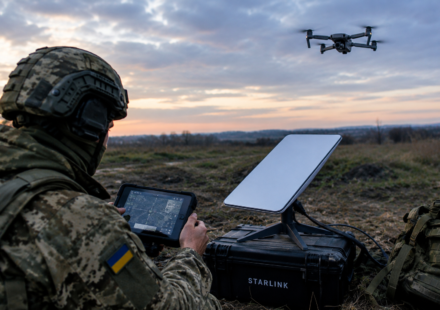
A temporary disruption affecting Starshield, SpaceX’s military-grade satellite communications system, has exposed Ukraine’s dependence on US-linked technology for battlefield communications and drone operations.
Ukrainian military personnel reported that connectivity restrictions affected some drone missions earlier this week, with commanders saying that communications interruptions caused mission failures and drone losses. Some Ukrainian units reported that their connections had returned to normal by Thursday, October 15, although questions remained about the cause of the disruption.
The incident has also raised concerns about Ukraine’s reliance on a communications system whose access and operating conditions are not entirely under Kyiv’s control. Reuters separately reported, citing two US officials and a Western official briefed on the matter, that an order to limit Starshield services for Ukraine came from inside the White House. The officials did not identify who made the decision.
What is Starshield?
Starshield is SpaceX’s satellite programme designed for government and national security customers. It builds on technology developed for Starlink, the company’s commercial satellite internet service, but is intended for more specialised missions.
According to the Associated Press, Starshield is designed to support secure communications, Earth observation and government operations that require additional security measures. It can incorporate dedicated satellites, specialised sensors and enhanced encryption for sensitive information.
Starlink, meanwhile, provides broadband internet through a large constellation of satellites in low Earth orbit. Its terminals have become important for maintaining communications in areas where conventional networks are unavailable, damaged or unreliable.
Although the two systems share technological foundations, they serve different purposes and are not interchangeable in every operational setting. Standard civilian Starlink access does not necessarily provide the specialised capabilities required for military missions.
Why does Ukraine rely on satellite connectivity?
Since Russia launched its full-scale invasion in February 2022, satellite communications have played an important role in Ukraine’s ability to maintain contact across the battlefield.
Military units use satellite internet to exchange information, coordinate operations and maintain communications when ground-based infrastructure is damaged or unavailable. Drone operators also rely on stable connections to receive live video, monitor flight conditions and maintain control of aircraft.
Ukraine’s battlefield systems increasingly depend on digital information. The Delta battlefield-management system, for example, helps military personnel organise and share operational data. Moving this information quickly and reliably is especially important when units and drones are operating in rapidly changing conditions.
The latest disruption demonstrated how interruptions to a communications link can affect several activities at once, from drone missions to frontline logistics.
What happened during the disruption?
Ukrainian officials reported that some satellite terminals experienced connectivity restrictions when moving at high speeds. Ukraine’s presidential adviser on defence technologies, Serhiy Beskrestnov, said the limitations affected military missions and that Ukrainian forces had not received advance warning.
Reuters reported that some terminals lost their connection for periods of around 10 to 20 seconds while travelling at speeds of approximately 110 to 120 kilometres per hour. Even brief interruptions can make a drone more difficult to control, particularly when it is moving quickly or operating in a demanding environment.
The Associated Press reported that a Ukrainian drone commander said several drones and other systems were affected and that some missions failed. By Thursday, some units said their connectivity had returned to the required level.
The precise cause of the restrictions was not immediately established publicly. The reports also did not establish that the entire Starlink network had been shut down across Ukraine. The reported problems concerned particular military connectivity and speed restrictions.
Who controls Starshield?
Control of access has become a central question in the dispute.
SpaceX chief executive Elon Musk said Starshield is owned and controlled by the US government, adding that decisions about its speed limits and permitted use ultimately rest with the US military and the president.
Reuters subsequently reported that officials had received a message from within the White House directing that the service for Ukraine's military be limited. However, the officials cited by Reuters did not say who issued the order or who was responsible for implementing it.
These reports raise questions about the extent to which Ukraine can depend on US-controlled systems during military operations. They do not, on their own, establish the full decision-making chain or prove the motive behind the restrictions.
Why Europe cannot quickly replace the system
The disruption has also highlighted the limited availability of immediate alternatives.
In a report published on October 14, Reuters said European countries and companies were working on alternatives but could not offer a straightforward replacement for Ukraine’s military use of Starlink and Starshield.
Eutelsat’s OneWeb network provides satellite connectivity, but experts cited by Reuters said its existing architecture, terminal requirements and performance limitations made it less suitable for some frontline applications.
Switching networks would also require changes to equipment. Terminals designed for one proprietary system cannot necessarily connect directly to another provider’s satellites.
Europe is developing longer-term capabilities, including the European Union’s planned IRIS² satellite constellation and Germany’s military satellite programme. However, these projects do not provide an immediate, equivalent replacement for all the services Ukraine currently relies on.
What happens next?
The incident has strengthened calls for Ukraine and its partners to develop backup communications systems and reduce dependence on any single provider.
Alternative networks could improve resilience, but building a reliable replacement requires compatible equipment, sufficient coverage, secure communications and the ability to operate under battlefield conditions.
For Ukraine, the immediate priorities include maintaining communications for military units, ensuring reliable drone operations and clarifying the conditions under which access to critical satellite services can be restricted.
The disruption appears to have been temporary for at least some units, but its wider significance remains: access to satellite communications can have direct consequences for military operations, especially when a country has limited alternatives.
NASA and SpaceX Prepare to Send New Solar Arrays and 6,300 Pounds of Cargo to Space Station
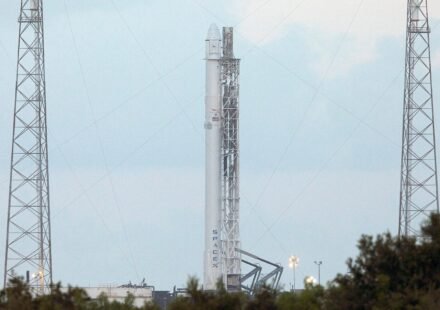
NASA and SpaceX are preparing a new cargo mission to the International Space Station (ISS), carrying more than 6,300 pounds of scientific investigations, supplies and equipment. The mission will also deliver the final set of new roll-out solar arrays designed to increase the orbiting laboratory’s power-generation capacity.
The flight, designated SpaceX’s 35th Commercial Resupply Services mission for NASA, is scheduled to use a Falcon 9 rocket and an uncrewed Dragon spacecraft. NASA announced a target launch time of 6:33 a.m. Eastern Daylight Time on October 13 from Space Launch Complex 40 at Cape Canaveral Space Force Station in Florida.
The launch schedule can change because of weather, technical checks or other operational requirements. NASA’s latest mission updates should be consulted for confirmation of the actual liftoff.
New Solar Arrays to Boost Space Station Power
One of the mission’s major payloads is the final set of International Space Station Roll-Out Solar Arrays, known as iROSA.
Unlike traditional rigid solar panels, these arrays are designed to roll out after deployment. Their compact configuration allows them to be transported to orbit and installed alongside the station’s existing solar-power infrastructure.
The new arrays are intended to supplement the ISS power system, helping support onboard research, equipment and daily operations. The station relies on electricity for life-support systems, communications, scientific instruments and other essential functions.
The additional power capacity is particularly important as the station continues to host experiments that require reliable electrical supply.
Cargo Includes Experiments for Medical and Materials Research
The Dragon spacecraft will carry a range of scientific payloads in addition to routine supplies for astronauts.
Among the investigations are hardware intended to manufacture artificial retinas in microgravity, research involving three-dimensional heart-tissue models, and studies examining how new types of glass form in space.
The mission will also transport brain organoids—small, laboratory-grown models of brain tissue—that researchers hope can help identify possible treatment targets for neurodegenerative diseases, including Alzheimer’s, Parkinson’s and multiple sclerosis.
Microgravity provides scientists with experimental conditions that differ from those on Earth. Research conducted in orbit can help investigators study biological processes, materials and technologies that may be difficult to examine under normal gravitational conditions.
However, results from space-based experiments must be analysed and validated before their potential medical or industrial applications can be established.
How Dragon Will Reach the International Space Station
Following launch, the Dragon spacecraft is expected to travel to orbit aboard the Falcon 9 rocket. It will then conduct its approach to the space station and dock autonomously with the space-facing port of the Harmony module.
NASA’s published schedule placed docking at approximately 11 a.m. EDT on October 15, subject to operational conditions.
After docking, the crew will unload the supplies and research equipment. The solar arrays will require installation work, including operations involving the station’s robotic systems and astronauts.
The spacecraft is expected to remain attached to the ISS until around mid-November before departing with research materials and cargo returning to Earth.
Why Cargo Missions Matter
Regular cargo flights are essential to maintaining the space station, which has supported scientific research involving international partners for more than two decades.
Resupply missions bring food, replacement components, scientific instruments and other equipment required by the crew. They also allow researchers to send new experiments to orbit and return selected samples for analysis on Earth.
NASA’s commercial resupply programme works with private companies, including SpaceX, to transport cargo to and from the station. These partnerships help sustain the ISS while supporting the development of commercial spaceflight capabilities.
The CRS-35 mission combines routine resupply operations with a significant power-system upgrade and research that could contribute to future advances in medicine and materials science.