Democracy21 to Contest Spain’s Snap Election in Madrid and Barcelona

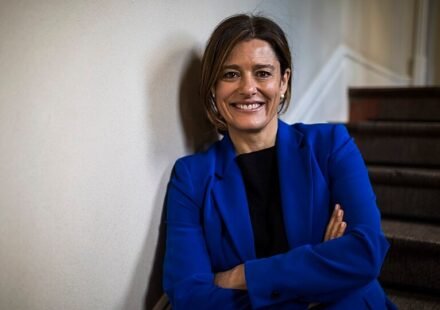
Spanish lawyer Miriam González Durántez has presented her centrist political project, Democracy21, ahead of Spain’s early general election scheduled for November 29. She says the new party aims to move beyond the country’s deep political divisions, strengthen democratic institutions and focus on practical solutions to public concerns.
González Durántez, an international and European Union trade-law specialist and the wife of former British Deputy Prime Minister Nick Clegg, announced that Democracy21 would contest the election in Madrid and Barcelona.
Her announcement comes as Spain prepares for an early vote following a parliamentary setback for Prime Minister Pedro Sánchez’s government over measures intended to address the country’s growing housing crisis.
A Challenge to Spain’s Political Polarisation
González Durántez has criticised what she describes as two rigid political blocs dominated by the left and right. She argues that the rivalry between the ruling Socialists and the conservative People’s Party has made it harder to build consensus on major national issues.
At the launch, she called on Spaniards to put ideological differences aside, work together to safeguard democracy and modernise the country.
Democracy21 presents itself as a centrist, reform-oriented alternative to established political parties. Its message focuses on improving public institutions, reducing political confrontation and making government more responsive to citizens.
However, the party faces the challenge of establishing itself in a political environment where established parties have extensive networks and Spain’s political debate is strongly divided.
Housing Crisis Becomes a Key Election Issue
Housing affordability is expected to remain a central issue in the election campaign. Spain has faced growing concerns over rising rents, limited housing availability and difficulties for younger people trying to buy or rent homes.
González Durántez has criticised both the national government and regional administrations over their handling of the housing crisis. She argues that excessive regulation and delays in developing land have contributed to high construction costs and a shortage of affordable homes.
Spain’s housing responsibilities are divided among national, regional and municipal authorities. While the central government can introduce legislation and financial incentives, regional governments and local councils play important roles in urban planning, land development and building permissions.
The new party says it wants a more practical approach to housing policy, with greater emphasis on increasing supply and improving coordination between different levels of government.
Democracy21 Calls for Institutional Reform
Beyond housing, González Durántez has made democratic reform and the depoliticisation of public institutions central themes of her political platform.
She has criticised what she sees as excessive political influence over institutions and called for changes intended to improve accountability and public confidence.
The party has also highlighted corruption prevention and the professionalisation of public administration. Its broader message is that political institutions should concentrate on delivering services and solving problems rather than deepening divisions between opposing groups.
These proposals place Democracy21 within Spain’s centrist political space, although its influence will depend on its campaign organisation, policy detail and support among voters.
Why Is Spain Holding an Early Election?
Prime Minister Pedro Sánchez announced on October 5 that Spain would hold a general election on November 29, bringing forward the vote amid mounting political pressure.
The announcement followed parliament’s rejection of measures designed to address the housing crisis. The issue has become a source of public frustration, with protests over housing shortages and increasing rents adding to pressure on political leaders.
The election will give voters an opportunity to decide the composition of the next national government. The campaign is expected to focus on housing, economic conditions, public services, institutional trust and the future direction of Spain’s political system.
The conservative People’s Party and the far-right Vox are also important players in the contest. Their prospects, alongside those of the governing Socialists and smaller parties, will shape the negotiations and alliances that may follow the vote.
Can a Centrist Party Find Space in a Polarised Election?
Democracy 21 is attempting to appeal to voters who are dissatisfied with the confrontation between Spain’s major political blocs. González Durántez has argued that the country needs a political approach that prioritises solutions over ideological disputes.
The party’s initial decision to contest seats in Madrid and Barcelona gives it a focused starting point for the November election. Its longer-term ambition is to establish a broader national presence.
Whether it can attract enough support to influence parliamentary representation remains uncertain. The campaign will test whether its message of political moderation and institutional reform resonates with voters in the two constituencies.
As the November 29 election approaches, housing policy, democratic reform and the performance of Spain’s established parties are likely to remain central to the political debate.

Spain’s Pedro Sánchez Calls Early Election for November 29 After Housing Defeat
Spanish Prime Minister Pedro Sánchez has called an early general election for November 29, 2026, bringing forward a national vote that was not otherwise due until next year.
Sánchez announced the decision on Monday after his minority government suffered a major parliamentary defeat over measures aimed at addressing Spain’s worsening housing crisis. He said voters should now decide the country’s political direction and argued that his government needs a stronger progressive majority to continue its agenda.
Housing defeat triggers election decision
The immediate trigger for the election was the rejection last Friday of two government housing decrees in Spain’s Congress.
The measures were designed to address housing affordability and included provisions related to evictions, renters’ rights and real-estate speculation. Opposition from the conservative People’s Party (PP) and far-right Vox, along with support from Catalan separatist party Junts, helped defeat the government proposals.
The parliamentary defeat came after growing public anger over housing costs. Protests have taken place in several Spanish cities, while the eviction of an 87-year-old woman from her Madrid home intensified public attention on the country's housing problems.
Sánchez seeks a stronger mandate
In a televised address, Sánchez said Spain needs a broader progressive majority capable of passing legislation and advancing social policies.
The prime minister acknowledged that his government had made mistakes and that some voters were dissatisfied with its performance. He nevertheless presented the election as an opportunity to renew public support for his political programme.
Sánchez has been prime minister since 2018 and has remained in power through a series of difficult parliamentary alliances. His current government has struggled to pass legislation because it depends on several smaller parties to maintain its parliamentary position.
Tough contest expected
The November election is likely to be a major test for Sánchez and his Socialist Party (PSOE).
Recent opinion polling has placed the conservative People's Party in a strong position, while Vox could play an important role in determining whether a right-wing coalition can form a government.
A defeat for Sánchez could therefore end more than eight years of Socialist-led national government and potentially bring the Spanish right back to power.
However, Sánchez has repeatedly managed to remain in office despite difficult political circumstances. His ability to build alliances with smaller parties has allowed him to survive previous challenges, making the outcome of the November vote difficult to predict.
Housing, migration and corruption dominate campaign
The election campaign is expected to focus heavily on housing affordability, but other issues are also likely to shape the vote.
Sánchez's government has faced political pressure over migration, particularly after a major influx of migrants into Spain's North African enclave of Ceuta. At the same time, corruption investigations involving figures connected to the Socialist Party have weakened the government's political position.
The government has also faced criticism over its inability to pass a full budget since 2023, highlighting the difficulties created by its fragmented parliamentary support.
Election set for November 29
The election will take place on Sunday, November 29.
Spain's electoral timetable will formally begin after the election decree is published. The campaign is scheduled to run from November 13 to November 27, followed by a day of reflection before voters go to the polls on November 29.
The vote will determine whether Sánchez can secure enough support to continue leading Spain's government or whether the country moves toward a conservative-led administration.
For Sánchez, the decision is a calculated political gamble: he is seeking a stronger mandate at a time when his government is under pressure, while the opposition sees an opportunity to end his long tenure in office.
Source attribution: Reuters, Associated Press, Financial Times, RTVE and EFE.