
Samsung Sets Fresh Earnings Record as AI Infrastructure Demand Surges

Samsung Electronics has reported another record-breaking quarter as the global expansion of artificial intelligence infrastructure drives demand for advanced memory chips. The South Korean technology giant recorded 107.4 trillion won (approximately $80.5 billion) in operating profit and 195.3 trillion won (approximately $146 billion) in revenue for the July–September 2026 period. Both figures represent new quarterly records for the company.
The results mark Samsung’s fourth consecutive quarter of record revenue and operating profit. The company’s semiconductor division was the principal growth engine, benefiting from demand for memory products used in AI servers, data centres and high-performance computing systems.
The latest performance highlights how the AI investment cycle is reshaping the semiconductor industry. As technology companies expand computing capacity to train and operate increasingly sophisticated AI models, they need larger quantities of high-speed memory and storage. Samsung is positioning its chip business to capture more of that demand.
AI Memory Chips Drive Samsung’s Earnings
Samsung’s Device Solutions division, which includes its semiconductor operations, generated 147.1 trillion won in revenue and 106.5 trillion won in operating profit during the third quarter.
The memory business delivered particularly strong results as demand from server customers increased and prices rose across several product categories. Samsung also expanded sales of high-bandwidth memory, commonly known as HBM, which helps AI accelerators process large volumes of data efficiently.
The company said it had significantly increased sales of HBM4, a newer generation of high-bandwidth memory designed for advanced computing applications. Server DRAM and solid-state drives also benefited from demand linked to AI infrastructure expansion.
Memory has become an increasingly important part of AI hardware because powerful processors require rapid access to large amounts of data. As developers build larger AI systems, the need for memory bandwidth, capacity and energy efficiency is growing.
Samsung’s scale across memory production and semiconductor manufacturing gives it several opportunities to participate in this expansion. However, the company must continue improving product performance and production efficiency as competition intensifies.
Why High-Bandwidth Memory Matters
High-bandwidth memory is designed to move data rapidly between memory and processors. This capability is important for AI systems, where thousands of calculations may be performed simultaneously and large datasets must be accessed quickly.
Traditional memory products remain essential for smartphones, personal computers and enterprise servers. But AI accelerators often require specialised memory configurations to avoid data-transfer bottlenecks.
Samsung is increasing its focus on advanced memory products while seeking to strengthen its position among customers developing AI processors and data-centre systems. The company also plans to expand sales of server DRAM and high-capacity storage products as demand for computing infrastructure grows.
The opportunity is significant, but it is not without risk. Chipmakers must invest heavily in manufacturing capacity and advanced production technology before they can supply new products at scale. If customer demand slows or new capacity arrives faster than expected, prices and profit margins could come under pressure.
AI Growth Is Not Lifting Every Samsung Business Equally
Although semiconductor earnings surged, Samsung’s consumer-facing businesses faced a more difficult operating environment.
The company’s Device eXperience division, which includes smartphones, televisions and home appliances, recorded 52.1 trillion won in revenue and an operating loss of 800 billion won in the third quarter.
The mobile business continued to generate substantial sales, supported by flagship smartphones and foldable devices. However, higher component and operating costs weighed on profitability. Rising memory prices can create a particular challenge for electronics manufacturers because memory is an important component in smartphones and other connected products.
This creates a contrast within Samsung’s business model: stronger memory prices can improve results for its semiconductor division while increasing costs for parts of its device business
The company’s ability to manage that balance will be important as it seeks to preserve consumer-product competitiveness while expanding its position in AI-related components.
Samsung Expects AI Chip Demand to Remain Strong
Samsung expects investment in AI infrastructure to continue supporting the semiconductor market into 2027. It anticipates that demand for AI-related memory will grow faster than industry supply as technology companies expand their computing capabilities.
The company plans to prioritise high-bandwidth memory, server DRAM and solid-state drives, while pursuing longer-term supply arrangements with customers. Such arrangements can help manufacturers plan production and give customers greater visibility over the availability of essential components.
Samsung is also targeting opportunities in advanced chip manufacturing, including products for high-performance computing applications. Its foundry business reported improved revenue and earnings during the quarter, supported by higher sales of advanced-node products and demand related to AI and computing workloads.
Nevertheless, the outlook depends on continued investment by AI developers and cloud-computing companies. Any reduction in spending, technical changes in AI system design or shift in supplier preferences could affect the pace of growth.
Heavy Investment Will Be Needed to Sustain Growth
Samsung is planning substantial spending on manufacturing facilities and technology. Its capital expenditure reached 29 trillion won in the third quarter, with most of the spending allocated to the semiconductor division.
For the full year, the company expects capital expenditure of approximately 84.4 trillion won, including investment in production capacity and infrastructure intended to meet demand for AI and high-performance computing products.
Such investment is necessary to expand output, improve manufacturing processes and develop more advanced chips. However, building semiconductor facilities requires significant capital and long lead times. New capacity must also be matched to customer demand to avoid oversupply.
Samsung therefore faces a dual challenge: expanding production quickly enough to capture the AI opportunity while ensuring that investment produces sustainable returns.
What Samsung’s Record Means for the Technology Industry
Samsung’s latest results underline the growing importance of memory chips in the AI economy. While public attention often focuses on AI models and powerful processors, memory and storage are also critical to the performance of modern computing systems.
Strong demand could support semiconductor investment, create opportunities for suppliers and accelerate the development of advanced manufacturing technologies. It may also affect prices for memory components used in other electronic devices.
For consumers, sustained increases in memory costs could eventually add pressure to the prices or margins of smartphones, computers and other products. The actual impact will depend on supply conditions, competition and how manufacturers absorb or pass on higher costs.
For Samsung, the immediate priority is to strengthen its advanced-memory portfolio, meet customer requirements and maintain production efficiency. Its record quarter demonstrates the scale of the current AI-driven opportunity, but continued growth will depend on demand, execution and the economics of future investment.

Sundar Pichai Reportedly Pushes Back on Trump’s ‘Trump Ocean’ Proposal
Google chief executive Sundar Pichai reportedly declined US President Donald Trump’s proposal to rename the Atlantic Ocean “Trump Ocean”, according to an account Trump shared during a political rally in South Carolina. Trump said Pichai explained that oceans are different from smaller geographical features because they extend across multiple countries.
The president described the alleged conversation while discussing his administration’s efforts to rename prominent geographical landmarks. According to Trump, he contacted Google about whether the Atlantic Ocean could be given a new name, but Pichai discouraged the idea, citing the international reach of the ocean.
"Oceans are different, sir. They cover a lot of countries. Please don’t ask us to do that,” Trump said, recounting Pichai’s reported response. The conversation has not been independently verified, and Google has not publicly confirmed Trump’s account.
Trump’s proposal to rename an ocean
Trump has repeatedly floated the possibility of renaming major geographical features since returning to the White House. Earlier this month, he suggested that either the Atlantic or Pacific Ocean could receive a new name, proposing options including “Trump Ocean” and “Ocean of the Americas”.
During his South Carolina remarks, Trump said he had considered the Atlantic Ocean but might abandon the proposal after the response he attributed to Pichai. He also joked about renaming the Pacific Ocean “American Ocean” and questioned how Europe would fit into such a name.
The comments appeared to extend Trump’s earlier campaign to attach new names to geographical landmarks associated with the United States. However, there is no announcement of an official change to the internationally recognised name of either the Atlantic or Pacific Ocean.
Trump’s account also did not establish whether Google received a formal request or whether the discussion was an informal exchange.
Why Google’s position matters
Google Maps is one of the world’s most widely used digital mapping services. Its geographical labels influence how millions of users find locations, plan journeys and understand the names of physical features.
Google has previously said that its maps reflect official government naming sources and may display different names depending on the user’s location. That policy became prominent after Trump ordered the Gulf of Mexico to be renamed the Gulf of America for US federal use in January 2025.
Google subsequently updated its US map display to use “Gulf of America”. Users in Mexico continued to see “Gulf of Mexico”, while users elsewhere could see both names. The company described its approach as consistent with its established practice for geographical names that differ across countries.
A similar situation followed Trump’s 2026 decision to rename Lake Ontario “Lake America” for US government purposes. Google Maps adopted the new designation for users in the United States, while users in Canada continued to see “Lake Ontario”. Outside the two countries, the map displayed both names, according to reporting on the change.
These examples demonstrate how digital platforms can apply country-specific naming conventions without necessarily changing the names recognised elsewhere in the world.
Why an ocean’s name is different
The Atlantic Ocean borders or connects regions across Europe, Africa, North America and South America. Its waters are shared by numerous countries, and its name is used in international geography, navigation, scientific research and maritime documentation.
Changing the name displayed on a digital map is not the same as establishing a universally recognised geographical name. A US administration may direct federal agencies to use a particular designation within its own official systems, but that does not automatically compel other governments or international organisations to adopt it.
International geographical names are influenced by established usage, national naming authorities, cartographic practices and international cooperation. A unilateral proposal to rename an ocean would therefore face a very different set of practical and diplomatic considerations from a change affecting a feature primarily within one country.
The Atlantic Ocean’s extensive international significance helps explain why a platform might treat a proposed name change differently from one affecting a geographical feature covered by a specific government naming decision.
Trump’s wider campaign to rename landmarks
The latest remarks follow Trump’s earlier efforts to change the names of geographical features. In January 2025, he signed an executive order directing US federal agencies to use “Gulf of America” instead of “Gulf of Mexico”. The order also restored the name Mount McKinley for North America’s tallest peak, previously known as Denali in US federal usage.
Trump later pursued the “Lake America” designation for Lake Ontario, which lies along the US-Canada border. These changes have illustrated the limits and reach of government naming decisions: a country can direct its own agencies to adopt a designation, but international acceptance may vary.
The proposals have also placed technology companies in a sensitive position. Mapping services must consider official naming sources while serving users in countries that may recognise different names for the same geographical feature.
Google’s country-specific labelling approach allows it to reflect some differences without applying one government’s preferred name uniformly to every user worldwide.
What happens next?
There is currently no confirmed decision to rename the Atlantic Ocean or the Pacific Ocean. Trump’s latest comments indicate that he may not pursue the Atlantic proposal, at least for now, after the response he attributed to Pichai.
The episode also highlights the influence that major technology companies have over the presentation of geographical information. While governments can establish naming policies for their own official use, digital platforms still need to determine how those policies are reflected in products used around the world.
For now, the Atlantic Ocean retains its established name in international usage. Whether Trump revisits his proposal remains unclear, and the reported exchange with Pichai has not been independently confirmed.

Meta Puts AI Assistant Muse at the Centre of Its Future as New Shares Support Expansion
Meta Platforms is reorganising its artificial intelligence strategy around Muse, its new personal AI agent, as the Facebook and Instagram owner prepares to issue a new class of non-voting shares to support its costly expansion. The strategy signals a shift towards AI-powered services that can perform tasks for users, rather than simply answer questions, while giving Meta additional financial flexibility to compete in an increasingly crowded market.
The announcement came alongside the company's third-quarter results, which showed stronger-than-expected revenue and rapid early adoption of Muse. However, the growing cost of developing AI models, building data centres and recruiting specialised talent remains a significant challenge for the technology giant.
Muse Emerges as a Core Part of Meta's AI Strategy
Meta introduced Muse in September as a personal AI agent designed to help users complete tasks across connected applications. Unlike conventional chatbots that primarily respond to prompts, Muse is intended to carry out activities such as organising emails, planning trips, managing schedules and assisting with online purchases.
The service is powered by Meta's Muse Spark model and operates through a dedicated virtual environment. Users can decide which services it connects to and what permissions it receives, while certain sensitive actions require approval.
Chief Executive Mark Zuckerberg sees the product as a potential gateway to a much broader AI ecosystem. According to the company's latest update, more than 10 million people in the United States and Canada had established Muse accounts within roughly six weeks of its launch.
Meta hopes that wider adoption will create a network effect: as more individuals and businesses use the assistant, it could become more useful and open opportunities for additional services and commercial transactions.
New Class of Shares to Help Fund Expansion
Meta plans to issue a new class of non-voting Class C common shares beginning in January 2027. The shares are intended to provide additional flexibility for acquisitions, employee compensation and other strategic investments without weakening Zuckerberg's control over the company.
The structure is effectively designed to produce a two-for-one stock split, although investors should distinguish the new share class and its implications from a conventional cash-raising share sale. The company's stated objective is to expand its financing options while preserving its existing control arrangements.
The move comes as Meta commits enormous resources to AI infrastructure, including advanced computing chips, data centres and the development of increasingly capable models. Its capital expenditure forecast for 2026 now stands at between $135 billion and $145 billion, with the lower end raised from its previous outlook.
Such spending reflects the scale of the competition Meta faces from leading AI developers and other technology companies seeking to build consumer and business AI products.
Strong Revenue, but AI Costs Are Rising
Meta reported third-quarter revenue of $64.60 billion, exceeding the $63.37 billion expected by analysts surveyed by LSEG. The company also forecast fourth-quarter revenue of between $73 billion and $76 billion, indicating that its core advertising business continues to provide substantial financial support for its expansion.
However, its cash position highlights the pressure created by investment. Meta recorded a free cash flow deficit of $2.12 billion in the third quarter, compared with positive free cash flow of $10.63 billion a year earlier.
The company's financial outlook therefore depends on balancing two priorities: maintaining growth in advertising across Facebook and Instagram while developing AI products that can eventually generate meaningful additional revenue.
Chief Financial Officer Susan Li expects AI businesses to begin adding incremental revenue in 2027 and become a more meaningful source of diversification over time. Meta has also indicated that it intends to monetise Muse sooner than it typically would with a new product because the service is expensive to operate.
Reality Labs Shifts More Attention Towards AI
Meta is also adjusting its investment priorities within Reality Labs, the division responsible for virtual reality, augmented reality and related technologies. The company has spent heavily on its metaverse ambitions, but it is now directing more resources towards AI-related opportunities.
Meta expects Reality Labs' losses to narrow to around $15 billion next year as investment is reallocated towards priority areas, primarily artificial intelligence. The change does not mean that Meta is abandoning its work on immersive technologies; rather, it indicates a stronger focus on areas management believes can deliver more immediate strategic or commercial value.
AI assistants could also become increasingly relevant to smart glasses and other connected devices, giving Meta additional ways to integrate its technology into users' daily routines.
Privacy and Reliability Remain Major Challenges
Despite Muse's early adoption, its expansion raises important questions about privacy, security and reliability. An assistant capable of interacting with email, calendars, shopping services and payment tools may handle sensitive information and perform actions that have real-world consequences.
Meta says Muse includes safeguards such as permission controls, a separate security-monitoring agent and approval requirements for certain sensitive actions. Users can also limit access to connected applications.
Nevertheless, the broader AI industry continues to face concerns about inaccurate responses, inappropriate access to information and the possibility that automated systems could take unintended actions. Greater adoption could increase scrutiny of how personal data is handled and how users can review or reverse an agent's decisions.
Meta also faces wider legal and regulatory pressures. These issues could increase compliance costs and influence public trust as the company expands AI services that interact more directly with personal information.
What the Strategy Means for Meta's Future
Meta's decision to put Muse at the centre of its AI plans represents an attempt to turn substantial technology spending into a new long-term business opportunity. A successful assistant could strengthen user engagement, support subscriptions and transactions, and create additional commercial opportunities beyond advertising.
The risks are equally significant. Infrastructure spending could continue to weigh on cash flow, rivals may develop competing products, and privacy concerns could slow adoption. The new share structure may offer financial flexibility, but it does not remove the need for Meta to demonstrate that its investments can generate sustainable returns.
For investors, the central question is whether Muse and Meta's wider AI portfolio can eventually deliver enough additional revenue to justify the enormous cost of development. The company's latest results provide an encouraging starting point, but the longer-term outcome will depend on user retention, reliable performance, responsible data handling and successful monetisation.
Meta is betting that personal AI agents will become a major part of how people use technology. Its next challenge is to prove that this vision can become a durable and profitable business.
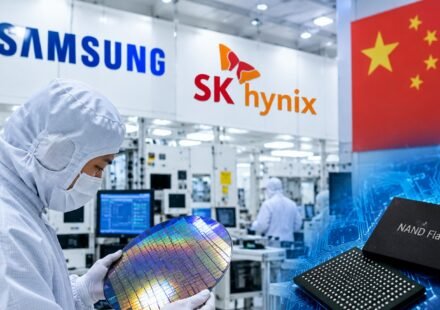
Samsung and SK Hynix Upgrade China Plants to Make More Advanced Memory Chips
South Korean semiconductor giants Samsung Electronics and SK Hynix are upgrading their manufacturing facilities in China to produce more advanced memory chips, as they seek to meet rising demand from the artificial intelligence (AI) industry and compete with China's rapidly growing domestic chipmakers.
According to a Reuters report citing four people familiar with the plans, both companies are working to manufacture NAND flash memory chips with more than 200 layers at their Chinese plants. The upgrades could help them maintain their competitiveness in a market increasingly shaped by AI data centres, cloud computing and high-capacity data storage.
However, the companies face a difficult operating environment as US export controls restrict access to certain American semiconductor manufacturing equipment and require annual licensing for equipment installations at their Chinese facilities.
Samsung Targets 286-Layer NAND Chips in China
Samsung is upgrading its semiconductor facility in Xi’an, northwestern China, to produce its 286-layer V9 NAND memory chips, Reuters reported.
The Xi’an plant is particularly important to Samsung because it accounts for approximately 40% of the company’s global NAND production, according to people familiar with the plans cited in the report.
The project, internally known as “Monami”, is targeting monthly output of 5,000 wafers by December 2026, followed by a planned increase to 40,000 wafers per month by December 2027.
Samsung said the upgrade complies with US export regulations and is intended to meet growing demand from global customers, including those in the United States. The company also said the project does not involve expanding production capacity or constructing new manufacturing facilities.
NAND flash memory is a type of non-volatile storage that retains information even when power is switched off. It is widely used in smartphones, personal computers, solid-state drives and data-centre storage systems.
Increasing the number of layers in a NAND chip allows manufacturers to pack more storage capacity into a smaller physical space, potentially improving efficiency and reducing costs.
SK Hynix Plans Advanced Production at Dalian Facility
SK Hynix is also working to upgrade its NAND manufacturing operations at Dalian, in northeastern China.
The company is looking to shift production from its existing 192-layer products to NAND chips with 240 layers or more, according to people familiar with the plans cited by Reuters.
The Dalian facility was acquired when SK Hynix purchased Intel’s NAND memory business in 2021. The business subsequently became known as Solidigm, which focuses on enterprise storage products.
One source told Reuters that SK Hynix is authorised to produce chips with up to 240 layers at the Dalian site. The company may also seek US permission to conduct research and development on chips with more than 300 layers.
Such research could help the company prepare for future manufacturing requirements, although the extent and timing of any further production upgrades remain uncertain.
US Export Controls Create Challenges
The upgrades come amid continuing technology tensions between Washington and Beijing.
Since 2022, the United States has introduced restrictions on exports of certain advanced semiconductor manufacturing equipment to China. These measures are intended to limit China's access to technologies that could support its advanced computing and semiconductor capabilities.
Samsung and SK Hynix have faced additional uncertainty over the equipment they can install at their Chinese factories. Following changes to their previous authorisations in 2025, the companies must seek annual US licences for certain American-made manufacturing tools.
The US Commerce Department has said it intends to allow the companies to continue operating their existing facilities in China, while indicating that licences for technological upgrades and capacity expansion would not generally be granted under its stated policy. The precise status of approvals for the newly reported projects was not clear from the Reuters report.
Both companies have said their current upgrade efforts are being carried out in consultation with Washington and in accordance with applicable US regulations. The situation highlights the challenge of balancing access to the Chinese market with compliance with export-control requirements.
Chinese Rival YMTC Increases Competition
Another major factor behind the upgrades is the rise of Yangtze Memory Technologies Co (YMTC), a Chinese NAND manufacturer that has expanded its position in the domestic market.
According to market research firm Omdia, cited by Reuters, YMTC held 38.5% of China's NAND market in the second quarter of 2026, overtaking Samsung, whose share stood at 33.5%. SK Hynix's share was reported at 17%.
YMTC produces NAND chips with up to 232 layers in its main product lineup and also manufactures a smaller quantity of 294-layer chips, according to people familiar with its operations. The company is reportedly planning products with more than 300 layers.
The growing presence of Chinese manufacturers increases competitive pressure on foreign chipmakers, particularly as domestic customers look for alternatives to imported memory products.
For Samsung and SK Hynix, maintaining advanced production capabilities in China could help them serve customers in one of the world's largest electronics markets. However, US restrictions could complicate their ability to keep pace with technological changes.
AI Demand Drives the Memory Chip Market
The rapid growth of AI services is increasing demand for storage and memory technologies. Data centres require substantial amounts of memory and storage to support AI training, inference, cloud services and large-scale data processing.
Although high-bandwidth memory used alongside AI accelerators has attracted considerable attention, NAND flash remains essential for storing the enormous volumes of data handled by modern computing infrastructure.
More advanced NAND technology can help manufacturers deliver higher storage density and improve the economics of large-scale data storage.
Outside China, Samsung has already commercialised 286-layer NAND products and unveiled a prototype with more than 400 layers. SK Hynix offers NAND products with up to 321 layers.
What Happens Next?
The future of the Chinese upgrades will depend on equipment availability, regulatory approvals, production schedules and market demand.
Samsung and SK Hynix must also consider the long-term risks of operating facilities in China while US technology restrictions continue to evolve. Any delay in accessing essential manufacturing equipment could affect their ability to introduce newer products on schedule.
For now, the reported projects demonstrate how the world's leading memory chipmakers are attempting to protect their market positions amid two powerful forces: growing demand for AI-related storage and intensifying geopolitical competition over semiconductor technology.

Elon Musk Reportedly Ordered Starlink Slowdown in Ukraine, Disrupting Military Drone Operations
Elon Musk, chief executive of SpaceX, is facing renewed scrutiny following reports that he ordered restrictions on a satellite communications service used by Ukrainian forces during their ongoing war with Russia. The reported decision affected military drone operations and raised fresh questions about Ukraine’s dependence on privately operated technology for battlefield communications.
According to a report published by The Wall Street Journal, Musk directed a reduction in the speed of a military-grade version of Starlink used by Ukrainian forces. The report, citing US officials and people familiar with the matter, said the restrictions affected certain offensive and defensive drone missions.
The development has drawn attention to the role of commercial satellite networks in modern warfare, particularly when a private company has substantial influence over communications infrastructure used by a country's military.
Ukraine has relied heavily on satellite internet services provided by SpaceX since Russia launched its full-scale invasion in February 2022. The technology has helped military units maintain communications in areas where conventional infrastructure has been damaged or disrupted.
Recent restrictions reportedly affected terminals used by Ukrainian forces for drone operations. According to reporting by The Wall Street Journal, the slowdown began on October 14 and limited the speeds at which certain Ukrainian systems could remain connected to the network.
Ukrainian military personnel reported operational problems following the changes. The restrictions reportedly affected both drones used to strike targets and interceptor drones designed to counter incoming aerial threats.
The precise operational impact remains difficult to establish independently. However, earlier reporting by Reuters and other news organisations documented Ukrainian complaints about connectivity restrictions and disruptions to several military missions.
Why Starlink Is Important to Ukraine's Military
Starlink uses a network of satellites in low Earth orbit to provide internet connectivity in locations where terrestrial networks are unavailable, damaged or unreliable.
For Ukrainian forces, the service has become an important communications tool. Its terminals can support battlefield coordination, data transmission and connections used by drone operators.
Drones have become central to the conflict, serving a range of purposes that include reconnaissance, surveillance, interception and attacks against military targets. Reliable communications can be essential for controlling some systems and transmitting information between operators and units in the field.
A sudden reduction in connectivity can therefore create operational complications, particularly when military units depend on the network for time-sensitive missions.
The episode also highlights a broader strategic concern: when armed forces depend on technology controlled by a private provider, decisions about access, speed and contractual conditions can have consequences beyond the commercial sphere.
Musk, Trump and Conflicting Accounts of the Decision
The reported slowdown has also raised questions about communications between Musk and the Trump administration.
According to The Wall Street Journal, Musk and US President Donald Trump discussed the decision around the time the restrictions became public. Sources cited by the newspaper offered differing accounts of the extent to which senior administration officials were involved before the change was implemented.
Musk previously stated on X that restrictions on speed or usage were determined by the US military and ultimately the president. Trump, however, told reporters that he did not know who was responsible and wanted to establish what had happened.
US Defence Secretary Pete Hegseth said the Pentagon had not issued a directive to reduce the service. Secretary of State Marco Rubio also rejected claims that the White House had ordered the slowdown.
These competing accounts leave important questions about the decision-making process unresolved. The reported involvement of Musk does not, by itself, establish that Trump or the Pentagon ordered the restrictions.
Starlink and Starshield: Understanding the Difference
Part of the controversy involves the distinction between Starlink and Starshield, two related but different satellite communications offerings associated with SpaceX.
Starlink is the company's commercial satellite internet service, used by consumers, businesses and organisations in numerous countries. Starshield is a separate, security-focused system intended for government and national security applications.
The distinction matters because officials have offered different descriptions of which service was affected and who controls access to it. Rubio said Starshield is a military product operated under US government arrangements and distinguished it from the Starlink service used by Ukraine.
Meanwhile, reporting on the restrictions has referred to military-grade connectivity and terminals used for Ukrainian drone operations. The terminology and operational arrangements have contributed to confusion over the precise system involved.
Establishing which terminals were restricted, the contractual framework governing their use and the authority responsible for the changes will be important to understanding the episode fully.
Ukraine Seeks Clarity as Connectivity Is Restored
Ukrainian officials have expressed concern about the impact of the restrictions and the possibility of similar disruptions in the future.
Reports indicate that Starlink connectivity was being restored following the disruption. However, questions remained about the status of restrictions affecting military use and whether access would return to the required operational level.
The episode has renewed attention on Ukraine's reliance on satellite communications supplied by a company outside its direct control. Alternative communications systems exist, but replacing a widely deployed network during an active conflict would present technical, logistical and operational challenges.
For Ukraine, the immediate concern is maintaining reliable communications for military units. For its international partners, the incident raises questions about how access to privately operated infrastructure should be managed when it becomes essential to national security.
A Wider Debate About Private Technology in Warfare
The dispute illustrates the growing influence of technology companies in modern conflicts. Satellite communications, cloud computing, artificial intelligence and commercially developed drones are increasingly integrated into military operations.
These technologies can provide capabilities that governments might otherwise struggle to deploy quickly. However, reliance on private suppliers can also create vulnerabilities if service conditions change, contractual disagreements arise or political considerations affect access.
The latest controversy does not establish that commercial satellite networks are inherently unsuitable for military use. Instead, it demonstrates the importance of clear agreements, contingency planning and alternative communications options.
For SpaceX, the issue brings renewed attention to the responsibilities associated with providing technology used in an active war. For Ukraine, it underscores the importance of ensuring that military communications remain dependable under changing operational and political conditions.
What Happens Next?
Attention is likely to remain focused on whether Ukrainian forces regain consistent access to the required satellite services and whether officials provide a clearer account of how the restrictions were introduced.
Further clarification from SpaceX, the Pentagon and Ukrainian authorities could help establish the sequence of events and the precise effects on military operations.
For now, the reported slowdown has exposed a significant tension between commercial control of technology and the needs of a country fighting a war.
The bottom line: Reports that Musk ordered restrictions on Starlink connectivity used by Ukrainian forces have triggered questions about battlefield communications and the influence of private technology companies. Although US officials have denied directing the slowdown, the episode highlights Ukraine's dependence on satellite infrastructure and the strategic risks of relying on a single provider.